Hualien Soil Color




Art Director | Cheng Tsung FENG
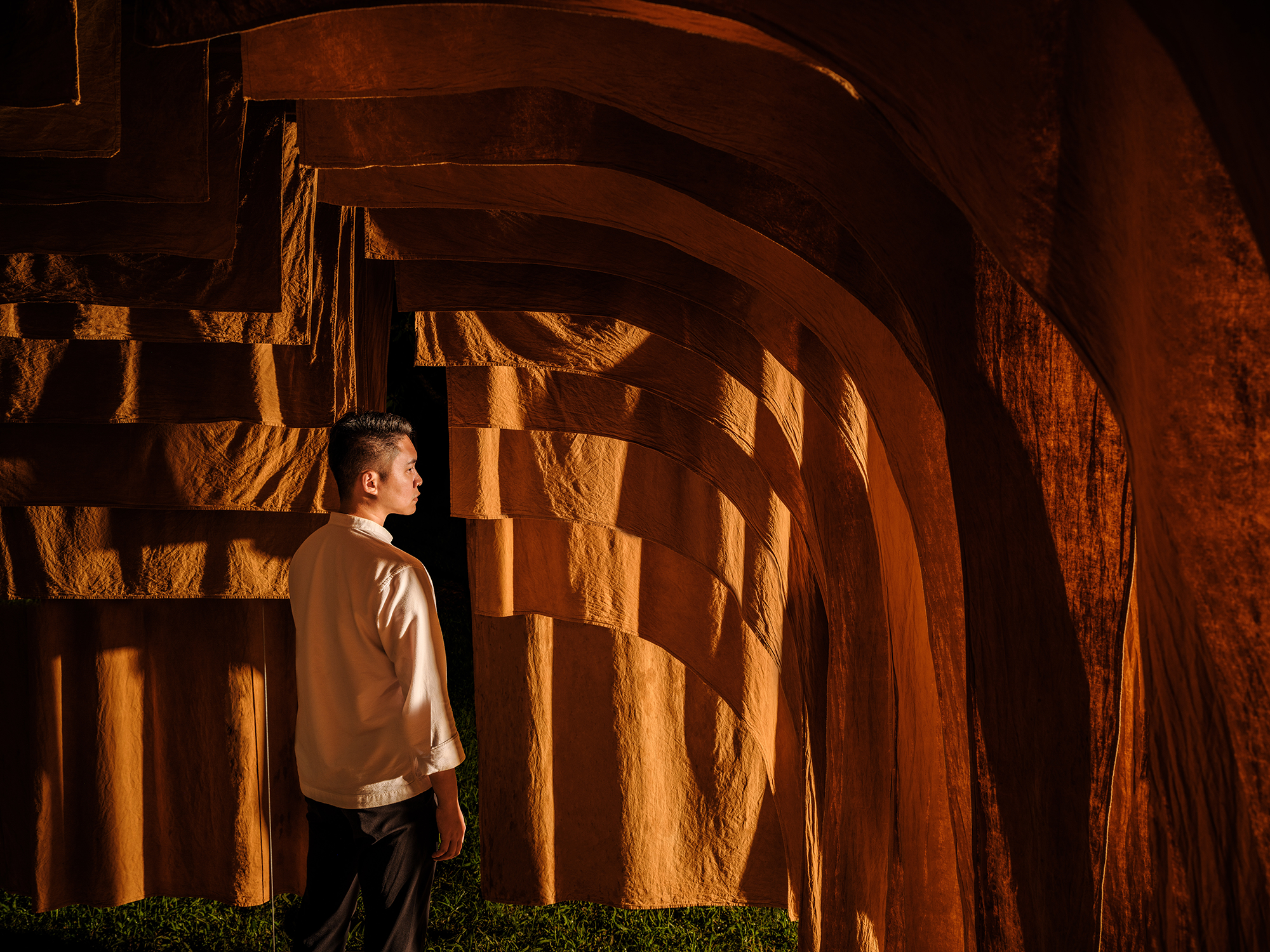
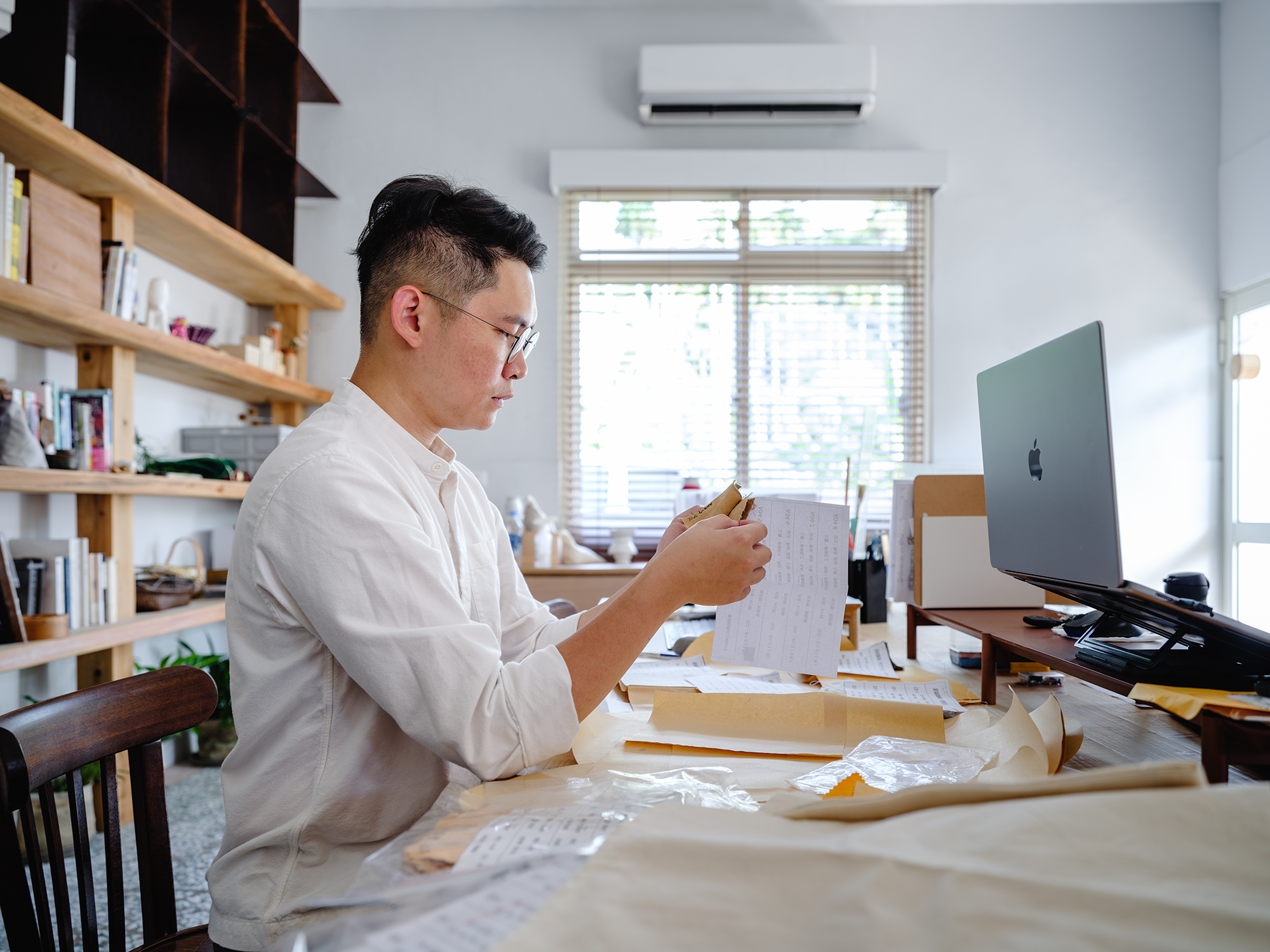
Artist Cheng Tsung FENG specializes in installation art, sculpture, crafts, and industrial design. A soul with an old spirit, he is fascinated by the wisdom embedded in traditional artifacts—wisdom formed and solidified through time. Unwilling to see these intangible heritages vanish alongside the objects themselves, he reinterprets ancient craftsmanship in various forms and scales, allowing age-old knowledge to take on new expressions.
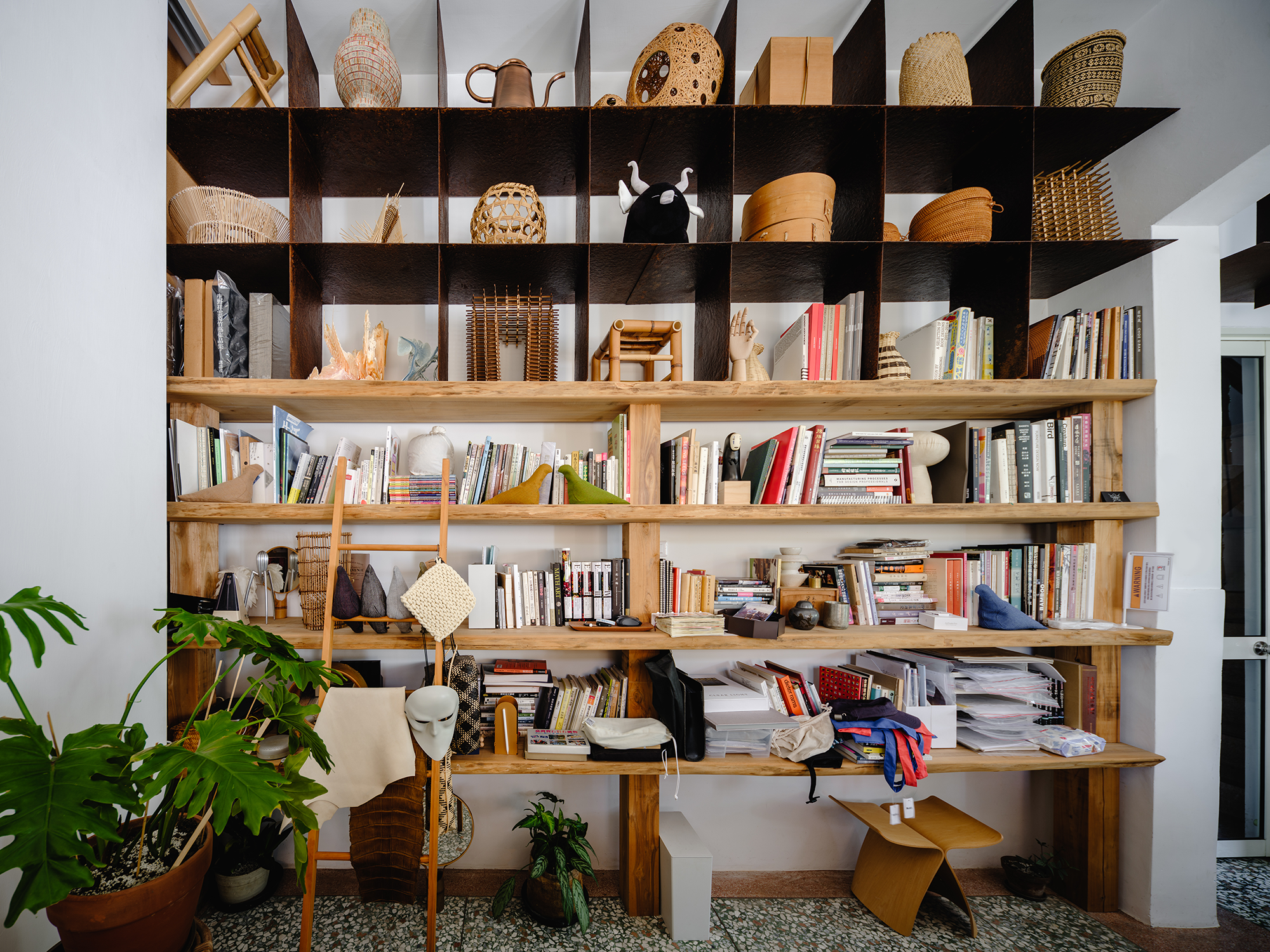
His studio, Studio Kao Gong Ji, is located in Caotun, Nantou. The team often draws creative inspiration from ancient handcraft cultures. The studio is filled with scaled models made of natural materials such as bamboo, wood, rattan, and grass. Shelves are lined with treasured craft pieces, classic design objects, and books of all kinds—an essential source of inspiration for their work.
FENG dissects traditional craftsmanship through three levels: form, material, and method—developing a unique process of documentation, research, and creation. For this Hualien Color Series, he deliberately kept the shapes of all objects simple and understated. By stepping back in form, he allows the spotlight to fall on the colors and textures of Hualien’s soil, which became the true protagonists in this series. The resulting objects carry a rustic, honest, and slightly wild charm—qualities that echo his impression of Hualien: a place of ease, where people and things are naturally approachable and unpretentious.
Hands-on making is the closest and most direct way to understand a craft. The depth and richness of insights gained far surpass what one can learn through images, videos, or passive observation.
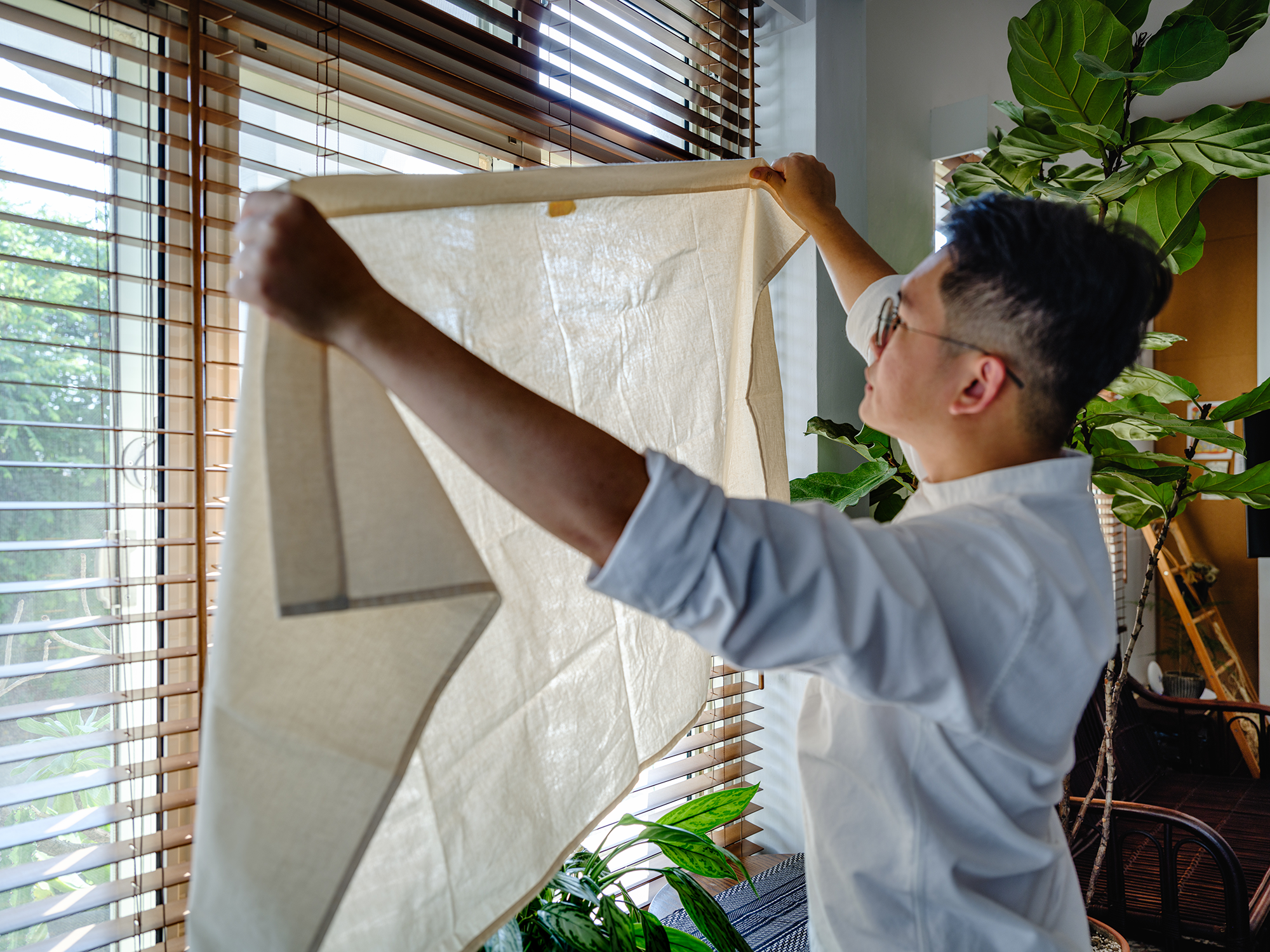
He received hundreds of color samples developed by ceramic and dye artisans—each one carefully examined for its unique hue and texture.
Based on the spatial and personal characteristics of ten selected Hualien shops, he developed ten site-specific objects for practical use.
Each of these ten objects was then matched with a color sample that resonated with the spirit and aesthetic of its respective shop.
藝術總監|范承宗
藝術家范承宗,專長於裝置藝術、雕塑、工藝與工業設計。身體裡住著老靈魂的他,著迷於挖掘隱藏在傳統器物中以時間凝結而成的智慧。他不捨這些無形資產將隨物件一同逝去,便將這些古老的手藝文化以各種截然不同的形式與尺度重新詮釋,讓古老的智慧能以不同的面貌展現。
考工記工作室位於南投草屯,團隊常以古老手工器物文化為創作題材,工作室裡充滿以竹、木、藤、草等自然素材製成的作品縮比模型,架上擺滿珍藏的工藝作品、經典設計與各類書籍,這些是他們重要的創意資源。
范承宗將傳統工藝的製作過程透過形狀、材料、方法三種層次解離,發展出一套紀錄、研究與創作的手法。此次花蓮色系列物件,他讓所有物件的造形都保持單純,以這樣退後的造形角色,將希望優先被關注的焦點留給花蓮土壤的色彩與質感魅力,完成一系列樸實、率性,甚至帶點野味的氣質器物,就像他所認識的花蓮印象,人事物都容易親近,不必小心翼翼的一種自在。
親手製作是閱讀一項手工藝的最佳距離,從中能獲得的訊息質與量遠大於閱讀圖文影音資訊或旁觀製作現場。
收到陶職人與染職人完成的上百種色彩效果樣本,一一檢視其中的色彩與質感特性。
根據十家花蓮店家的空間與經營者的個性特質,發展十件於店內使用的物件。
再根據十家花蓮店家的氣質,為這十個物件配對十款適合的色彩樣本。




Fire Craft|Chia Pe Wu
“Ceramics have existed for thousands of years. From earth to glaze, combined with the natural energy of fire, an infinite variety of effects can be created. Every artisan is searching for a signature code—something instantly recognizable as theirs, so that the work speaks on their behalf.”
Wu Chia-Pei was first introduced to ceramics in high school and was unexpectedly drawn into a lifelong journey with clay. Instead of following a traditional academic path after graduation, he chose to work in a ceramics factory, where his early work focused on wheel-thrown functional wares and tea utensils. In recent years, as his inner landscape has matured, he has shifted toward sculptural forms to express the thoughts and emotions of daily life. Known for his mastery of kiln stacking (multi-level firing), Wu brings out the dynamic potential of glaze, allowing it to bloom in all its variety.
“Each piece feels like a fragment of my lived experience. I’m not good with words—just feel the work instead.”
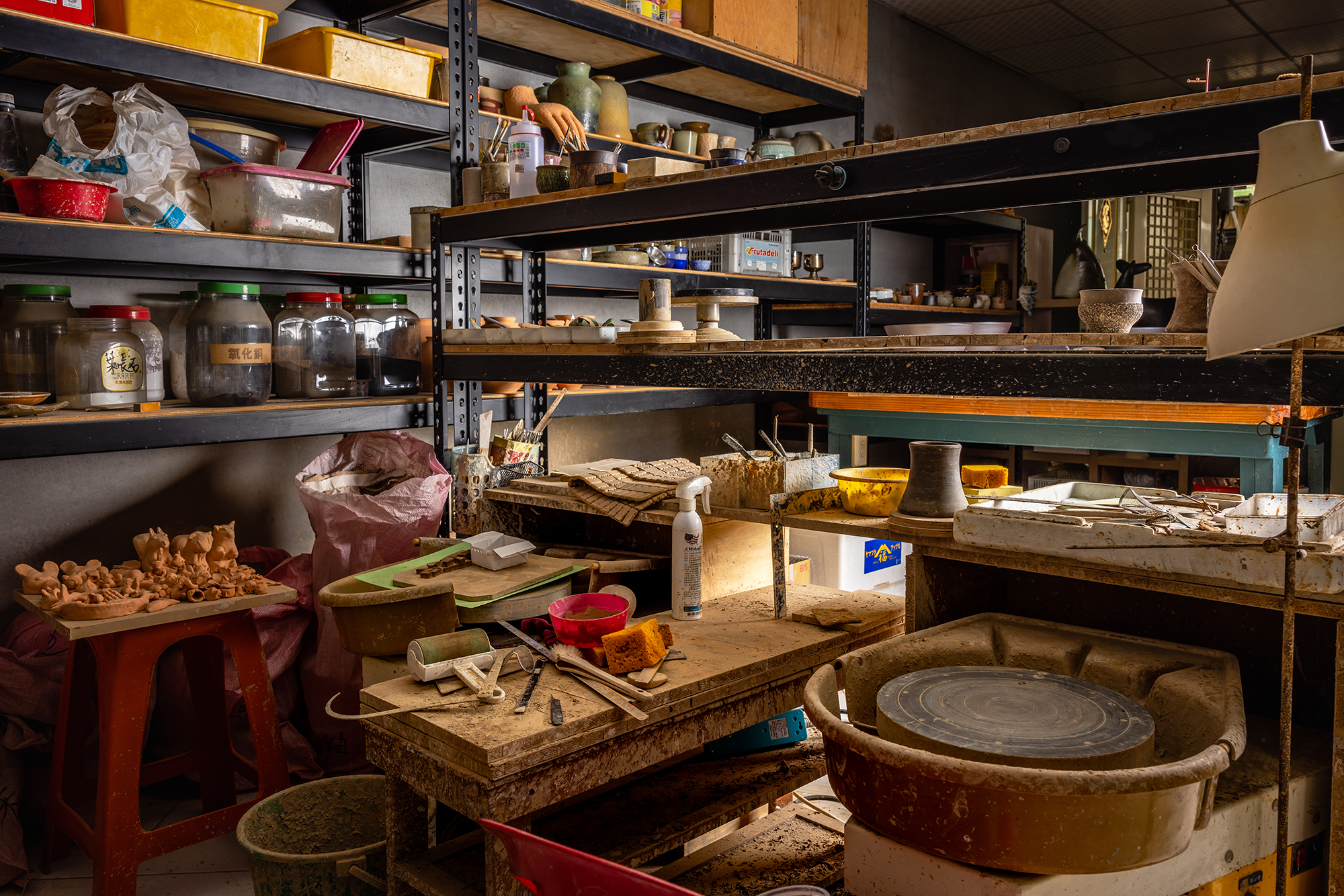
【Refining & Sieving】Raw clay is sifted to remove impurities, left to settle naturally. Once the water separates from the slip, the clear water is poured off. The sediment is dried and crushed for later use.
【Kneading & Shaping】Clay is kneaded to expel air and achieve uniform texture and moisture, making it more suitable for forming and shaping.
【Bisque Firing】The bisque firing at 900°C begins the vitrification process, allowing the clay body to become more durable and receptive to glaze through capillary action.
【Glaze Mixing】Special glaze recipes are made by blending feldspar, calcium carbonate, quartz, talc, magnesium carbonate, zinc oxide, dolomite, bone ash, and barium carbonate with five different types of Hualien soil—creating uniquely local glazes.
【Glazing Techniques】Glazes are applied using dipping, spraying, brushing, pouring, or painting to build up the ideal surface thickness on the clay body.
【Stacked Kiln Firing】A reduction firing at 1,230°C over about 16 hours transforms the body and glaze. Only at this temperature do the glaze materials undergo chemical changes and form a strong bond with the ceramic body.
【Cooling】Cooling takes about three days. Once the temperature drops to room level, the pieces can be removed—now complete and usable ceramic works.
【Unloading the Kiln】The ratio of powdered materials in each glaze recipe, when fired with different Hualien clays, yields a variety of unexpected and rich color outcomes.
火工藝|吳嘉倍
「陶器的存在已經超過幾千年,從土壤到釉藥,加上火這個自然能量的控制,可以組合出無限多種的效果,每個工藝師應該都在找尋能夠一眼辨識出屬於自己的符碼,讓作品替自己說故事。」在高中課堂上接觸陶藝後,吳嘉倍意外被命運牽引著,畢業後沒有走傳統的升學管道,而是進入陶瓷工廠工作,因此早期的作品多以手拉坏製作生活器物、茶道具等為主;近年來隨心境的成長,轉而發展雕塑,來體現生活的思想與情感,他善於使用疊窯進行燒製,將釉彩的多變發揮得淋漓盡致。「每一個作品都像我經歷過的某個生活片段,我不太會表達,就去感受它吧!」
【掏洗過篩】過篩去除原礦土中多餘雜質,待自然沈澱後,等水與泥漿自然分離,倒掉上層清水,曬乾後敲碎備用。
【練土塑形】將陶土透過練土讓空氣排出,使土的質地更均勻、乾濕軟硬適中,更好塑形。
【製坯素燒】經過900度(攝氏)的燒窯,素坏會產生瓷化作用,便於保存,利用毛細現象附著,有利於上釉。
【調配釉藥】添加霞石正長石、碳酸鈣、石英、滑石、碳酸鎂、氧化鋅、白雲石、骨灰、碳酸鋇,分別與五種花蓮土質調製成獨家釉料。
【上釉】使用浸、噴、刷、淋、彩繪等施柚技法,讓坏體表面堆疊至適當的厚度層。
【疊窯釉燒】使用還原燒燒至1,230度(約16小時)的高溫後,坏體的質地會更完整,且釉料才會產生變化,兩者能產生結合作用。
【退溫】歷經窯爐高溫燒成的作品,等待約莫3天的退溫,待降溫到室溫便可取出,成為可以使用的陶器。
【出窯】不同比例的粉末原料,在不同的原礦土中呈現不同顏色的樣貌。


Water Craft|Iyas
Step into Iyas Douai’s studio in Majia Township, Pingtung, and you’ll find yourself surrounded by a world of materials and textures: large woven structures in progress, woodwork benches, tree bark cloth, and yellow rattan hung up to dry. Every corner reflects his wide-ranging and deeply rooted creative vocabulary.
"Before scientific instruments existed, craft itself was a form of experiential science."
Iyas prefers hands-on experimentation—going into the mountains to collect and identify raw materials, learning their characteristics and potential uses. "Just like people—you don’t truly know someone until you spend time with them. Objects are the same."
With deep knowledge inherited from generations of Paiwan craftsmanship, Iyas excels at finding the ideal expression of each material through repeated hand trials and combinations. His creations are a dialogue between intuition, ancestral wisdom, and the raw materials of the land.
【Fabric Refining】Scouring or pre-treatment before dyeing: the fabric is washed to remove sizing, then soaked in a mordant solution to prepare for color absorption. Once dried, it is ready for dyeing.
【Soil Sieving】Local soil is sieved to remove impurities, then left to settle naturally for an hour. Once the water separates from the slurry, the clear liquid on top is discarded.
【Mud Activation】Soil powder is cooked with plant matter to enrich the mud medium. After simmering, the solution is left to ferment, enhancing its dyeing potential.
【Hot Soak Pre-Dyeing】Cotton fabrics are soaked in the heated mud solution, allowing the pigment to penetrate the fibers and form a base stain on the surface.
【Hot Mud Dyeing】Heat dyeing opens up the fabric’s fibers, helping the pigmented mud bind more effectively to the textile structure.
【Rinsing & Fixing】Excess mud is rinsed off, then the fabric is soaked in a fixing solution to stabilize the color.
【Shade Drying & Sun Setting】Shade drying allows the pigment to settle gently into the fibers. This is followed by sun exposure, where heat further locks the pigment into the fabric.
【Final Result】Seven different cotton-linen blends were tested, each absorbing the dye differently. The final colors vary depending on the fabric’s fiber composition and absorption properties.
水工藝|峇岦嵐偲.旮札涅灆
踏入位於屏東瑪家鄉的工作室內,製作到一半的巨型編織、木作鋸檯、樹皮布、吊掛等待風乾的黃藤材料等,處處可見Iyas多元且豐富的創作題材。「在還沒有科學儀器前,工藝本身就是一門經驗的科學。」喜歡透過自己動手實驗,上山採集與辨識原始材料的特性和用途,「就和人在相處之前你不會知道他真實的個性,物件也是一樣。」運用排灣族群世代積累下的工藝智慧,透過雙手嘗試無數種組合後找到每個物件最適合出現的表情,是Iyas最擅長的事。
【布料精煉】精練( 精細洗或煮練) 是染色前的準備工程之一,洗滌布料去漿浸泡預染劑,曬乾穩定預染劑輔助上色備用。
【原土過篩】過篩去除泥土中多餘雜質,待一小時自然沈澱後,等水與泥漿自然分離,倒掉上層清水。
【泥液淬色】泥粉與草植混煮淬色使泥媒物質濃度增加後靜置發酵備用。
【熱浸泡】將棉布入泥液中洗色打底,使泥液均勻滲透面料纖維形成附著於布面的泥漿。
【泥媒染】使用熱染方式促使布料纖維張開,使附著的表面泥液進入纖維。
【清洗固色】將多餘泥液清洗掉,泡入固色液中靜置。
【陰乾日曬】陰乾讓染料緩和附著於布料上,穩定布料纖維與染料融合,接著透過日曬的強烈溫度更好地將染料鎖於纖維中。
【完成】因使用7種棉麻布料試染布料,其布料著色程度不同,最終顏色也不同。


卓溪(中正部落)Sinkam
The name Sinkam is derived from a Japanese pronunciation, and is said to mean “a very tall mountain.” Located in Zhuoxi Township, Zhongzheng Village sits in what is considered the heartland of the Bunun people in Hualien.
According to oral history, the Bunun ancestors originally lived along the Luanda River (tak banuaz) in Xinyi Township, Nantou County. As the population gradually increased, they began migrating eastward across the Central Mountain Range toward the end of the 18th century. Eventually, they settled in the upper reaches of the Xiuguluan River, in what is now the Lakulaku Valley—becoming one of the earliest clans to reach the Yuli region.
During the Japanese colonial era, the government sought to exploit forest resources and implemented the policy of "group relocation" to better manage and control the Indigenous population. As a result, the Bunun people were collectively resettled to the current village site at the foot of the Central Mountain Range.
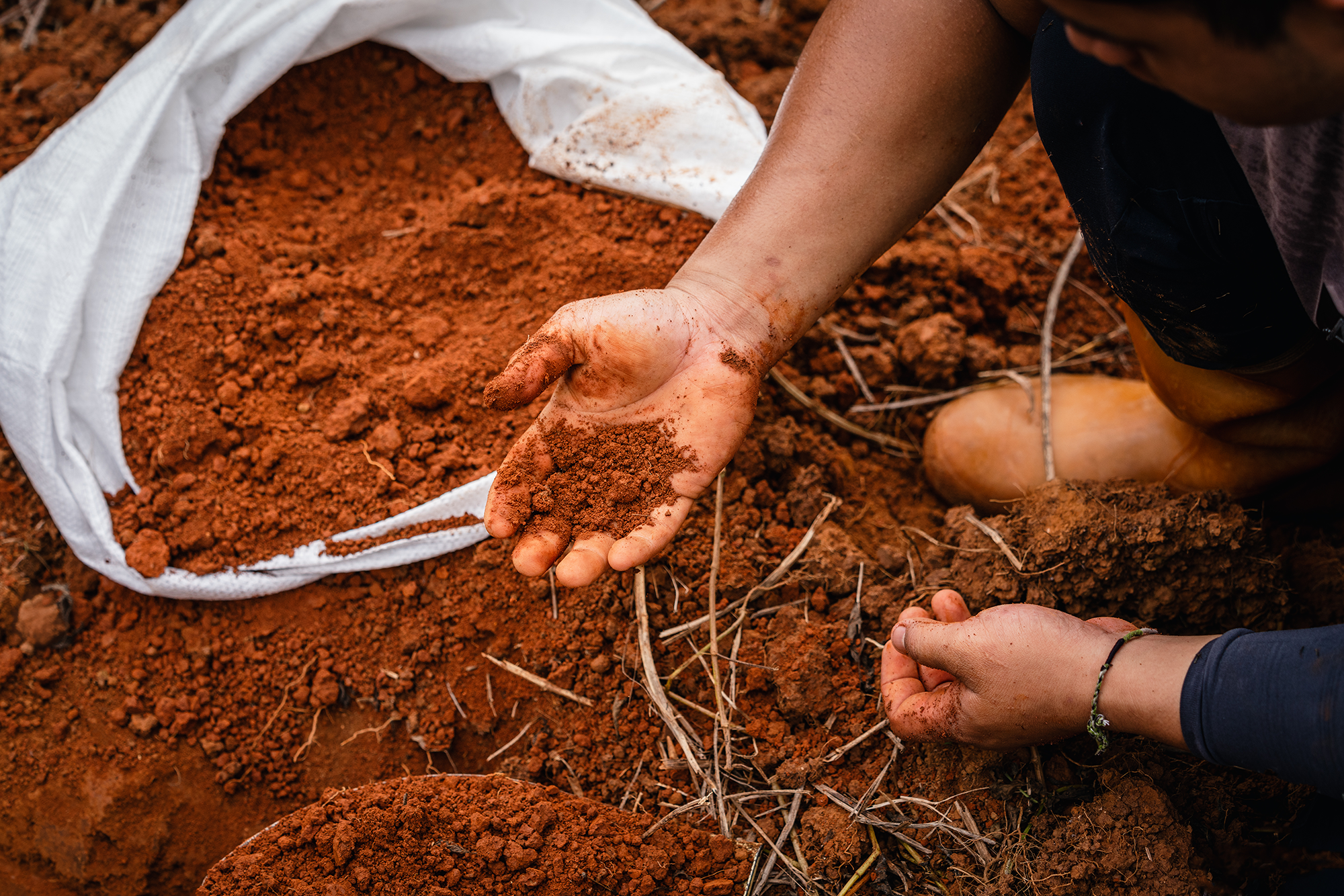
【Raw Soil】The red soil found here is relatively old in geological terms. It has a heavier clay content, with good drainage and aeration properties. However, the soil is mildly acidic and tends to be less fertile.
【Soil Composition】This type of soil is the product of ferrallitization—a process common in tropical or subtropical climates characterized by high temperatures and heavy rainfall. Under these conditions, organic matter decomposes rapidly, and most soluble nutrients are leached out, leaving behind iron and aluminum oxides. These oxides give the soil its distinctive reddish color.
【Collectors】Vilian, Tulbus, Saidu, Sai
【Field Site】The region is primarily composed of red and yellow soils, each covering approximately 2,000 hectares. These soils are mainly distributed across Yuli, Ruisui, Shoufeng, Fenglin, Xiulin, Wanrong, and Zhuoxi townships.
【Location】23°21'4.8978" N 121°19'0.0154" E
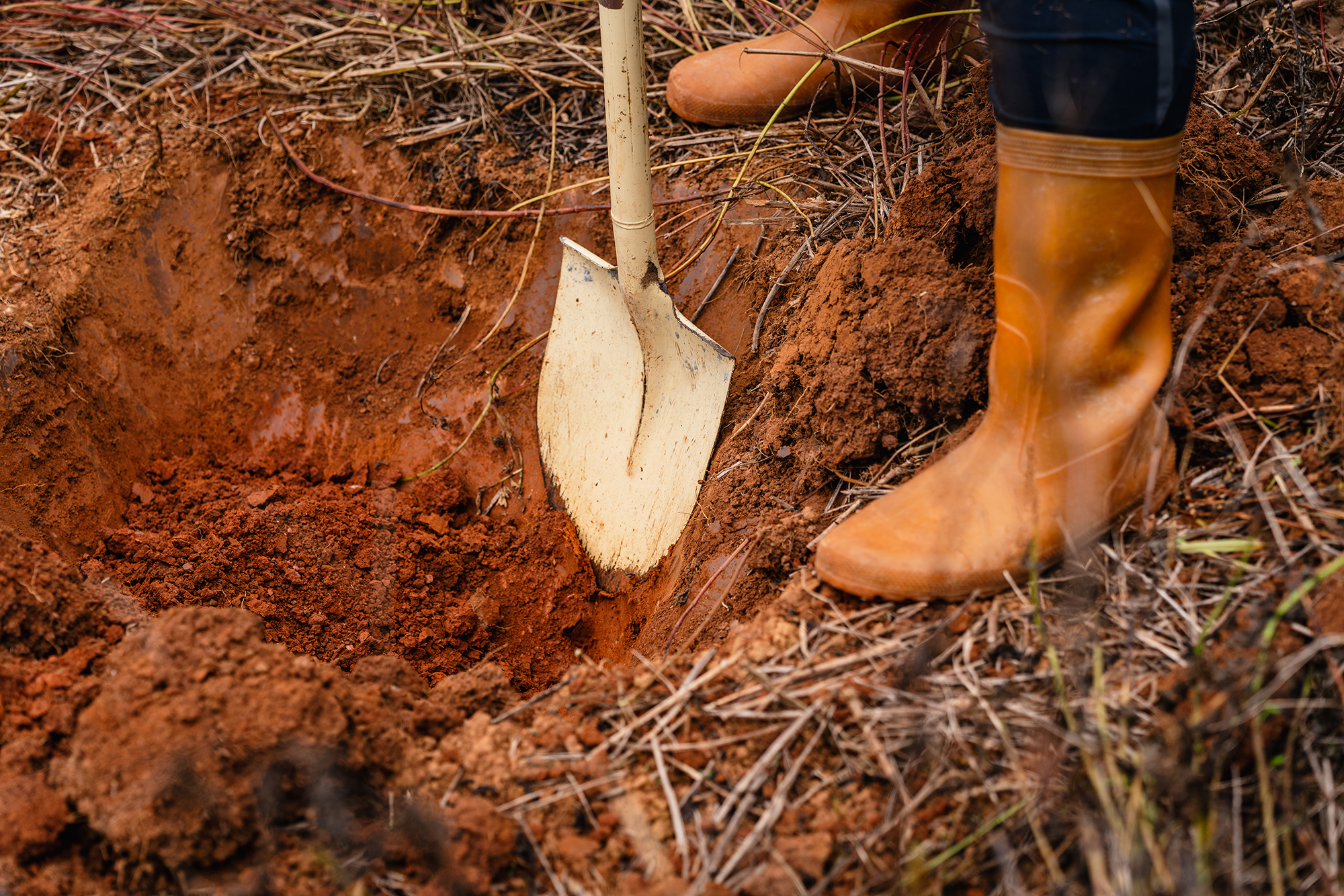
【Collecting Process】As we wove our way through the village, we followed Vilian into a trail of memories shared with his grandfather. "Back in the day," he said, "I used to go barefoot into the fields during the day to dig up sweet potatoes and taro, or cut grass for feed." Pointing to a small hill nearby, he added, “I used to carry loads of grass or feed—about the weight of five Formosan serows—up that slope to feed the goats and pigs for Grandpa.” After the work was done, they would rest in front of a massive red earth cliff. “The sweet potato fields were red soil too,” he recalled, “but what I remember most was the fingerprint of red soil left by Grandpa on the sweet potatoes. It gave them a kind of gritty texture. You can’t find that taste anymore.”
中正部落,其名稱「Sinkam」從日語發音而來,相傳有「很高的山」之意。卓溪鄉是花蓮布農族人大本營,據口傳歷史其祖先最早居住於南投縣信義鄉巒大溪沿岸(tak banuaz),因人口漸增,便於18世紀末翻過中央山脈,慢慢遷徙到花蓮卓溪鄉秀姑巒溪上游的拉庫拉庫溪谷,算是此流域最早接近玉里的氏族;後受到日本殖民欲開採山林資源,透過原住民「集團移住」政策管制行動,才被集體遷移到中央山脈山腳下的部落現址。
【原礦土】紅土,因生成年代較久,土壤粘性較重,排水與通氣良好,但土質偏酸性,肥力略差。
【土質】紅壤化成土作用常發盛於熱帶或亞熱帶等高溫多雨的氣候條件,當有機質分解迅速,土壤中的物質流失剩下鋁、鐵氧化物質,故土壤呈紅色。
【採集者】Vilian、Tulbus、Saidu、Sai
【場域】現地以紅壤及黃壤為主,其面積分別各約兩千餘公頃,主要分布於玉里、瑞穗、壽豐、鳳林、秀林、萬榮及卓溪等地。
【位置】23°21'4.8978" N 121°19'0.0154" E
【採集過程】在部落內蜿蜒穿梭,隨著帶路人Vilian走進他與阿公的記憶之中,白天到田裡挖地瓜、芋頭、砍牧草,打著赤腳在田間跑跳,手指了指後方的小山坡,「我以前都是幫阿公從這裡揹著大概五隻山羌重量的牧草或飼料,到上面去餵羊和豬,工作結束就會在一大片紅色的山壁前休息,地瓜田也是紅土啊,但我印象最深刻的是沾上阿公的紅土指紋地瓜,吃起來沙沙的,但現在也吃不到了。」



Taiwanese Tea Perfume - P.Seven
“Scent memory is one of the most romantic mechanisms of the human body—smell can transport you somewhere both incredibly near and impossibly far.”
P.Seven Taiwanese Tea Perfume was founded by Pan Yu-Ching, a native of Fuli in Hualien. Quiet by nature, she has always observed the world with great sensitivity. Through capturing and crafting subtle scent layers, she transforms abstract concepts into tangible, bodily experiences.
In addition to creating signature tea-based fragrances inspired by her background as a tea master, she also develops custom scents as brand identities for companies. “I’m like an abstract artist working with scent. I don’t aim for imitation—I want to express something from deep within.”
Headquartered in Taipei, P.Seven centers its practice around “Taiwanese memory” and draws upon the island’s cultural richness and unique natural materials to create fragrance products. P.Seven has service points throughout Taiwan and in Eslite Bookstore Tokyo, Japan.
P.Seven reinterprets Taiwan’s tea culture in a contemporary context, offering a wide array of tea-inspired fragrances—seasonal scent selections, the classic “Tea Fragrance Water” series, perfumes, and home fragrance items—that have captured the hearts of both local and international customers.
Beyond tea perfumes and lifestyle products, P.Seven also explores olfactory art. Believing that “fragrance is a path through perception to the soul,” they work to extend the expressive power of scent into the corporate world—translating brand identity into scent and creating unique olfactory trademarks for businesses.
【Store Requirements】
1.Packaging with an international design language
2.Reusable
3.Carries both scent and a sense of taste
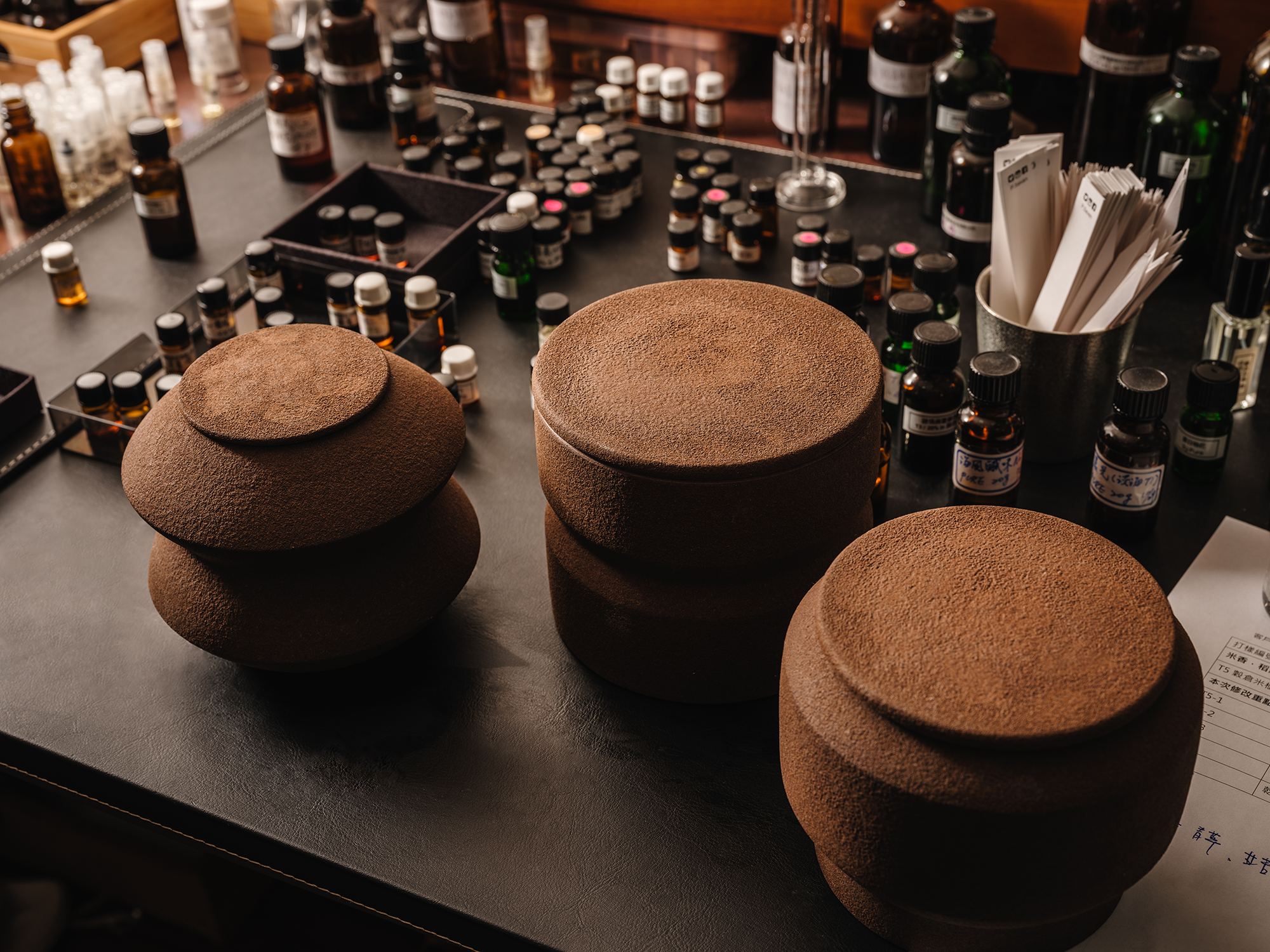
【Scent Candle Container】
“Let scent become the clothing each person wears—something that embodies their unique identity.” This has always been the vision of Pan Yu-Ching. By emphasizing individuality and taste through fragrance, essential oil candles from the home fragrance series have become the perfect choice. To fulfill both functions of identity and containment, the vessel should not be something disposable after use. Instead, it is designed to be a unique object that enhances the atmosphere of a space—like a sculptural piece.
Crafted with red clay to achieve a matte texture both visually and to the touch, the container recalls vessels once used in homes to hold items of special significance. After the candle has burned down, it can be repurposed as a jewelry box, storage container, or flower vase—placed in a cozy corner of the home to continue holding something precious and personal.
P.Seven台灣茶香水
「嗅覺記憶是一種很浪漫的人體機制,氣味可以帶你到很近又很遠的地方。」P.Seven台灣茶香水的創辦人潘雨晴,來自花蓮富里,從小對世界就有敏銳的觀察力。話不多的她,透過捕捉與創造細膩地氣味層次,將抽象的概念轉化為具體的身體經驗。除了因為茶師經歷而創作出以茶入香的代表性產品外,也為企業量身打造專屬氣味成為品牌識別。「我就像是用味道在創作抽象藝術的人,仿真不是我的目的,傳遞某種內心深處的訊息才是。」
總部位於台北的P.Seven,以「台灣記憶」為母題,發展台灣文化為內涵,採用台灣特有自然素材為發想而研製各式香氛產品,在台灣各地與日本東京誠品皆設有服務據點。
P.Seven將台灣茶文化,用新的方式詮釋,打造一系列茶香產品,像是充滿季節感的當季香氣推薦、經典的《茗香水》、各式淡香水與居家香氛等,擄獲台灣甚至國際觀光客的心。
P.Seven除了打造茶香水與香氛產品,更致力於嗅覺的藝術創作,深信「香氣是藉由感知傳遞至靈魂的一種途徑」,希望將嗅覺創作能量延伸至台灣企業,將企業識別商標「嗅覺化」,為企業打造專屬的氣味商標。
【店家需求】
1.擁有國際語言的包裝
2.可重複利用
3.裝載氣味與品味
【香氛蠟燭容器】
「讓氣味成為穿在每個人身上的衣服,且能成為一個人獨特的識別。」是潘雨晴一直以來希望成就的事。
透過氣味強調「獨特性」與「品味」,居家香氛系列中的精油蠟燭就成為了絕佳選項。為了兼具「識別」與「乘載」功能,容器不該用完即被拋棄,而是能成為襯托居家室內氣質的獨特物件,就如同雕塑品一般。
應用紅土創造出磨砂質地的視覺與觸感,像極了過去家中存放特殊意義物品的器物,蠟燭燒完後,可以作為飾品盒、收納盒、花器等,隨意放置家中角落,繼續存放專屬自己的珍貴。


Liu Liu
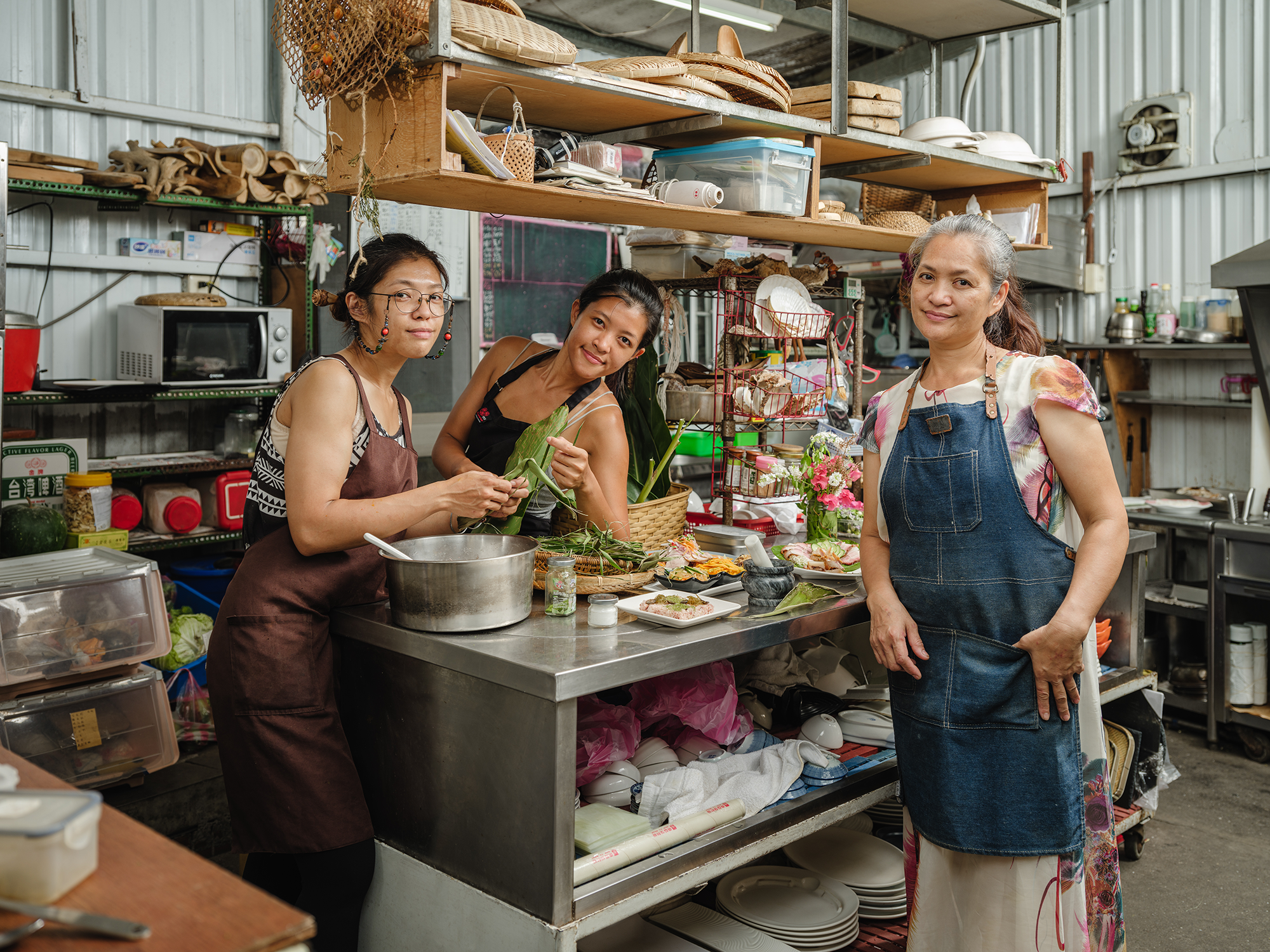
The restaurant owner, Li Xiumei, is of the Kavalan tribe. To fulfill a promise made to her grandmother and pass on the tribe’s traditional culinary heritage, she opened “Liu Liu” after accidentally winning first prize in an Indigenous creative cooking competition. The name “Liu Liu” comes from the largest settlement among the 36 Kavalan communities during the Qing dynasty.
“I dove into the sea as a haenyeo, hiked into the mountains for ingredients. No formal training — just followed the elders around. No one teaches you; you have to secretly learn on your own!” says Li Xiumei. Her menu is written by nature itself, changing with the weather and seasons, sourced entirely from the abundant local environment. “I’ve found that the dishes we’re tired of are the ones you all end up loving,” she jokes with her two daughters, all bursting into laughter.
Liu Liu operates by reservation only, offering a prix-fixe, seasonal tasting menu. Every ingredient is foraged by Li herself and members of her community, so the day’s menu is entirely dependent on what nature provides. Their foraging approach is mindful and modest — taking only what’s needed — reflecting the Indigenous philosophy of living in harmony with the land.
At first, the restaurant tried offering a fixed menu with standard banquet dishes, but soon realized it clashed with traditional Indigenous foodways. To ensure guests enjoy the freshest, most seasonal local ingredients, they avoid mass procurement and imported goods, instead offering tiered pricing for their no-menu meals.
Li’s husband — the front-of-house “comedian” — entertains guests with humorous quizzes before the meal, asking diners to guess the ingredients used. Some questions take three or more visits to finally earn the answer! Every ingredient carries a rich story from the community, making each meal not only delicious, but deeply educational.
【Store Requirements】
1.Tablecloth compatible with various table shapes
2.Size can be freely reduced or expanded
3.Color tones that highlight mountain and ocean ingredients
【Dining Table Cloth】
“We often have guests who don’t know each other suddenly start chatting and end up sharing a table—round tables joined with square ones—and the serving dishes are always used in spontaneous ways, so it’s really hard to find a suitable tablecloth out there for us!”
This need for unrestricted table shapes, flexible sizing, and freely adjustable layouts became the starting point for the design concept. Made by randomly stitching together multiple pebble-shaped fabric pieces of varying sizes, the cloth naturally drapes over both sides of the table without needing to match its exact shape.
During the mud dyeing process, one light and one dark shade were intentionally chosen. By adjusting the overlapping proportions of these layers, the cloth complements the ever-changing wild character of the table—regardless of how the dishes or serving vessels vary.
流流社原住民風味餐廳 Liu Liu
餐廳老闆娘李秀美出身噶瑪蘭族,為了實現了對阿嬤的承諾,將族群的傳統飲食文化傳承下去,在「不小心」獲得原住民創意美食烹飪大賽冠軍後,便以清代噶瑪蘭 36 社中最大社群部落之名「流流社」為名開店。
「下海當海女,上山找食材,也沒特別訓練啦,就是跟在老人家後面走,哪有人教,自己要偷學啊!」李秀美的菜單是老天爺開的,隨著天氣和季節轉換,全來自豐饒的自然場域,「開了這麼久的店我有發現一件事,我們吃膩的都是你們會喜歡的。」李秀美與兩個女兒大笑不止。
「流流社」採純預約制,分價位供應的無菜單料理,因食材皆為老闆娘和部落族人親手至野外採集,能吃到什麼料理,全憑藉當天所能收穫的食材而定。他們不強求、只取所需的採集方式,充分地展現了原住民順應自然的生活智慧。
起初流流社也曾嘗試常見的固定菜單,提供制式桌菜,但很快地發現這種備菜邏輯和原住民傳統的料理方式有很大的差異。流流社為確保客人能吃到當地最當季新鮮的好食材,他們不大量批發囤貨、不使用進口食材,而採用不同價位的無菜單料理。
作為外場「幽默擔當」的老闆,在客人用餐前會用趣味問答來炒熱氣氛,讓大家猜猜料理中的食材是什麼,有些問題甚至要回來用餐3次以上,才會得到解答。每道食材中都住著部落豐沛的故事,不僅可以吃到美味料理,還能增長見識。
【店家需求】
1.符合不同桌型的桌布
2.尺寸可自由縮減與擴增
3.襯托山海食材的色調
【餐桌布】
「我們很常會有互不認識的客人突然聊開就併桌,圓桌拼方桌,或是裝菜的器皿太常自由發揮,所以很難在外面找到適合我們的桌布啦!」
可不受桌型限制與彈性改變尺度、自由鋪設方式的需要,成為了設計思考的切入點。由多個大小不一的卵石形布墊隨意車縫而成,在餐桌上鋪開時,布料可以自然垂墜在兩側,不用刻意迎合桌子的形狀,泥染時刻意選擇深、淺色效果各一,透過上下層交疊面積的比例調整,無論菜色與特殊器皿如何轉變,皆能襯托餐桌上多變野性的氣質。



秀姑巒溪出海口(港口部落)Makudaai
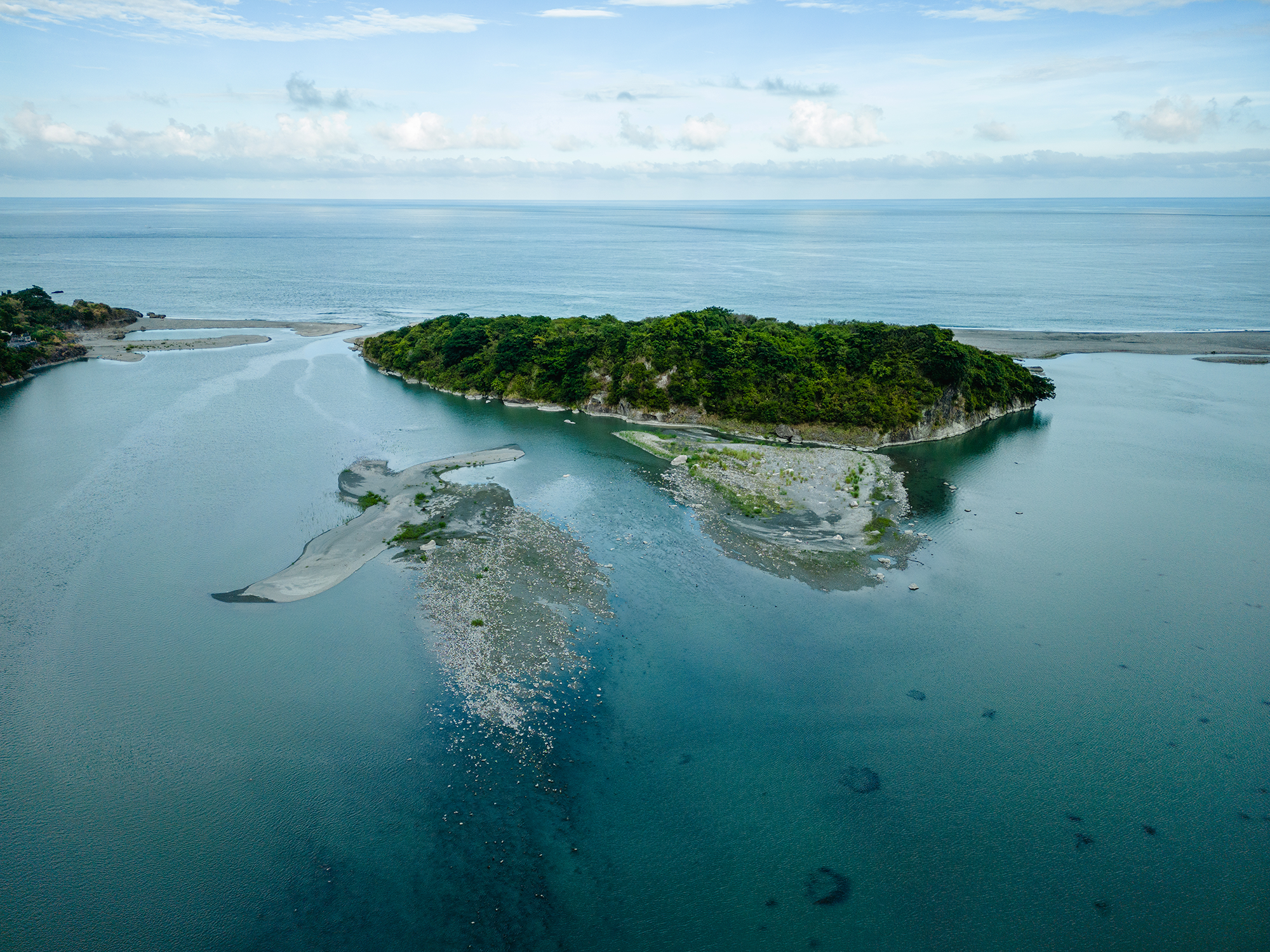
Makudaai (formerly known as Cepo′) is one of the four communities that make up Gangkou Village in Fengbin Township, Hualien County—alongside Dagangkou, Shitiping, and Shitiwan. The name "Cepo′" refers to holding sea rituals at the river mouth, reflecting the community's deep connection with the ocean.
Located in the river delta where the Xiuguluan River meets the Pacific Ocean—between Shitiping and the Changhong Bridge—the area experiences shifting seasonal winds that bring varying levels of moisture, contributing to its rich biodiversity and abundant natural resources. With its prime geographic location, thriving natural gathering grounds, and deep-rooted wisdom passed down through generations, Makudaai has become the most populous and vibrant among the four villages.
【Raw Soil】A bluish-grey, murky-colored clay.
【Soil Composition】The Xiuguluan River is the largest river in eastern Taiwan and the primary waterway that shaped the alluvial fan of the Huatung Valley. One of its most famous landmarks is the striking white boulders scattered across the riverbed, known as the “Shuyu Wonder.” Located at the junction of freshwater and seawater, the river’s soil contains not only organic matter from terrestrial plants but also a rich mix of weathered shells, coral fragments, and other marine debris.
【Collector】 Chien Da LU, 伊佑・安查
【Field Site】The “Shuyu Rock Formations” are composed of limestone formed from accumulated marine debris, fossils, and coral reefs. In the past, due to tectonic compression and crustal movement, these volcanic islands and coral reefs were uplifted above sea level, creating a striking landscape of massive rocks in various shapes.
【Location】 23°28'2.6744" N 121°29'54.7922" E
【Collection Process】Following Iyu Ancha and Brother Lü Jianda to the estuary of the Xiuguluan River beside the village, we passed under the octagonal pavilion where an elderly man was mending his fishing nets. “Across the way is Ci'poran Island,” said Lü Jianda. “According to legend, our ancestors first landed there before settling in our current home. This place is where people come to fish, forage, or even retreat into solitude.”
“When I was a kid, we used to catch baby eels here. Any eels that slipped through the elders’ triangular nets became our pocket money. But the soil here is so sticky—if it got on our clothes, it was nearly impossible to wash off. Whenever our mothers saw the bluish-gray mud on us, they’d scold or even hit us. They always said the estuary was dangerous and not a place for children.”
Now, in the blink of an eye, Iyu Ancha has become one of the sea men who stand out in the winter surf each year, catching baby eels at the river’s mouth.
港口(Makudaai)部落,古名稱作為「Cepo′」,意指為「在出海口舉行海祭」之意涵,是花蓮縣豐濱鄉港口村四個部落(港口、大港口、石梯坪與石梯灣)之一。座落於石梯坪與長虹橋之間、秀姑巒溪入海的河口三角地帶,四季呈現不同的風向,帶來不同的水氣,讓當地的自然生態與物產極為豐富,佔據絕佳的地理位置,充滿優勢的自然採集場域,以及世代傳承的部落生活智慧,讓港口部落成為四個部落中人丁最為興盛的部落。
【原礦土】帶藍色的灰濁色黏土。
【土質】秀姑巒溪是台灣東部第一大河川,也是形成花東縱谷沖積扇的主要河流。最著名的景點是河床中的巨大白石,稱為漱玉奇景。因位處於淡水與海水交界處,土壤內除了陸地植物的有機質外,也有眾多螺貝類風化物、珊瑚、海洋生物碎屑等蘊含其中。
【採集者】呂建達、伊佑・安查。
【場域】漱玉奇石是由堆積在海上的生物碎屑、化石、珊瑚礁所組成的石灰岩區域,過去受到板塊擠壓和地殼變動,這些火山島和珊瑚礁被抬升出水面,形成形狀各異的巨石景觀。
【位置】23°28'2.6744" N 121°29'54.7922" E
【採集過程】
跟著伊祐・安查和呂建達大哥,前往部落旁的秀姑巒溪出海口,八角亭下有一位老人家正在修補漁網。「對面是Ci'poran島,傳說祖先就是先登上那邊,才來到我們現在的位置,這邊是很多人來漁撈、採集、耍自閉的地方。」呂建達說。
「小時候都在這裡撈鰻苗,從長輩的三角網流走的鰻苗就會變成我們的零用錢,但這邊的土很黏,沾到衣服非常難洗,所以回家媽媽看到我們身上有這種灰藍色的土就會打人,他們總說出海口很危險,小孩子不要去。」轉眼之間,伊祐・安查已經是每年冬天站在前方頂著浪捕鰻苗的海男人了。




Deep Breath B&B
Following Google Maps, you turn onto a narrow forest path that fits only one car, winding through a seemingly endless series of hairpin bends. Just as you're about to turn around, wondering if you've gotten lost in the woods, you see manager Chen Bo-Han waving to welcome you. “Look at the bald cypress in front of the house,” he says. “When it rains, the branches droop under the weight of the water, and guests have to bend down to enter the room. We’ve tried to preserve the plants in their natural state as much as possible within safe boundaries. After all, humans are meant to embrace the randomness of nature.” At Deep Breath B&B, guests aren’t just booking a room—they’re reserving an entire forest.
With the belief that “plants and animals are the true hosts, and we are merely borrowing space,” Deep Breath B&B avoids pesticides and herbicides, does not provide single-use personal items, minimizes waste, and refuses to burn or bury garbage in the forest. These firm commitments have nurtured a thriving natural habitat.
While lodging is the core service, the existing grounds have also been adapted to host customized dining, workshops, and cultural experiences.
“Forests don’t merely heal—they provide everything we need for life.” This philosophy has inspired a wide range of tailored offerings designed to deepen visitors’ connection to their environment. These include private chef experiences, floral design classes, local music performances, hunter-style afternoon teas, weaving workshops, and more—all aimed at creating meaningful encounters with the region’s natural materials and living culture.
【Store Requirements】
1.Extend outdoor greenery into the interior
2.Decorate and style according to various service needs
3.Create visual focal points within the room
【Planting Pot】
"Placing a floral arrangement on the private dining table or setting a welcoming plant in the guest room—I simply want to offer a small token of care made from the greenery I’ve gathered in the forest."
To highlight the colors and textures of the plants, this set of planters was crafted using a silver-gray clay with a metallic sheen that contrasts strongly with the plants themselves. The design consists of two separate yet complementary parts: an upper pot with a drainage hole, and a lower dish that catches the water. Together, they form a complete and refined whole that makes no compromises.
梯田山民宿
跟著google map導航轉進僅有一台車通過的小徑,連綿不絕的髮夾彎讓人懷疑是否在森林裡迷了路,正當準備掉頭迴轉時,看見經理人陳柏翰揮著手歡迎旅人的到來。「你看房前的這顆落羽松,下雨的時候枝葉會因為雨水的重量低垂,入住的房客必須彎著腰才能走進室內,我們是在安全範圍內盡量保留植物的天然狀態,人本來就是需要接受自然裡的所有隨機。」旅客訂的不只是房間,而是預約一整片森林。
「動植物才是主人,我們只是借住」的理念之下,不噴灑農藥與除草劑、不提供一次性消耗個人用品、垃圾減量,及不在山林中焚燒與掩埋垃圾的各種堅持裡,造就這座山林的豐富生命力。
以住宿為主要營業項目,同時利用既有場域打造訂製餐飲服務、課程、文化體驗。
「森林不只是療癒,而是提供人的一切生活之需要」,為了讓旅人對身處的環境有感,衍伸出多元訂製的內容,如私廚、花藝課程、地方音樂人演出、獵人下午茶、編織課程等,都是為了創造無數種與地方生活文化與天然素材接觸的機會。
【店家需求】
1.將室外植栽延伸至室內
2.因應各式不同服務內容所需的佈置與妝點
3.創造房間內的視覺亮點
【植栽盆器】
「在私廚餐桌上擺上桌花、或在房內放上一盆迎賓的植物,想用自己在森林裡摘採的綠意做成獻給客人們一點心意。」
為了襯托植物的色彩與質感,選用了與植物對比大、帶有金屬光澤的銀灰色土壤來製作這組盆器,它是上下兩件並置的組合,上半部底下是有洩水孔的盆,下半部是水盤,組合起來成為了不將就、分離的完形。


Oliy’s Garden
Every season brings forth different blooming flowers, each with its own meaning and unique color. Floral art is not only about capturing the beauty of blossoms to adorn our living spaces, but also about cultivating meaningful connections between people.
Because beauty is fleeting, it becomes all the more precious. Every floral gift received is a result of perfect timing and the right connection. Whether it’s for a lover, elder, friend, or junior, Oliy’s Garden believes flowers are the gentlest way to express heartfelt emotions. The florist serves as a messenger, transforming the unspoken words of the giver into beautiful creations that accompany life’s many meaningful moments.
Located in Ji’an Township, Hualien, the floral studio Oliy’s Garden sees flowers as the language of the earth—using their vibrant colors and ever-changing forms to convey the deepest emotions that words often fail to express.
Oliy’s Garden offers custom floral gifts, bouquet designs, spatial styling, and creative floral installations. Known for its tasteful floral arrangements, the studio also creates unforgettable wedding décor, making it a beloved floral destination in the Hualien–Taitung region.
Bouquets are among the most heartfelt and thoughtful gift choices. Whether it’s a hand-tied bouquet, bridal bouquet, or potted arrangement, Oliy’s Garden skillfully combines fresh flowers, dried blooms, and preserved flowers to craft one-of-a-kind floral gifts tailored to each client’s wishes.
【Store Requirements】
1.Work apron
2.Not enough pockets for various small clips needed to sculpt floral materials
3.Commonly used tools come in a wide range of sizes and dimensions
【Florist Apron】
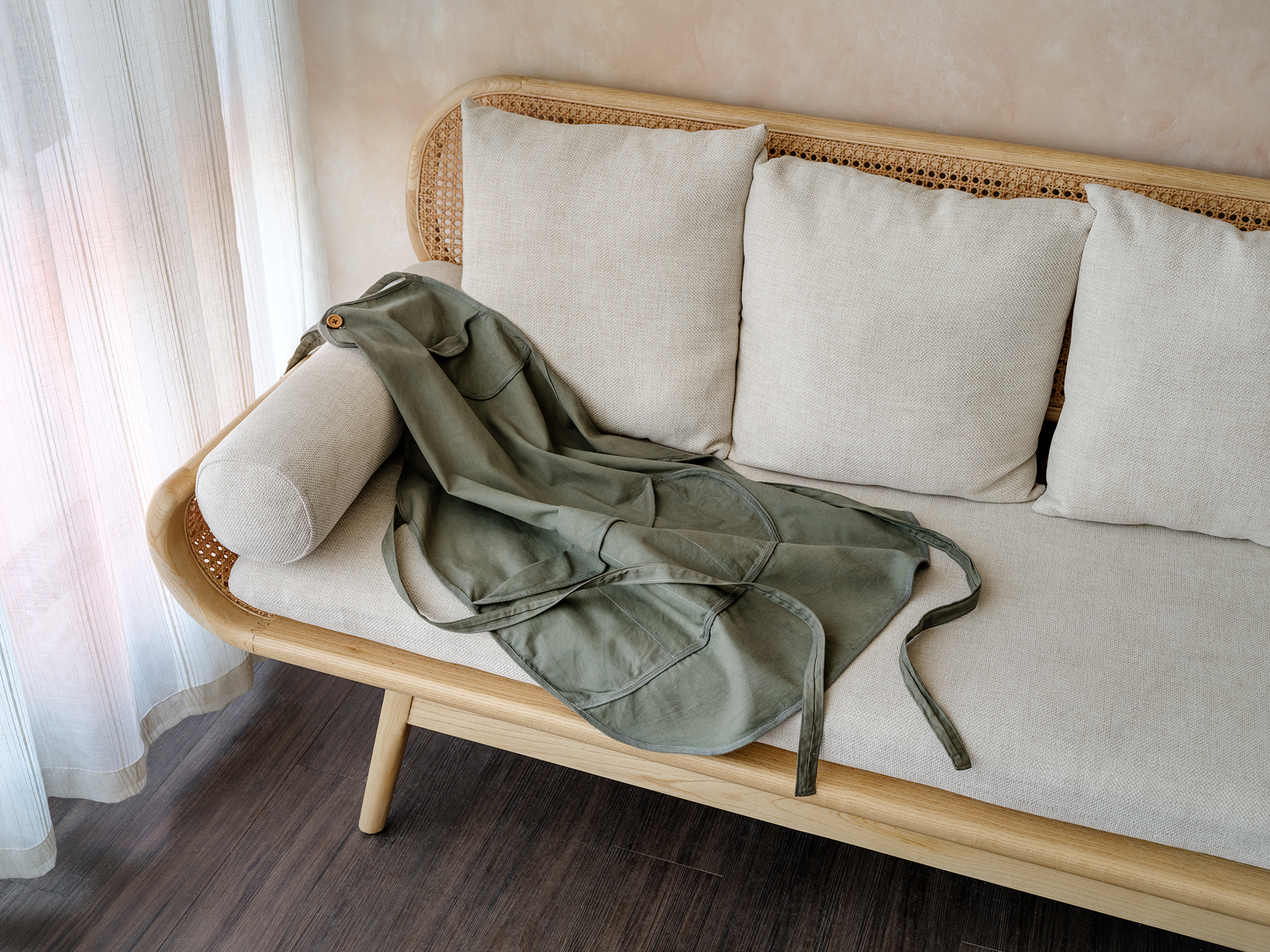
Using an inclusive and spontaneous approach, one large and one small pocket are cut and sewn onto the apron. The pockets are intentionally left unstitched at the top, allowing them to hang freely, giving a relaxed and unrefined look—just like how plants grow naturally.
A smaller pocket at the top of the apron holds small items, while the larger lower pocket includes hidden compartments that allow each tool to be stored appropriately. Even trimmed floral materials can rest inside the pocket, awaiting their turn to be used. During work, all commonly used floral tools and related items can be securely placed in the pockets, maintaining a clean and tidy overall appearance. The apron’s color is deliberately chosen from soil-dyeing effects that complement natural elements like dirt, leaves, pollen, and petals, allowing them to blend seamlessly into the garment.
Oliy’s Garden
每個季節都有不同的花草盛開,每朵花朵都有其含義和它專屬的色彩。花藝不僅是將花朵綻放的姿態捕捉下來、點綴我們的生活空間,還能建立人與人之間深厚的情誼。
正因燦爛有時,更顯珍貴。每一份來到手中的花禮,都是在對的時間、最好的緣分,不論對象是情人、長輩、朋友、晚輩,Oliy’s Garden認為它們是用來傳達心意最溫柔的方式,花藝師則是傳達信息的使者,將那些藏在贈送者心裡的話,化成一個個美麗的作品,陪伴著每個人人生中的不同重要時刻。
位於花蓮吉安鄉的花藝工作室「Oliy's Garden」,認為花朵是大地孕育的語言,用它繽紛的色彩及多變的姿態,敘說著你我心裡深處無法言喻的心意。
Oliy's Garden 提供花禮訂製、花束設計、空間規劃與創意花藝;也以充滿質感的花藝佈置,為新人打造難忘的婚禮,是花東深受歡迎的花藝工作室。
花束是最能表達心意的方式,也是最好的送禮選項之ㄧ。不管是花束、捧花或是盆花等,Oliy's Garden 都能嫺熟地運用鮮花、乾燥花甚至永生花,為客人量身訂製獨一無二的美麗花禮。
【店家需求】
1.工作圍裙
2.雕塑花材所需的各式小夾沒有足夠的口袋
3.常用工具的大小尺寸多元
【花藝工作圍裙】
以包容、隨機的方式,剪出一大一小的口袋,特意保留未縫製到頂的口袋開口,能自由垂墜,使之看起來更加率性、不修邊幅,恰如植物們自然生長的狀態。
圍裙上方的口袋可以放置較小型的物件,下方的大口袋則暗藏不同的分隔,讓每種工具都能適得其所,即使是剪下的花材,也能在口袋中安放,靜待出場的機會。工作時,所有常用的花藝工具與相關物品,都能被安穩地放置於口袋中,因此整體視覺上仍保有簡潔俐落的外觀,並刻意選擇了土壤泥染效果中能承接泥土、葉子、花粉和花瓣這些自然產物的顏色,令其無違和地融入圍裙裡。


萬榮瑞欣石礦場 Wanrong Ruixin Minesite
【Located in the Caogu’an Mountain area of Wanrong Township at an elevation of 1,200 meters, the Ruixin Minesite spans over 30 hectares. The primary mineral extracted here is serpentine, and the rocks often contain white or pale green asbestos veins. Such geological features are commonly found in the Coastal Range and the eastern side of the Central Mountain Range in eastern Taiwan. Mining activities began in 1986 and have since provided numerous job opportunities for local Indigenous communities.
This area was originally the traditional territory of the Dungku Asang group of the Bunun people. The entrance to the site is through Hongye Village, home to the Truku people. Due to overlapping living and hunting territories, the Bunun and Truku have long engaged in cultural exchanges and intermarriage. Their coexistence has given rise to a uniquely interwoven way of life.
【Raw Soil】Serpentine is a green metamorphic rock composed of serpentine-group minerals. After undergoing weathering, it produces soil with varying shades of murky grayish-green, forming beautifully diverse patterns that resemble snake skin.
【Soil Composition】Serpentinite has relatively weak resistance to weathering, so soil quality varies greatly across different terrains. Initially weathered serpentinite produces soil that is dark gray, shallow, and weakly to moderately alkaline. As weathering progresses and iron oxide accumulates, the soil color often turns red, soil horizons become more distinct, and the pH shifts to acidic.
【Collector】Vilian, Tulbus, residence of Ihownang Tribe, county councilor Zhi Long CHIEN
【Field Site】Areas where serpentinite is exposed represent former locations at plate boundary collision zones or orogenic belts. Oceanic plates were thrust into the mantle wedge due to collision and later uplifted and eroded, revealing them at the surface. The rock formations in Wanrong were formed through regional metamorphism.
【Location】23°29'31.392" N 121°18'16.7418" E
The collection site is located above Ruisui Forest Trail, at the boundary between Ruisui and Zhuoxi.
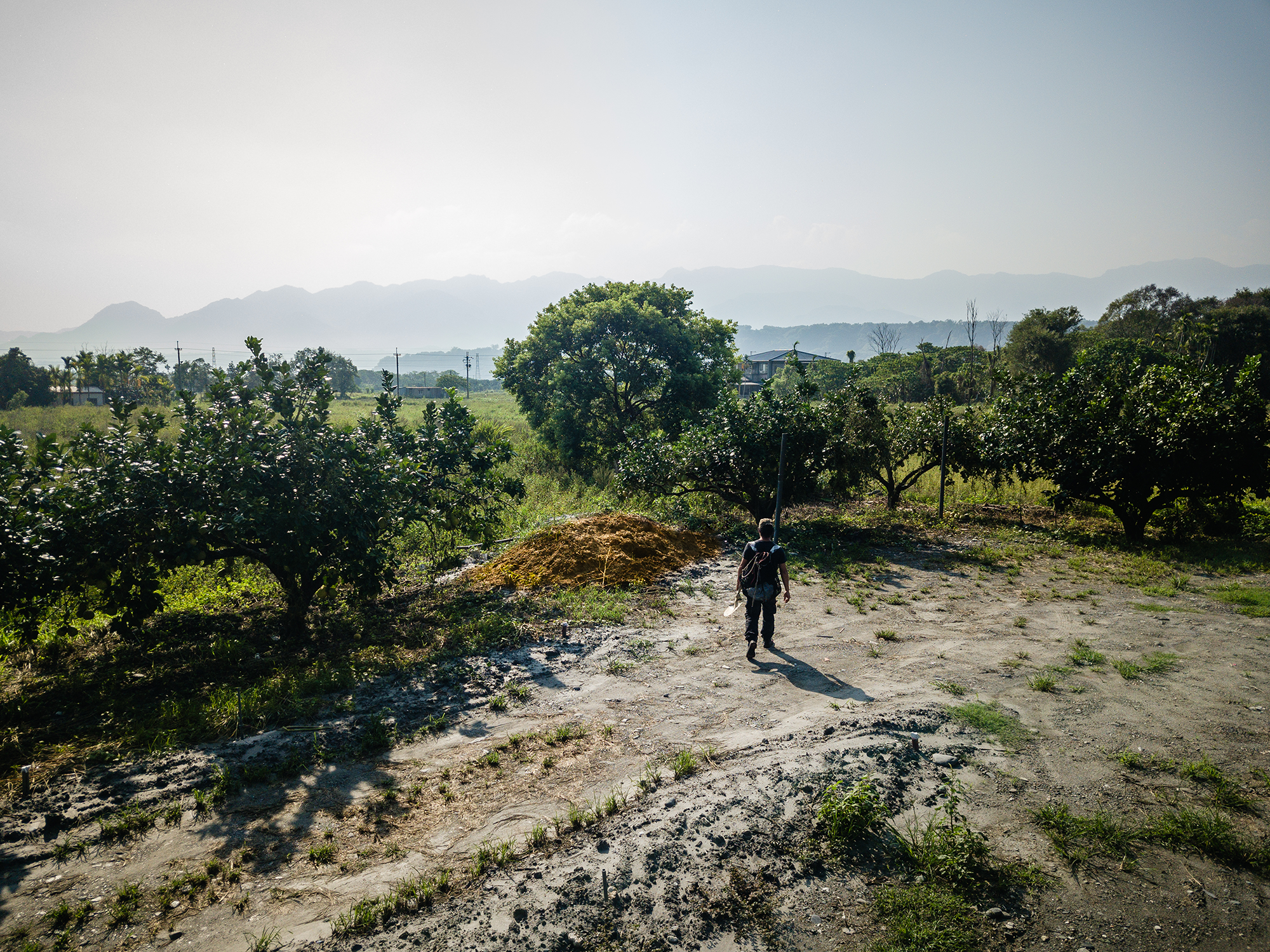
【Collection Process】Driving a four-wheel-drive vehicle across a small creek, winding up the Ruisui Forest Trail, the ground covered with abundant green powder and green gravel. Each slope and turn made the vehicle skid dangerously until reaching an altitude of 1,000 meters, where we started walking.
"My cousin worked here before. He said if you want to find green clay, first look for places with water and follow the animal tracks," said Tulbus, a Bunun from the Mayuan tribe. Following his footsteps along a game trail, we pushed aside a small patch of grass and saw a set of abandoned animal traps beside a small puddle. The green clay was right ahead.
"See, we found it. Animals look for water; where there’s water, there’s mud. Finding things in nature follows a logic," he said. The hunter knows how to read the signals in nature, understands where he is, and thus finds the right direction to move forward.
萬榮鄉的瑞欣石礦場,位於海拔1200公尺的草古安山山區,總面積約30多公頃,主要組成礦物是蛇紋石,岩石中常發現有白色或帶淡綠色帶狀的石綿,常出露在花東的海岸山脈與中央山脈東側。從1986年開始規劃、開採迄今,也創造許多當地族人的就業機會。這裡原是布農族丹社群傳統領域「Dungku Asang」,入口的紅葉部落是太魯閣族人的家,兩族之間因生活領域與狩獵區域相近,時有交流、通婚,因混居關係,交織出獨特的生活文化特殊性。
【原礦土】蛇紋石為礦物的綠色變質岩。經風化作用後,土壤呈現深淺程度不同的濁灰帶綠色澤,形成多變美麗的蛇皮紋彩。
【土質】蛇紋岩抗風化能力較弱,因此隨著地形不同,在許多地方土壤質差異很大。初步風化的蛇紋岩土壤顏色為暗灰色,土質淺薄,屬弱鹼性或中鹼性。隨著風化程度的提高,氧化鐵累積後,土色很容易變紅,土壤層次明顯,且PH值呈酸性。
【採集者】Vilian、Tulbus、紅葉部落居民、簡智隆議員。
【場域】蛇紋岩出露的地區代表曾位於板塊邊緣碰撞帶或造山帶,海洋板塊因碰撞作用移至混同層內,而後抬升侵蝕而露出於地表,萬榮的岩系受區域變質作用所形成。
【位置】23°29'31.392" N 121°18'16.7418" E
採集位置在瑞穗林道上方,位於瑞穗跟卓溪之交界處。
【採集過程】搭著四輪傳動的車穿過小溪,沿著瑞穗林道蜿蜒而上,地面有著大量的綠粉與綠色碎石,每一次的斜坡轉彎車子驚險打滑,直至海拔一千公尺的地方開始步行。「我表叔有在這邊工作過,他說要找綠泥就先找有水的地方,跟著動物的足跡就對了。」Tulbus是馬遠部落的布農族人,隨著他的腳步循著獸徑,撥開一小片草叢,看到小水窪旁躺了一組廢棄的捕獸夾,綠泥就在前方。「看吧,找到了,動物會找水,有水就有泥,在大自然裡找東西是有邏輯的。」獵人懂得閱讀自然裡的訊息,知道自己身在何處,才有正確前進的方向。


dot.dot. Bakery & Cafe
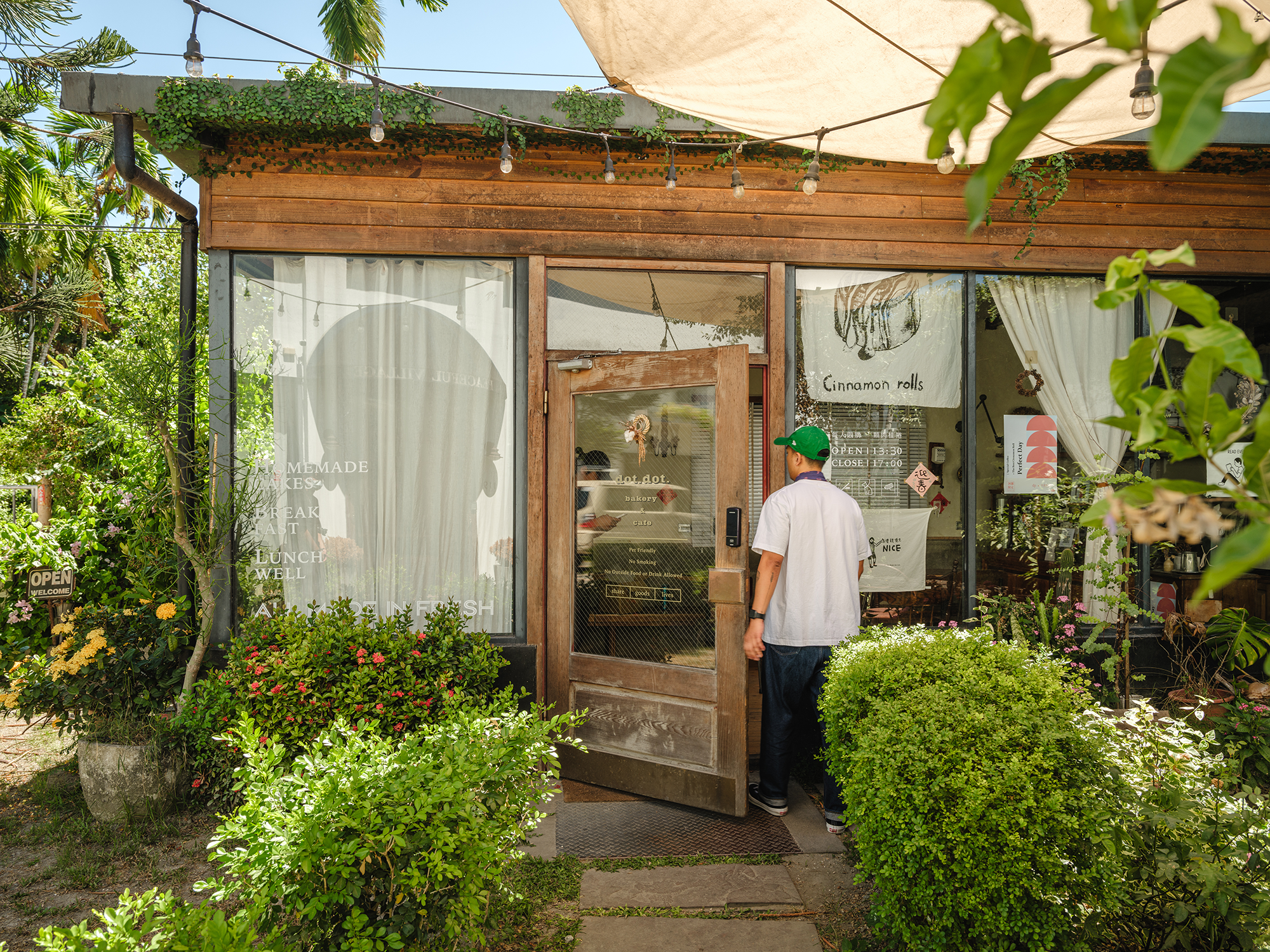
Hidden in Pinghe, Shoufeng, Dot.Dot. Bakery & Cafe feels like stepping into an old European countryside house. Owner Shen Shize loves antiques and outdoor activities. “I like things that carry a sense of time, and old items were crafted with great skill and cleverness — you can even see the maker’s personality in them.”
Born and raised in Hualien, his easygoing and sunny personality is reflected in how he runs his business. “I don’t worry about customers’ preferences or reviews. Creating my own rules is much more important.” Shen currently operates four shops in Hualien — Dot.Dot., Xiaohe Valley, Pinghe Hotel, and Xiaohe Village — each representing different facets of his life.
The European-style building features large floor-to-ceiling windows, plants, and wood against a snowy white facade, crafting a charming vision of modern rural living that attracts many young visitors.
To serve guests a truly “good” meal, ingredients come not only from his father’s fields and poultry farm but also from carefully selected local quality sources. Dot.Dot. stands firmly on its original values in both food preparation and attention to detail. Right next door is Xiaohe Village, a guesthouse run by family members, offering a cozy space for dining and lodging.
Famous for its snow-mountain cinnamon rolls nearly twice the size of typical ones, drizzled with homemade caramel and cream cheese sauce, the rolls are irresistibly fragrant and visually appealing. Reheated, they’re crispy on the outside and soft inside, making this cafe a must-visit afternoon tea spot for cinnamon roll lovers in Hualien. The shop also offers other delicious treats like scones and lemon pies, all worth trying.
【Space Requirements】
1.The main product, the Snow Mountain cinnamon roll, is larger in size.
2.The fresh cream cheese and caramel sauce melt and drip when heated.
3.Create a vivid visual impression.
【Serving Plate for Cinnamon Roll】
“The Snow Mountain cinnamon roll is like the mountains of Hualien in winter; when served, it’s like handing the guest a piece of the Hualien scenery I love.” To evoke a sense of “visual imagery,” “food form,” and “bread color,” a plate made from serpentine green clay with crystalline clusters was chosen. Its irregular edges present an organic, natural elegance on the dining table. Placing the Snow Mountain cinnamon roll on it resembles the condensed view of snowy mountain peaks in Hualien’s wintertime.
小和好點
藏在壽豐平和的小和好點,推開門像是進入了某個歐洲鄉下的老房子中,老闆諶世澤喜愛古董老件,也熱愛戶外活動,「我喜歡有時間感的東西,而且以前的東西作工很精細和聰明,還能看出製作者的個性。」
在花蓮出生長大的他,毫不拘束的陽光性格也反映在他的經營風格上。「我不去想客人的喜好或評論,創造自己的規則我覺得重要多了。」目前在花蓮共擁有四家店「小和好點」、「小和山谷」、「平和飯店」、「小和農村」,代表著諶世澤不同生活面向的自己。
以大量落地窗、植物、木頭,襯著雪白外牆的歐式建築店面,打造迷人的現代化農村生活想像,吸引許多年輕人來此造訪。
為了讓到來的旅客吃上一頓「好」的,小和的食材除了來自父親田地和養殖的雞鴨外,也嚴選在地優質食材,堅持初心在餐點製作和經營細節。小和好點旁緊鄰同為自家人經營的「小和農村」民宿,是餐飲與住宿空存的舒適空間。
販售著比一般肉桂捲近二倍大的雪山肉桂捲,淋上自製焦糖及乳酪醬,香氣與色澤都十分誘人,回烤後外酥內軟,是許多肉桂捲迷到花蓮必訪之下午茶小店。此外店內還有各式美味甜點,如司康、檸檬派等,都值得一試。
【店家需求】
1.主力商品雪山肉桂捲尺寸較大
2.鮮奶乳酪與焦糖醬加熱後會融化滑落
3.創造畫面感
【肉桂捲內用餐盤】
「雪山肉桂捲就像花蓮冬天的山一樣,端出去的時候如同遞給客人我所喜歡的花蓮風景。」
因應「畫面感」、「食物造形」、「麵包體顏色」,選擇以蛇紋岩綠泥燒製出帶有晶體集結而成的盤器,邊緣不規則的造形,在餐桌上呈現有機自然的氣質,擺上雪山肉桂捲後,就像濃縮了花蓮冬日時,高山頂上白雪靄靄的景緻。


ZuJian Energy Foot Care & Wellness Center
“Our technique is like acupuncture, focusing on pressing specific acupoints—not sliding or scraping with knuckles. Once you try it and like it, you usually become a long-term customer,” says Wang Shi-hao, who has been operating in Hualien for 15 years. Through word of mouth, the center has gained a strong local reputation. They offer a variety of massage services including foot reflexology SPA, essential oil SPA, body acupressure, and gua sha. They are often requested by hotels and B&Bs for on-site services. “From custom-sized chairs in the center to massage tables, and many portable tools for outcall services, ensuring customers feel comfortable in any environment is probably why we survived through the pandemic.”
ZuJian Energy Foot Care & Wellness Center provides professional foot massage to relax tired muscles and relieve daily stress. Their foot reflexology SPA includes sea-energy foot soaks and shoulder-neck massages, with focused acupoint stimulation techniques for deep relaxation and care.
Besides an open foot massage area, the center also offers private rooms. Full-body oil massages use medical-grade essential oils imported from the UK, allowing privacy-conscious clients to enjoy a relaxing mind-body-spirit SPA experience with peace of mind.
With a reservation of two or more people and a minimum spend of 1,000 TWD per person, professional massage therapists can be dispatched to city hotels and B&Bs for on-site service—so guests can recharge and relieve fatigue without leaving their accommodation, ready for the next day’s adventures.
【Store Requirements】
1.Adjustable pillows that can be customized according to body shape or mattress firmness
2.When there is no standard massage bed, lying face down without a face cradle requires raising the chest and neck to avoid a feeling of suffocation
3.Easy to carry
【Massage Pillow】
The body pillow is designed as a long cylindrical shape with a sculptural three-dimensional form that can be placed vertically for stacking or used horizontally. Whether lying on the back or stomach, it adapts to various movements and body support needs during massage sessions. It is also easy to stack and store in the shop, making it convenient for therapists to carry when providing off-site services.
足健能量足體養生館
「我們的手法像針灸一樣,是穴位的點壓,不是用指節滑、刮的形式,試過只要喜歡,大概就會成為我們長期的老客戶了。」在花蓮營業至今已十五年的王士豪,透過口耳相傳,在花蓮當地頗富盛名,店裡提供足壓SPA、精油SPA、身部指壓、刮痧等多元的按摩項目,也時常被飯店和民宿業者指定到府服務。「我們從店內椅子到按摩床尺寸都是訂製的,師傅外出服務也有許多小道具,怎麼讓客人在不同環境或條件下按摩都能感到舒適,應該就是我們在疫情時還能存活下來最重要的關鍵吧。」
足健能量足體養生館由專業按摩師提供腳底按摩服務,讓疲憊的肌肉得以放鬆,還能紓解生活壓力的緊張感。館內的足壓SPA,服務包括海能量泡腳及肩頸按摩,重點式穴位刺激的手法,能得到深層的放鬆與保養。
除了開放式的腳底按摩空間外,館內也提供隱密的個人空間。全身油壓按摩使用的是英國進口的醫療級精油,讓注重隱私的客人,也能安心享受身心靈的SPA饗宴。
只要提前預約2人以上單人滿千的服務,就能派專業按摩師傅到市區飯店及民宿進行服務,不用出門,也能為旅途充電,消解疲勞,更有活力進行隔天的旅遊行程。
【店家需求】
1.可以依據身形或床鋪軟硬度自由調整的靠枕
2.無標準按摩床時,正面朝下,臉部沒有可放置的孔洞,需墊高胸頸,避免窒息感。
3.方便攜帶
【按摩靠枕】
將抱枕設計為長形筒狀,雕塑感的立體造形能夠垂直放置與堆疊,也能水平使用,無論正躺、趴臥時,皆能適應各種按摩服務過程中的動作與身體支撐需求,在店內也容易堆疊收納,更方便師傅外出服務時隨身攜帶。


瑞穗溫泉 Ruisui Hotsprings
The Ruisui hot spring area was discovered by the Japanese in 1919. Due to its spring quality being the same as the "Kongin Double Baths" of Arima Onsen—renowned as a top-tier hot spring favored by the Japanese emperor—it quickly became a highly sought-after destination for bathing enthusiasts. A Japanese-style inn named "Tekisuikaku," equipped with a public bathhouse, was built here and ranked as one of the most luxurious resorts of its time.
Ruisui features two unique spring types: "chloride carbonate springs" and "bicarbonate springs." The chloride carbonate springs are rich in minerals such as iron and barium. When the iron in the water oxidizes upon contact with air, it forms a yellowish, rusty-colored crystalline layer on the water’s surface known locally as "yukabana" or "onsen hana" (hot spring flowers). This has earned the spring the popular nickname "Golden Bath."
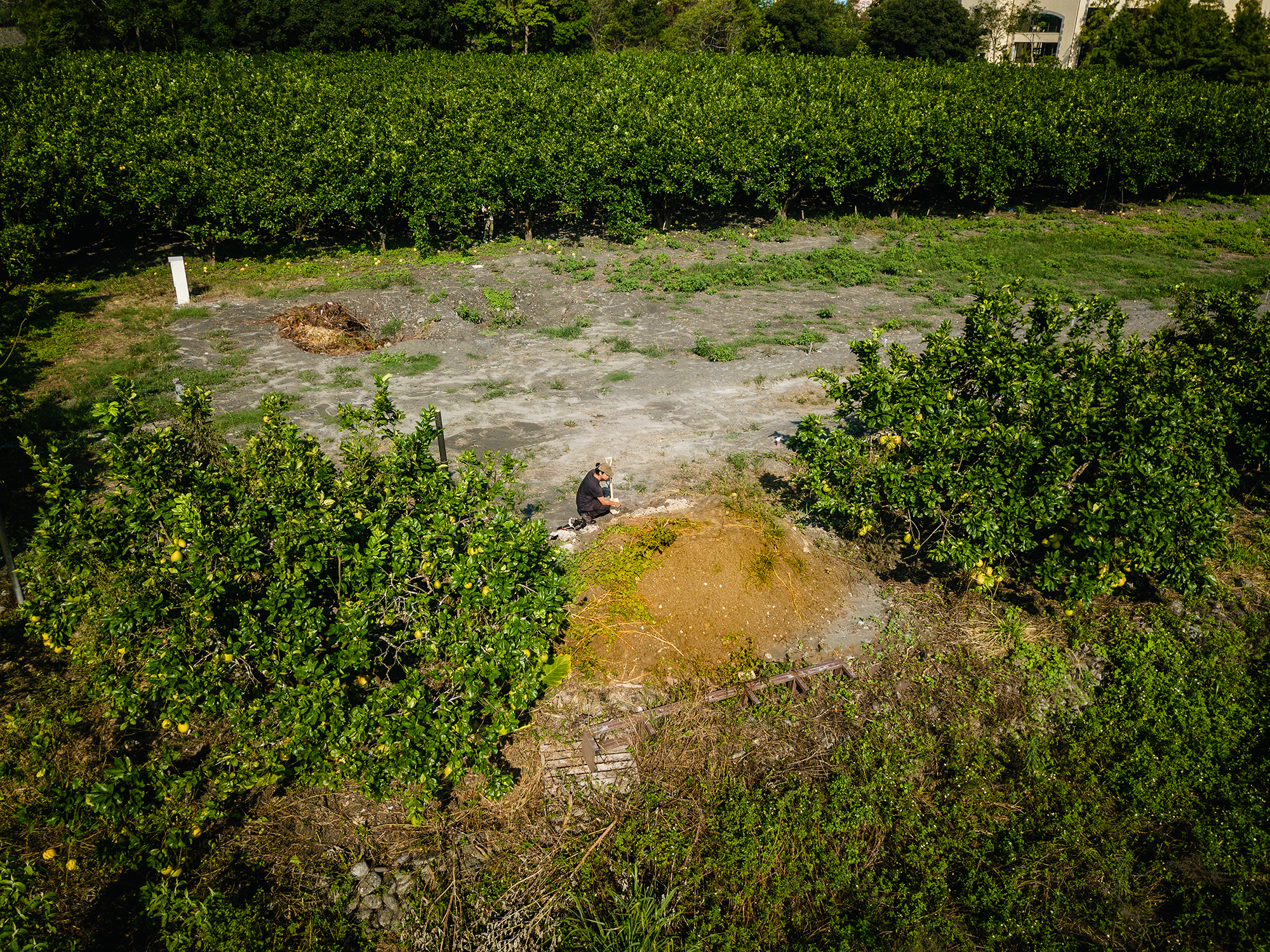
【Raw Soil】The local hot spring operators found yellow-gray-brown clayey sediment accumulated inside the pipelines.
【Soil Composition】The soil here mostly consists of alluvial deposits from the Central Mountain Range, composed of sand, gravel, and clay forming gray or brown-gray schist alluvial soil. It is a silty or sandy soil with abundant gravel.
【Collector】 Chun Chie CHIANG, Zhi Peng LIN
【Field Site】The hot springs in Ruisui Township, Hualien, are very popular with tourists. However, the wastewater drainage pipes often become clogged due to years of accumulated hot spring sediment. At regular intervals, operators must spend money to hire people to clean the pipes. The removed sediment is then dumped on private land, where it is mixed with the local soil and buried underground.
【Location】23°49’1.3360" N 121°35’6.8770” E
【Collection Process】Riding motorcycles with Lin Zhipeng and Jiang Junjie near the Hongye Tribe in Ruisui, they searched for traces of hot spring mud. "Many young people here probably have experience helping hot spring operators clean the sediment accumulated in the pipes. It’s a part-time job to earn some pocket money. Ah, over there!" Lin Zhipeng jumped off his motorcycle and grabbed a small, dry, hardened yellow stone. "This is it! Although cleaning the sediment is tough work, there aren't many job opportunities in rural areas like ours. So, this yellow mud is a headache for the operators since it’s classified as waste that can’t be dumped anywhere, but for us, it’s a source of livelihood!"
瑞穗溫泉區在1919年由日本人發現,因泉質與日本天皇級的有馬溫泉「金銀雙湯」相同,成為人人趨之若鶩的泡湯聖地,並興建了附設公共澡堂的日式旅館「滴翠閣」,是當年數一數二的高級度假旅館。
瑞穗溫泉區具有得天獨厚的「氯化物碳酸鹽泉」及「碳酸氫鈉泉」二種泉質,氯化物碳酸鹽泉中富含鐵、鋇等礦物質,泉水中的鐵質遇到空氣氧化後,會在水面形成一層略帶鐵鏽味的黃濁色結晶物,俗稱「湯花」或「溫泉花」,故大眾以「黃金湯」稱之。
【原礦土】地方溫泉業者於管線內的溫泉淤積土,呈黃灰褐色黏土質地。
【土質】這裡的土壤多為中央山脈之沖積物,為砂、礫石、黏土組成之灰色或棕灰色片岩沖積土,屬於多礫石之粉質或砂質土壤。
【採集者】江俊傑、林志鵬
【場域】花蓮瑞穗鄉的溫泉深受遊客喜愛,但溫泉的廢水排水溝因為長年累積溫泉泥,容易造成管線的阻塞,固定一個週期時間,業者便須花錢請人去清理,並傾倒在私人土地,與當地的泥土混合後在埋進地底。
【位置】23°49’1.3360" N 121°35’6.8770” E
【採集過程】跟著林志鵬與江俊傑騎著機車在瑞穗的紅葉部落附近找尋溫泉泥的蹤影。「我們這邊很多年輕人應該滿多都有去幫溫泉業者清理淤積在管線內的溫泉泥的經驗,就是去打零工賺點零用錢,啊,那邊有!」林志鵬跳下機車,抓了一塊乾透硬化的黃色小石塊。「就是這個了!雖然清淤泥很辛苦,但我們鄉下地方本來就沒什麼工作機會,所以這些黃色的泥對業者來說是個困擾,屬於不能亂傾倒的廢棄物,但對我們來說是生活費用啊!」


Ba han han non
“The quality of tea is only known after you taste it! Winning awards just makes people think it’s an excuse to raise prices. I'd rather let people experience tea with all five senses,” says Peng Wei-Hsiang, the fourth-generation tea grower at Jilin Tea Garden. Rather than chasing accolades, he prefers to connect directly with visitors. In front of the tea fields, he has established the “Good Tea Coffee Studio,” offering hands-on experiences such as a day in the life of a tea farmer and customized tea ceremonies. The studio also serves Mahe’s renowned coffee, along with guided tastings and coffee farm tours.
With a youthful perspective, Peng brings a more approachable and engaging way to grow and enjoy tea, giving the longstanding tea brand a fresh and modern identity. Personally involved in everything from weeding, fertilizing, tea production, packaging, to customer service, he identified and improved many subtle factors that affect quality and flavor—details that were often overlooked in the past. Thanks to this meticulous attention, the tea here boasts a sweet aftertaste, clear liquor, and rich aroma, earning loyal fans through word of mouth and excellent service.
Good Tea Coffee Studio blends the tea garden and factory into a unique tasting space where visitors can witness the entire tea-making process firsthand. Each tea tasting is paired with storytelling, creating a warm and relaxed atmosphere that keeps guests coming back.
In recent years, Peng has moved beyond traditional tea sales by creatively incorporating the local Canaan tribal culture. Collaborating with coffee roasters and offering experience-based activities, he promotes food and agricultural education. Fusing the tenacious spirit of his Hakka heritage with the vibrant energy of the Amis people, he created “Diamond Canaan Coffee.”
【Store Requirements】
1.Can distinguish between teas made using different methods
2.Can hold multiple types of products at the same time
【Serving Plate】
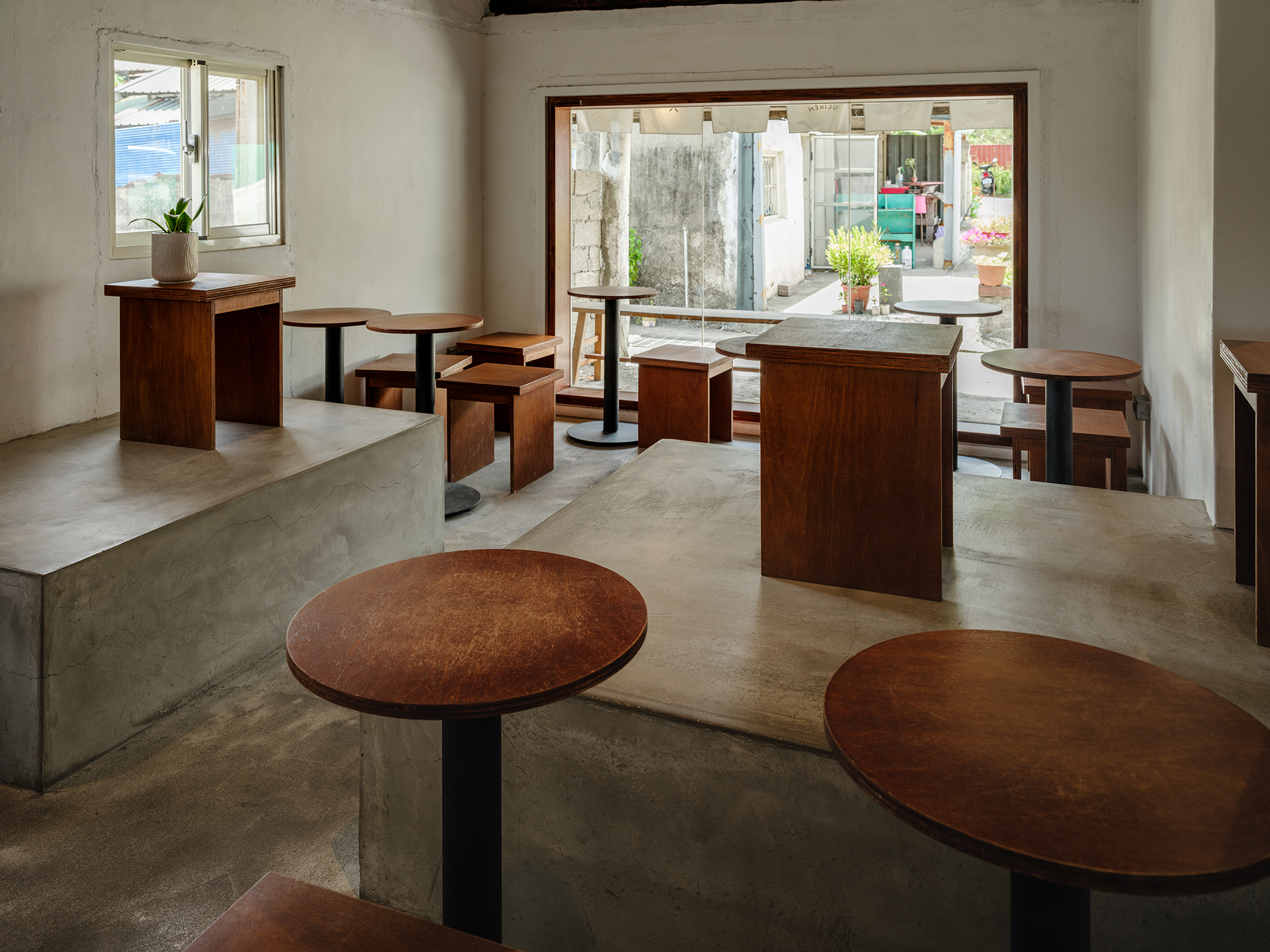
“Tea-making is also a form of craftsmanship—things shouldn’t be too complicated. Simplicity, purity, and authenticity are best!” This is how Peng Wei-Hsiang envisions his ideal tableware. Two different-sized plates are hand-formed with a free, spontaneous touch, allowing users to adapt their contents according to various serving contexts and needs. The grooves on the tea plate help divide the space—one side can hold tea for tasting, the other side snacks, or even three different kinds of tea and treats simultaneously. The plates are made from Ruisui hot spring clay, which leaves unique traces from incomplete combustion during firing, echoing the Jilin Tea Plantation’s emphasis on natural, organic, and hand-picked tea-making processes.
好茶咖啡工作室
「茶好不好,喝了才知道!得了多少獎大家只會覺得是拿來變貴的理由,不如讓人直接可以用五感品茶。」吉林茶園第四代彭瑋翔比起得獎,更想和來到此地的人們直球對決!
在茶園前打造「好茶咖啡工作室」,開發各式體驗行程,像是茶農日常體驗與客製茶席等;工作室也提供舞鶴著名的咖啡,與相應的品咖啡及咖啡園導覽體驗等。彭瑋翔用年輕人的視角,將種茶、品茶的過程變得更為親民有趣,讓老字號茶園有了嶄新的面貌。
從除草、施肥、製茶、包裝銷售、客服等工作都親自參與,找出過去製茶時不曾留心但影響品質與口感的諸多細節並一一改善,種種堅持下讓這裡的茶喉韻甘甜、茶湯澄淨、茶香濃厚,透過口碑行銷以及良好的服務態度,收穫許多忠實茶客的支持。
好茶咖啡將茶園與製茶廠完美融合,營造出獨特的品茶空間,讓每位客人都能清楚看見夥伴們親力親為的製茶過程,在招待客人品茶時一併分享故事,這樣的親和與愜意,讓每位來的客人都流連忘返。
彭瑋翔近年來跳脫傳統茶葉銷售方式,發揮巧思結合在地迦納納部落的文化元素,與咖啡烘焙合作,並融入體驗活動,推廣食農教育,以堅忍不拔的客家硬頸精神,揉以阿美族的熱情奔放,打造「鑽石迦納納咖啡」。
【店家需求】
1.可區隔不同製法的茶葉
2.可同時盛裝不同品項產品
【內用盤器】
「製茶也是做手工的人,東西不要太複雜,簡單純粹又原味最好!」是彭瑋翔對於器皿的想像。以隨機手捏的自由造形,製成兩種不同尺寸的盤器,根據不同的使用情境自由變換放置的內容物,達到各種彈性使用上的需求。茶盤上的溝槽,可以方便使用者在盤中做出分區,一邊可以放上供客人品茗的茶,一邊可放上茶點,或同時呈現三種不同的茶葉與茶點。瑞穗溫泉泥製成的盤器,在燒製過程中因為空氣燃燒不完全而產生的有趣痕跡,就如同在吉林茶園中特別重視天然、有機、手採的製茶過程一般。


The Fishery
"How can Taiwanese people not understand Taiwan’s own fish? The Pacific Ocean is right in front of us!" This sentiment drove Jen Yu-Hsin—whose wife’s family runs the Dong-Chang Set-Net Fishery at Qixingtan—to take action. Through his connection to the fishery, he came to understand the local fishing and market ecosystem, and the challenges fishermen face under declining marine resources and wholesale pricing systems. Leveraging his background in the restaurant industry, Jen sought to increase fishermen’s income by integrating local catches into his restaurants, while promoting sustainable fishing practices. "Our fish broth is actually my wife’s family’s secret postpartum and lactation remedy—what others see as leftover bycatch or fish bones are our secret weapons!"
The set-net fishing method, originally introduced from Japan, is a selective and sustainable way of catching marine life. Inspired by this, The Fishery: Third-Generation features a Japanese-style storefront: a striking white standalone building adorned with a giant woven bamboo fish basket and a traditional noren curtain bearing the Chinese character for "fish" (漁), all designed to catch the eye of passersby. Inside, warm wooden furniture and marble countertops exude a calm elegance. Diners seated at the bar can watch the chefs prepare dishes up close in a bright, open kitchen that feels clean and reassuring.
Fresh seafood is delivered daily from Dong-Chang Set-Net Fishery and personally overseen by Huang Chien-Wei, the young owner of the fishery. Wild-caught local species like mahi-mahi are transformed into a variety of dishes—from sashimi and seafood rice bowls to fried and pan-seared options. Even fish bones are utilized in rich broths for ramen, attracting both locals and tourists.
Signature dishes include yuzu-pepper noodles, locally sourced shrimp paste-fried squid, and crispy mahi-mahi bites—all must-tries. The flavorful bone broth and noodles are served with unlimited refills. As the restaurant doesn’t take reservations and offers a limited daily menu, early arrival is recommended to secure a spot and avoid disappointment.
【Store Requirements】
1.Primarily designed for individual dining scenarios
2.The interior features clean, straight lines—rounded elements are desired to create visual balance
3.The space is small and seating is narrow, so large objects are not suitable
【Dining Mat】
The ramen dishes are primarily served in an individual dining format, and the counter seating is not suitable for large tablecloths. Therefore, the design centers around individually sized mud-dyed fabric pieces. The natural, earthy tones of the mud-dyed cloth are transformed into irregular, pebble-shaped placemats, reminiscent of the pebbles found on the shores of Qixingtan. This design aims to bring the imagery of the coastline’s varied stone beach onto the dining table, creating a playful visual echo against the marble tabletops.
定置漁場三代目 The Fishery
「台灣人怎麼可以不懂台灣魚,太平洋就在眼前耶!」由於太太的娘家在七星潭經營「東昌定置漁場」的任聿新,間接了解到當地漁業與市場生態的問題,在海洋資源逐漸匱乏與盤商制度下,漁民的生活越來越不容易,使他開始思考如何透過擅長的餐飲業,提升漁民收益,大量使用在地漁貨進入自身經營的餐廳之中,希望能改善漁民銷售結構,並推廣永續發展理念。「我們的魚湯頭其實是太太娘家祖傳坐月子和泌乳的秘方,別人不要的雜魚或魚骨,是我們獨特的武器!」
定置漁法過去是從日本引入、對於捕獲海洋生物擁有選別性的漁法,故「定置漁場三代目」以日式風格打造店面氛圍,門口以純白的透天獨棟建築,襯托出巨大吸睛的竹編魚簍,和寫著「漁」字樣的日式掛簾,吸引客人目光;店內大量木傢俱以及大理石桌面,給人一種沈穩內斂的氣質,坐在吧台前用餐時,師傅就在你面前料理,明亮的採光、開放性的工作空間,讓人感覺十分乾淨且安心。
店內每日的新鮮漁獲皆來自東昌定置漁場,由漁場小老闆黃建衛親手掌控,使用花蓮近海的野生海魚如鬼頭刀,一魚多吃的方式料理成美味的生魚片、海鮮湯飯、炸魚塊、煎魚,就連魚骨也不浪費,用來熬製白湯拉麵,吸引眾多遊客前來朝聖。
店內的招牌柚子胡椒麵、本港蝦醬炸透抽、炸鬼頭刀魚塊都是來到定置漁場三代目不可錯過的必吃餐點,且以魚骨熬煮的濃郁湯頭及麵條,在店內都可以無限續加吃到飽。因沒有預約服務且餐點皆每日限量供應,建議提早至現場登記候位,以免向隅。
【店家需求】
1.個人用餐形式的使用情境為主
2.空間內的線條較直線俐落,希望可以有較圓潤感的東西與之平衡
3.空間較小,座位狹窄,不宜太大的物件
【餐墊】
拉麵品項主要為個人用餐的形式,加上吧檯座位不適合大尺寸餐桌巾,而以個人形式的泥染布料設計為主要思考。
將泥染原布質樸的色澤化身成一個個不規則卵形的餐墊,就像拾起同樣位於七星潭的鵝卵石,希望將海岸邊深淺不一的石頭海灘意象帶到餐桌,鋪在大理石製的桌面上,產生相互呼應的趣味。


清水溪上游(清水部落)Saiku
Saiku Village, known in Mandarin as Qingshui Village, is located in Zhuoqing Village, Zhuoxi Township, Hualien County. The majority of current residents belong to the Bunun people. During the Japanese colonial period, this area became a relocation site for the Bunun’s Is-bubukun and Takbanuaz groups. Originally living in the Lakulaku River Basin, the Bunun were collectively relocated here by the Japanese via the Batongguan Traversing Trail from Dafen. The name “Saiku” means “the place where the river bends.” However, after heavy rain and a sudden rise in water levels, the river quickly returns to clarity the next day, hence it was also called “Manias,” meaning “clear water.” During the Japanese rule, the village was named “Sisui,” based on the Indigenous meaning, and in the post-war Republic of China era, it became officially known as “Qingshui.”
【Raw Soil】Silver-white soil.
【Soil Composition】The cause of its formation remains unclear.
【Collector】Vilian, Tulbus, residence of Qingshui Village
【Field Site】Above the Zhongzheng community in Zhuoxi lies a mining site under development, with primary mineral veins consisting of marble, serpentinite, and talc. It is widely speculated that the soil in this area may have formed from the weathered remnants of talc; however, due to the lack of scientific research and data in the past, this remains unverified.
【Location】23°16'4.7022" N 121°11'57.2686" E
【Collection Process】Following the Qingshui River upstream, the water remains crystal clear along the way. “Even though it’s called the Clear Water River, the water isn’t safe to drink,” warns Tama of the Qingshui community, lighting a cigarette. “The elders say it contains heavy metals that could make you sick. But animals still cross mountains to drink from it — there are even bears around here.”
After a two-hour journey navigating steep slopes and landslide zones — and a brief standoff with a snake blocking the path (which, according to Bunun custom, we waited to pass first) — we pushed on through sambar deer trails, getting scratched and cut by tall, overgrown silvergrass. Finally, we arrived at the sunlit hillside Tama had described, where a wide patch of silver-white soil sparkled blindingly.
“No one knows why this spot is the only one like this,” Tama said. “But the elders, now in their seventies and eighties, say this soil was already here when they used to hunt or fix water pipes in the mountains as kids.” Looking down at the fresh hoof prints of a sambar deer in the soil, we scooped the shimmering earth into bags — perhaps it’s even a remnant of the giants’ battles once told in local legends?
Saiku部落,漢語稱做清水部落,位在花蓮縣卓溪鄉卓清村,目前部落中的居民以布農族居多。此處為日治時期布農族郡社群(Is-bubukun)和巒社群(Takbanuaz)之遷徙地。族人原居於拉庫拉庫溪流域,被日人自大分經八通關越嶺路集體遷徙於此後,稱此地為「Saiku」,意指河川彎曲之地。但在大雨來臨,溪水暴漲之後,隔天溪水會迅速恢復清澈,因此又稱之Manias,意指清水。日治時期取族語之意義,取名為「Sisui」,民國時期則取名為「清水」。
【原礦土】銀白泥。
【土質】形成原因尚不明朗。
【採集者】Vilian、Tulbus、清水部落居民。
【場域】在卓溪中正部落上方有個施工礦區,主要礦脈為大理石、蛇紋岩和滑石,眾人推測此地的泥土可能是由滑石的風化物積累而成,但因過去未經過科學數據的研究調查,難以證實。
【位置】23°16'4.7022" N 121°11'57.2686" E
【採集過程】沿著清水溪一路往上,沿途溪水清澈見底。「這裡雖然叫清水溪,但水不能喝,老人家說水中蘊含許多重金屬,喝了會生病,但是動物會翻山過來這裡喝水,而且是有熊出沒的地方。」清水部落的Tama點著煙提醒著。
經過兩個小時的路程,順利通過了幾個大陡坡與崩壁,路上還遇到一尾蛇擋路,按照布農族的習俗等到蛇先離開了我們才繼續前進。鑽進水鹿的獸徑、在被比人高的芒草堆裡割得遍體鱗傷後,終於找到Tama口中在陽光下閃耀著刺眼光芒的一大片銀白泥土丘。「沒人知道為什麼只有這裡有,但現在七八十歲的老人家都說這些土在他們小時候上山打獵或修水管時就存在了。」看著銀白泥上的水鹿蹄印,一鏟一鏟地將其裝袋,不知道是不是以前地方傳說故事中巨人打架留下的痕跡呢?


TIPI HOUSE
Inside a humble corrugated metal shack by the coast of Qixingtan, Jimmy and May have crafted an intimate private kitchen offering refined whole-fish and vegetable-based cuisine.
“We hope to start a fishing village revival from the dining table — this is the gateway for people to begin understanding life in the fishing village,” they say. Through food, they share stories of the ingredients and what’s happening in the ocean around them.
They feature freshly caught wild fish that migrate through Qixingtan — such as mackerel tuna, mahi-mahi, skipjack, albacore, narrow-barred Spanish mackerel, and round scad — paired with locally grown Hualien produce like rice, watermelon, knotweed, and sea scallions. These seasonal ingredients are transformed into refined, set-menu meals that have built a word-of-mouth following among food lovers.
Step through the front door, and you'll find a surprisingly charming traditional mud-brick house hidden within the metal exterior. The corrugated metal was originally added to protect the ancestral home from the harsh ocean winds and salt, a rough yet practical solution. Designer Juan Chen-Ji has blended this raw, rustic fishing village aesthetic with industrial design to create a unique, ocean-facing dining space with character.
“TIPI HOUSE” specializes in Mediterranean-style set menus. The dishes are designed around freshly selected catches of the day and seasonal, local ingredients from Hualien. Each guest enjoys an eight-course meal, including amuse-bouche, salad, appetizer, fish dish, soup, grain course, main dish, and dessert. A selection of wines from the chef’s private collection is also available for pairing.
All seafood served comes from Dong Chang Set Net Fishery, and ingredients are organic, toxin-free, and locally sourced. In line with their commitment to freshness and sustainability, dining is by reservation only, with just one group served per meal. The group size is limited to between 6 and 14 people.
【Store Requirements】
1.Unlimited versatile functions
2.Can also serve as home decor when not in use
3.Does not occupy space or creates space
【Floor Mat】
"Everyone wants to just lounge around after eating, especially after drinking — if they can casually sit or lie down, it feels even more like dining at a local friend's home!" Becoming part of the space, decorative, and offering freedom — these three key elements became the focus for this area.
To meet these needs, a large-scale floor mat was used, breaking away from the usual strict rectangular shapes of typical mats or picnic blankets. Instead, multiple randomly cut rectangles were sewn together, with horizontal lines embossed on the surface. This design allows for flexible extension, enlargement, and reduction, perfectly complementing the experimental atmosphere of TIPI HOUSE without any sense of mismatch.
TIPI HOUSE
在七星潭海邊一棟不起眼的鐵皮小屋裡,Jimmy與May打造精緻全魚蔬私廚料理。「我們希望從餐桌開始一場漁村復興運動,這是一道讓大家開始認識漁村的門。」兩人透過料理,分享食材與這片海洋正在發生的事。
他們把七星潭洄游的煙仔虎、鬼頭刀、鰹魚、雨傘旗魚、土魠(棘鰆)、四破(頷圓鰺)等新鮮野生海魚結合花蓮在地物產,如稻米、西瓜、綬草、海蔥等,依時令推出無菜單的精緻料理,在饕客的口耳相傳下,逐漸闖出名號。
打開大門,藏在鐵皮小屋內的是別有洞天的古早泥磚屋,是過去為了降低祖厝因海風與鹽分造成的快速損耗,而直接在屋外搭上鐵皮作為保護,阮振吉將這直接粗獷的漁村風格融合工業風,打造成可以直接面對大海用餐、獨一無二的個性空間。
「TIPI HOUSE」主打地中海無菜單料理,依每日嚴選新鮮漁獲及花蓮在地食材,來設計餐單內容,每人皆可嚐到八道菜,包含開胃菜、沙拉、前菜、魚料理、湯品、主食、主菜及甜點,另可加點主廚私藏的多款葡萄酒。
店內使用的海鮮皆來自東昌定置漁場捕撈,使用有機、無毒的花蓮在地食材,將自然永續的精神藏在每道菜裡。為保食材新鮮,採完全預約制,每次只接待一組客人,人數以6到14人為限。
【店家需求】
1.沒有限制的多元使用功能
2.不使用時也可以成為居家裝飾
3.不佔空間或創造空間
【地墊】
「大家吃飽了就想癱著,尤其喝了酒就更懶,如果可以隨性坐躺,就更像到在地朋友家吃飯的感覺了!」
成為空間的一部份、裝飾性、自由度三大要素,成為此場域的思考重點。透過大尺度的地墊來達成需求,並打破一般地墊/野餐墊規矩方正的形狀,而是使用多個隨機剪裁的矩形車縫固定在一起,表面壓上水平線條,使之充滿可自由延伸放大縮小的可能性,與「TIPI HOUSE」充滿實驗性的空間氛圍毫無違和的搭配在一起。


Yuciren
“Simple, fun, and ideally something that makes people exclaim, ‘How is this even possible!’ — that’s often how I approach product design.” Since moving to Hualien two years ago, Ruan Zhenji, who has opened four stores in a formerly sparsely populated fishing village, has continually amazed people with his creativity. The old, dilapidated smoked bonito house has transformed into a new hotspot for the younger generation around Qixingtan, Hualien. Often creating locale-specific exclusive products for his shops, his business philosophy is frequently repeated: “Good taste is the most basic requirement for food — that doesn’t need to be emphasized. Beyond deliciousness, whether you can create other reasons to attract customers is the key to survival outside city centers!”
This historic wooden building, located right by the Qixingtan seashore, combines rich cultural vibes with playful illustrations, making it very popular with young people. Visitors can comfortably enjoy egg waffles inside or take them out on cool days to relax by the beach.
Internationalizing local street snacks, the café improves traditional classic egg waffles by incorporating high-quality Taiwanese ingredients in the fillings. The waffles are golden and crispy on the outside, with rich, satisfying fillings that surprise and delight from the first bite, elevating a childhood snack into a refined afternoon treat.
Exclusive to the Hualien Qixingtan location is the limited-edition flavor “Zengshuigang Red Bean Mochi Egg Waffle,” which uses the famous local brand Shuigangbo’s classic red bean mochi—well-loved in Hualien for over half a century—as filling, creating a uniquely chewy and bouncy texture inside the waffle.
【Store Requirements】
1.Fun and interesting
2.The freshly baked egg waffles become soggy at the bottom when placed in containers due to steam, affecting the texture.
3.Able to interact with customers
【Serving Plate】
“Egg waffles are snacks full of childhood fun and memories, so if the dining experience can feel playful and memorable both before and after eating, it makes visiting here truly special.”
Grasping the sense of playfulness and interactivity, while considering that freshly baked waffles lose texture when placed on non-ventilated plates due to steam, was central to the design thinking. To solve this, the plate includes hand-crafted 3D fish and chicken figures at its base, creating breathing space between the waffle and plate bottom. After eating, these figures can be picked up and used through the holes for various photo interactions, creating a unique memory of the fishing village experience.
魚刺人雞蛋糕咖啡館——花蓮七星潭店 Yuciren
「簡單、好玩,最好是會讓人喊出:怎麼會這樣!就是我時常在思考產品的方式。」移居花蓮兩年以來,在原本人煙稀少的小漁村一連開了四家店的阮振吉,總是讓人對於他的創造驚呼連連。過去燻柴魚的破舊老房,搖身一變成為年輕世代中新的花蓮七星潭打卡熱點。時常為店家創造屬地性限定商品的他,時常掛在嘴邊的經營心法 - 「東西好吃是餐飲最基本的事,根本不需要強調,除了好吃以外,是不是還能創造其他吸引人來的理由,才是在非城市中心能生存下來的關鍵!」
這座老屋緊鄰於七星潭海邊,富滿歷史的木造建築配上童趣的插圖,散發濃厚的人文氣質,深受年輕人喜愛。遊客不僅可以在店內舒服地享用雞蛋糕,也可在天氣涼爽的時候,外帶到海邊悠閒地放空。
將在地街頭小吃國際化,改良傳統的經典雞蛋糕,融合台灣優質在地食材製成的內餡,使外皮金黃酥脆,內餡飽滿實在,一入口即讓人感到驚豔,讓兒時零嘴搖身一變成為精緻的下午茶點。
屬於花蓮七星潭店獨有的限定口味「曾水港紅豆麻糬雞蛋糕」,是把在花蓮紅過半甲子的地特產品牌,水港伯經典紅豆麻糬變成內餡,包在雞蛋糕中,創造全新Q彈的口感。
【店家需求】
1.好玩有趣
2.剛烤好的雞蛋糕放置於器皿中時,因熱氣導致底部受潮影響口感。
3.能與客人產生互動
【內用盤器】
「雞蛋糕是充滿童趣與回憶的零嘴,所以餐點在使用前與使用後如果都能充分地感到有趣以及創造回憶,就會讓來到這裡的意義變得很不一樣。」
掌握童趣、互動性,同時考量剛出爐時的蛋糕體,接觸不通透的盤器造成熱蒸汽破壞口感的情形為設計思考的重點。為盤器單獨製作底部充滿孩子樸拙手感的魚、雞立體造形物件,創造出雞蛋糕與盤器底部的呼吸空間,當餐點吃完後,魚與雞可以拿起來透過孔洞提供旅人各種攝影互動需求,創造獨特的漁村記憶。


2022
Hualien Soil Color
Translating Hualien’s natural and cultural resources, this project seeks to uncover and integrate the region’s often overlooked intangible heritage and centuries-old craft techniques. By combining local, native materials with contemporary tools and technologies, it creates products that are uniquely rooted in Hualien. Grounded in everyday life experiences, it explores the interdependent relationship between people and the land—collecting soil from the surrounding environment and examining the subtle expressions hidden within.
Through hands-on touch, deconstruction, and experimentation, the ancient techniques of mud dyeing and ceramic firing—which have long existed across human societies—are reintroduced. Over one hundred variations in texture and coloration were tested using locally gathered soils. Finally, through field research across ten distinct and character-rich local businesses, the insights were translated into ten practical lifestyle objects using design as a tool.
Each small discovery buried in the soil becomes a thread, weaving together a deep, inseparable connection between people and the land.
Liu Liu
Dining table cloth
Deep Breath B&B
Planting pot
Yuciren
Serving plate
Taiwanese Tea Perfume - P.Seven
Scent candle containter
Ba han han non
Serving plate
dot.dot. Bakery & Cafe
Cinnamon serving plate
ZuJian Energy Foot Care & Wellness Center
Massage pillow
Oliy’s Garden
Florist apron
The Fishery
Dining mat
TIPI HOUSE
Floor mat
2023 | Hualien Color #001| Hualien
adviser|Hualien County Government
organizer|Culture Affairs Beauru, Hualien County Government
operator|Hualien Design Center
co-organizer|Hualien Forest District Office, Forestry and Nature Conservation Agency, Taiwan Sugar Corporation
executor|Sen Shen Studio
plan host | Sheng Da TSAI
art director|Cheng Tsung FENG
craftsman|Chia Pe WU, Iyas
project designer|Sheng WANG
graphic design|Hong Lin LIU
journal copywrite|Sheng Da TSAI, Pei Lin KUO, Yi Lin CHEN
arts administration |Yun Han KAO
woodwork|Weige Interior
lighting design|Oude Light
lighting engineer|Beamtec Lighting
printing | 6Jian Into
photography|FIXER Photographic Studio, Bo Han CHEN
2022
花蓮人拾花蓮材 # 001 取色於土壤的創造計畫
將花蓮的風土資源轉譯,讓地方不易覺察的無形文化資產、千百年來積累的工藝技術,梳理、整合進而運用,並以地方原生的天然材料,導入當代技術與工具,創造花蓮的專屬限定。從地方生活的經驗出發,探尋人們與土地相互依存的軌跡,應用生活周遭可隨手採集的土壤,梳理藏在其中的細微表情。藉由雙手實際觸摸、感受、拆解、實驗,導入早已存在於人類社會裡,跨越時間與空間的古老工藝「泥染」與「陶燒」技法,測試出超過百餘種土壤轉換後的質地與成色效果。最後經由實地訪查十組各式風格獨具的代表性店家,應用設計工具,將之轉譯成十個生活物件。
每一個隱藏於土壤之中的微小發現,串起人與土地之間密不可分的深刻聯結。
流流社原住民風味餐廳
餐桌布
梯田山民宿
植栽盆器
魚刺人雞蛋糕咖啡館—花蓮七星潭店
內用盤器
P.Seven台灣茶香水
香氛蠟燭容器
好茶咖啡工作室
內用盤器
小和好點
肉桂捲內用盤器
足健能量足體養生館
按摩靠枕
Oliy’s Garden
花藝工作圍裙
定置漁場三代目
餐墊
TIPI HOUSE
地墊
2022 | 花蓮人拾花蓮材 # 001 取色於植物的創造計畫 | 花蓮
指導單位|花蓮縣政府
主辦單位|花蓮縣文化局
承辦單位|花蓮設計中心
協辦單位|林務局花蓮林區管理處、台灣糖業股份有限公司
執行單位|森深試務所有限公司
計劃統籌|蔡昇達
藝術總監|范承宗
工藝職人|吳嘉倍、峇岦嵐偲.旮札涅灆
專案設計|王笙
平面設計|劉鋐霖
展覽文字|蔡昇達、郭佩伶、陳亦琳
藝術行政|高韻涵
展場施作|唯格室內
照明設計|偶得設計
照明工程|丞逸照明
攝影|定影影像、陳柏翰
影像輸出|六角廣告
在地參與|馬遠部落、清水部落、中正部落、紅葉部落、港口部落、高銘鴻、馬詠恩、呂建達、伊祐.安察、田梓雋、簡智隆議員、邱美香、江寶惜、林志鵬、江俊傑、王子駿、流流社原住民風味餐廳、梯田山民宿、魚刺人雞蛋糕咖啡館花蓮七星潭店、P.Seven台灣茶香水、好茶咖啡工作室、小和好點、足健能量足體養生館、Oliy’s Garden、定置漁場三代目、TIPI HOUSE、瑞欣石礦場