Beside




workshop
2016
Beside
size | 4.3*3.5*3.5 m, 1.35*1*1 m
material | Taiwanese Moso Bamboo, steel
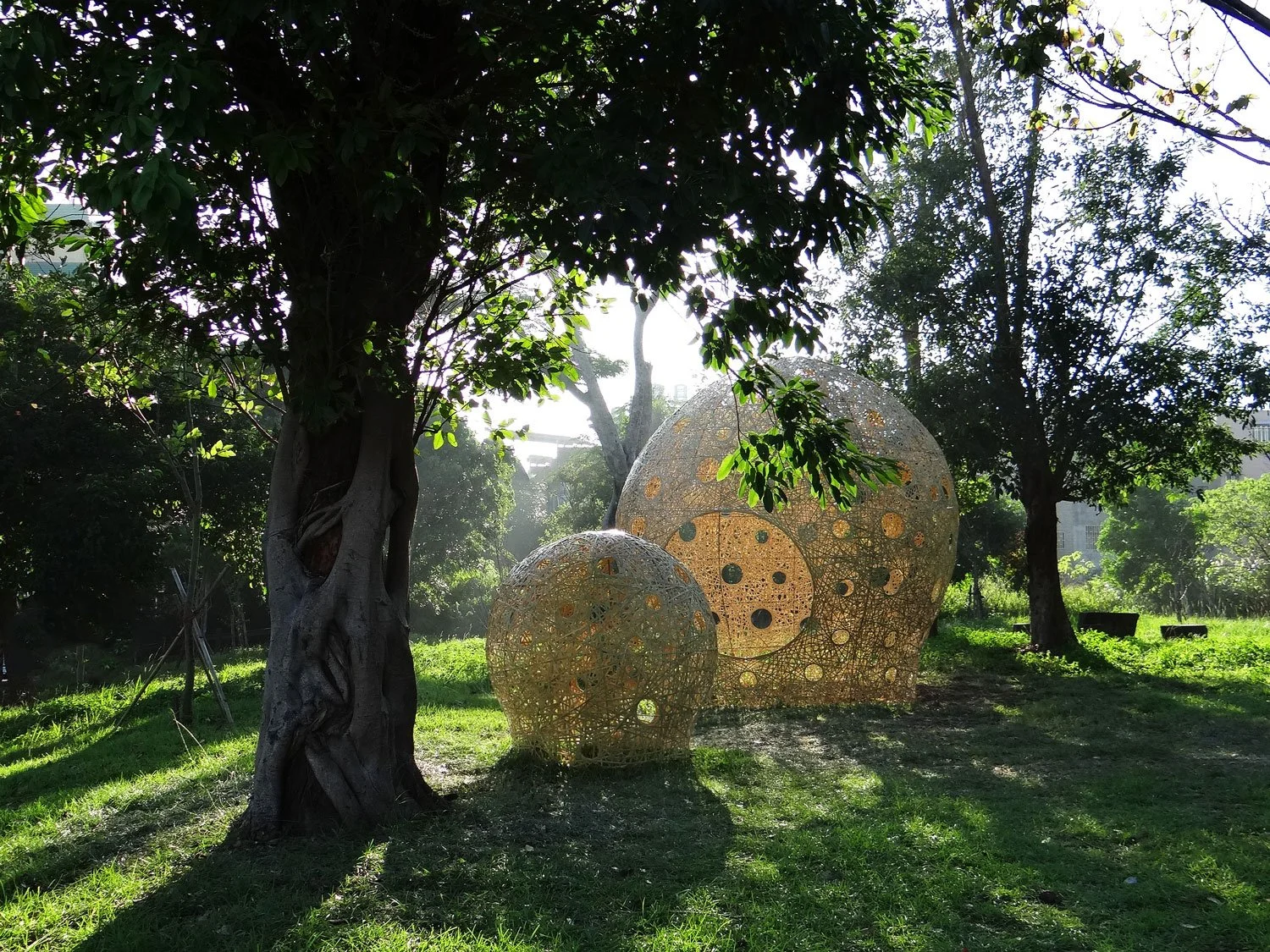
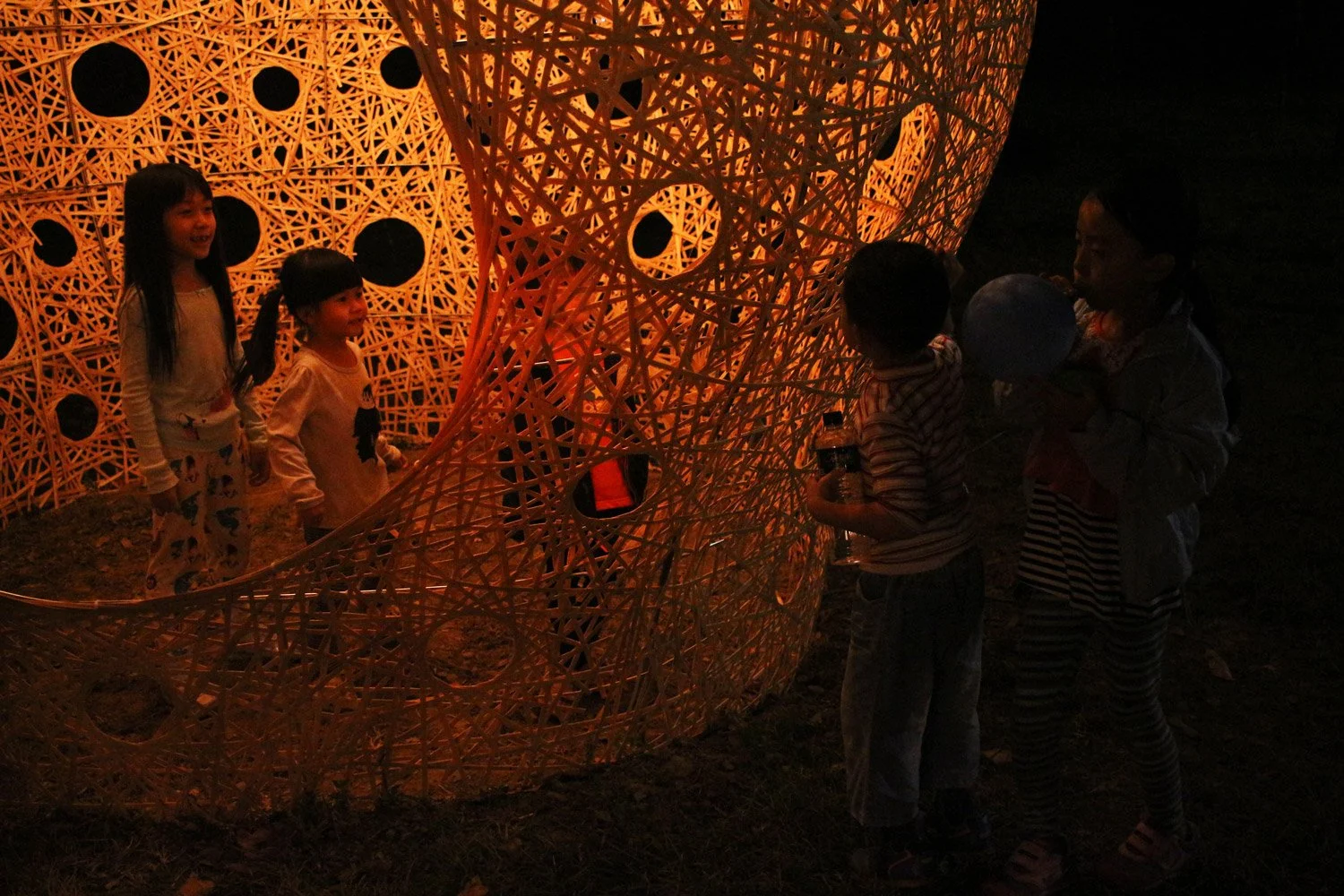
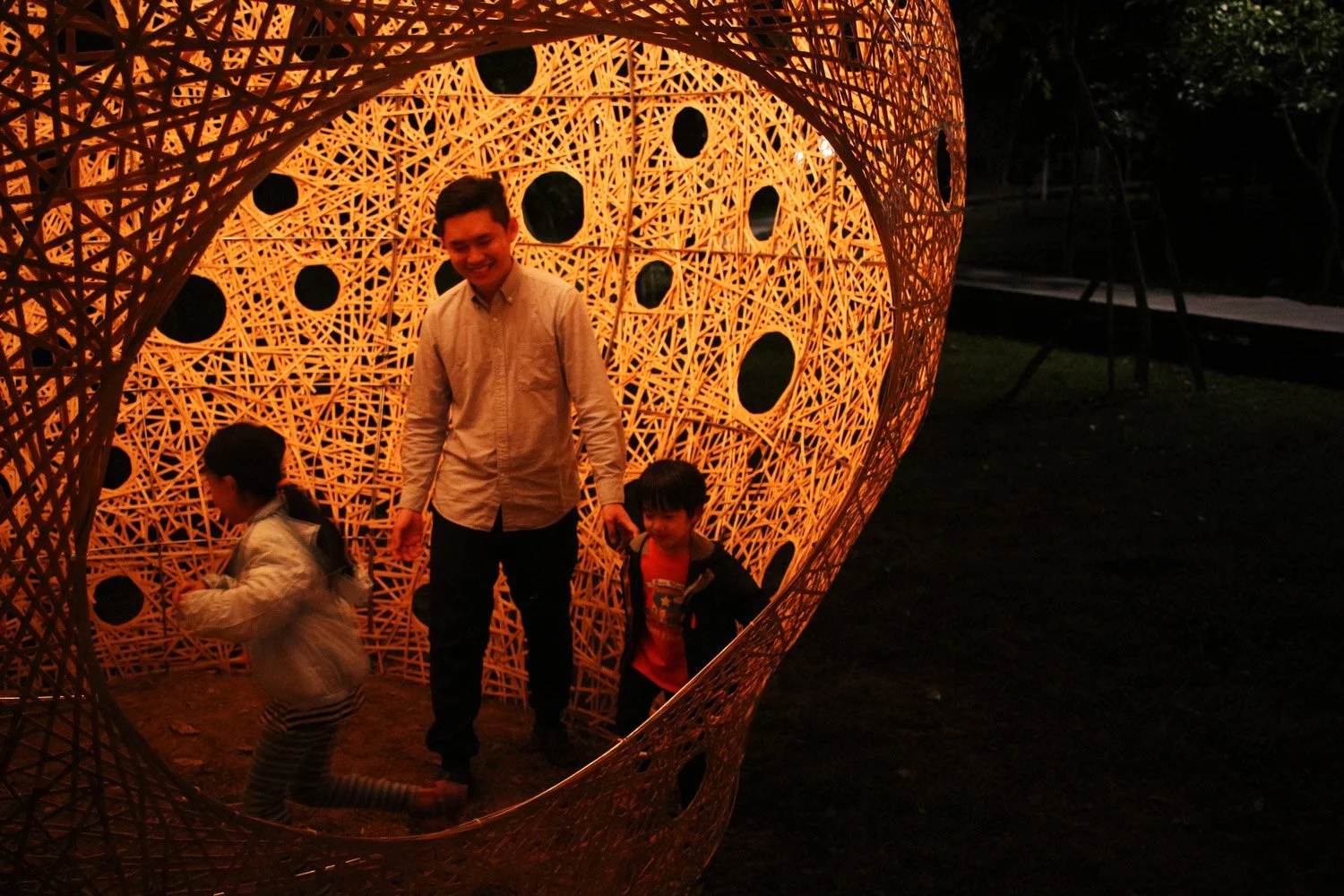
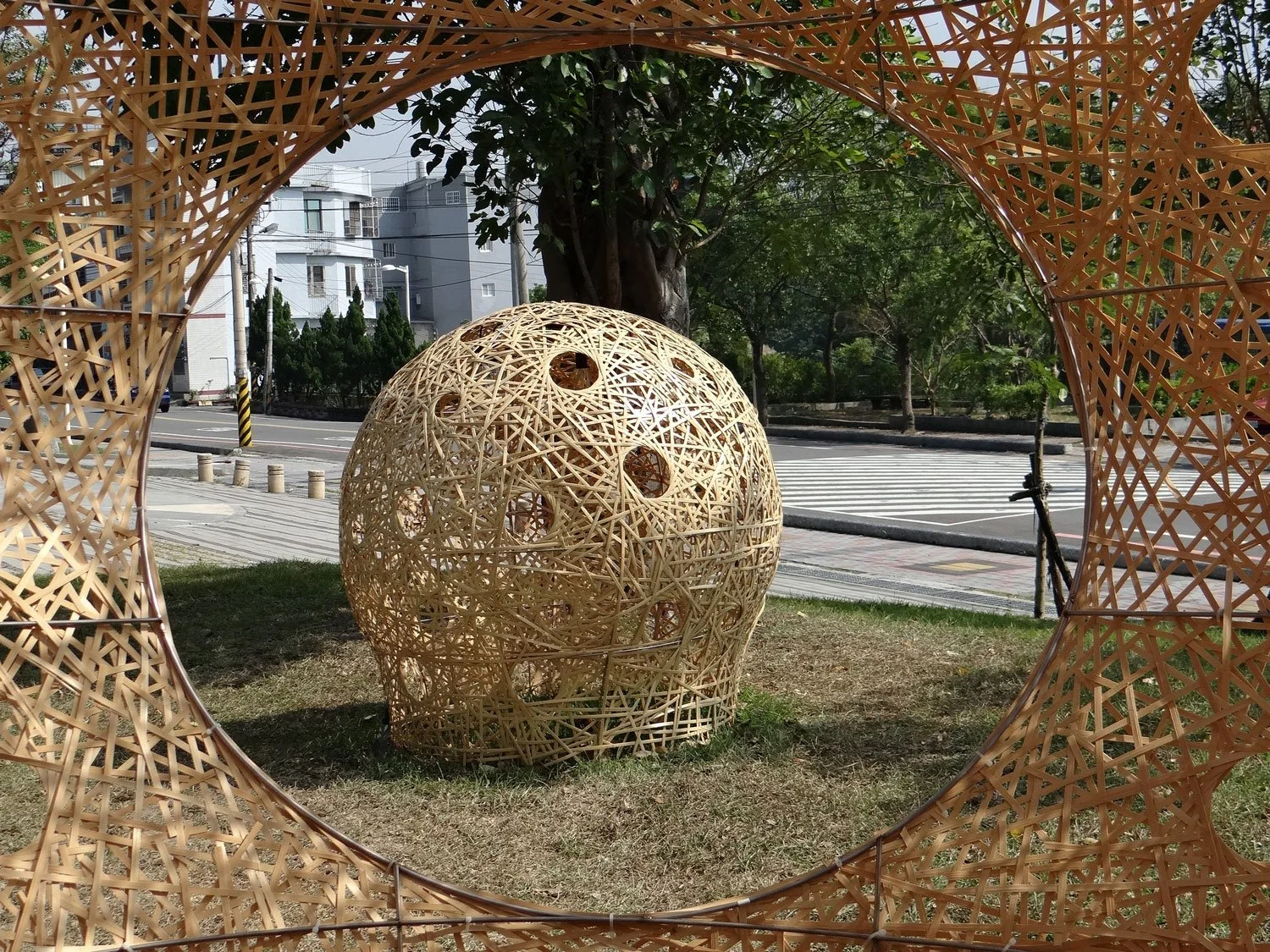
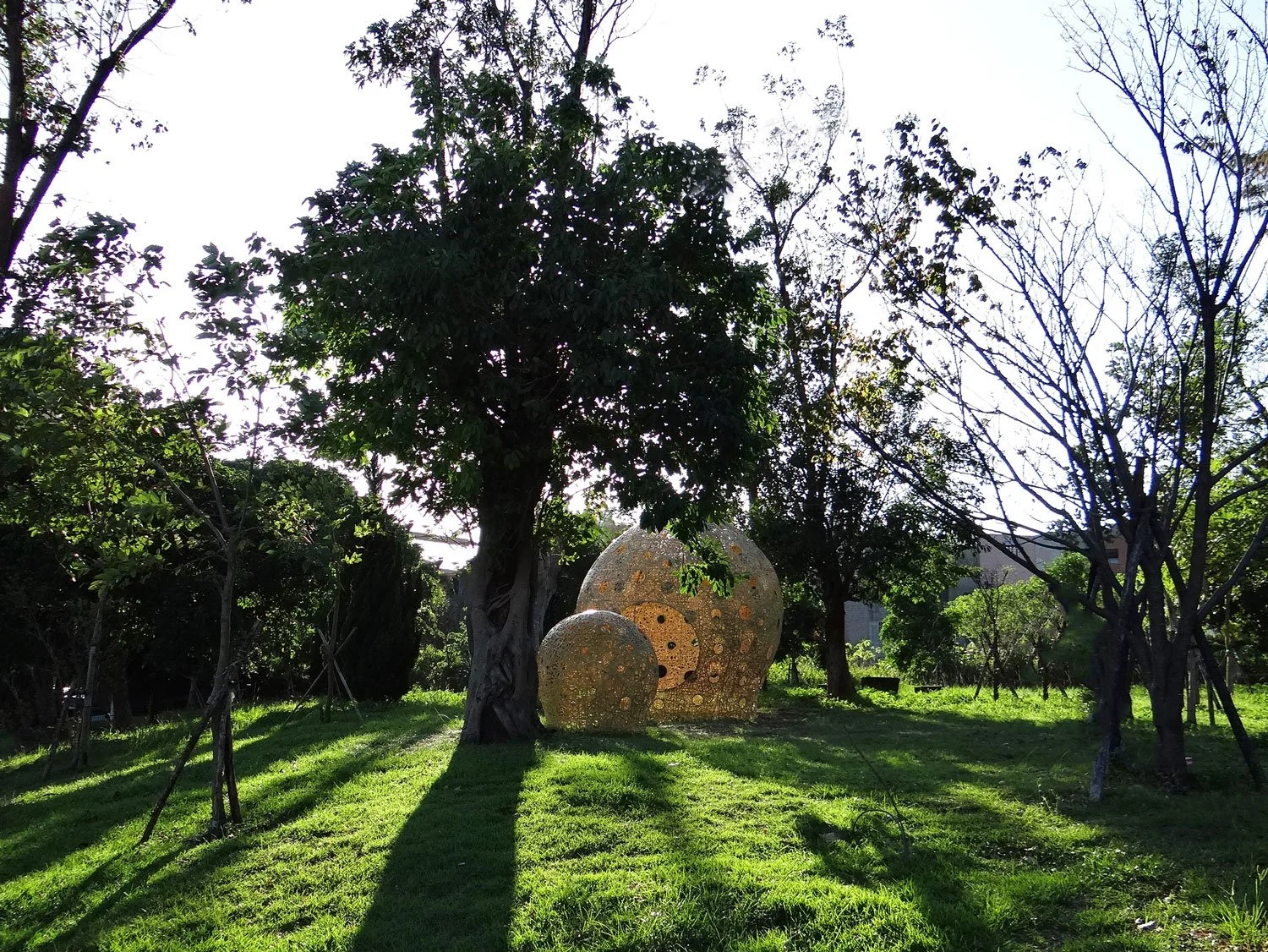
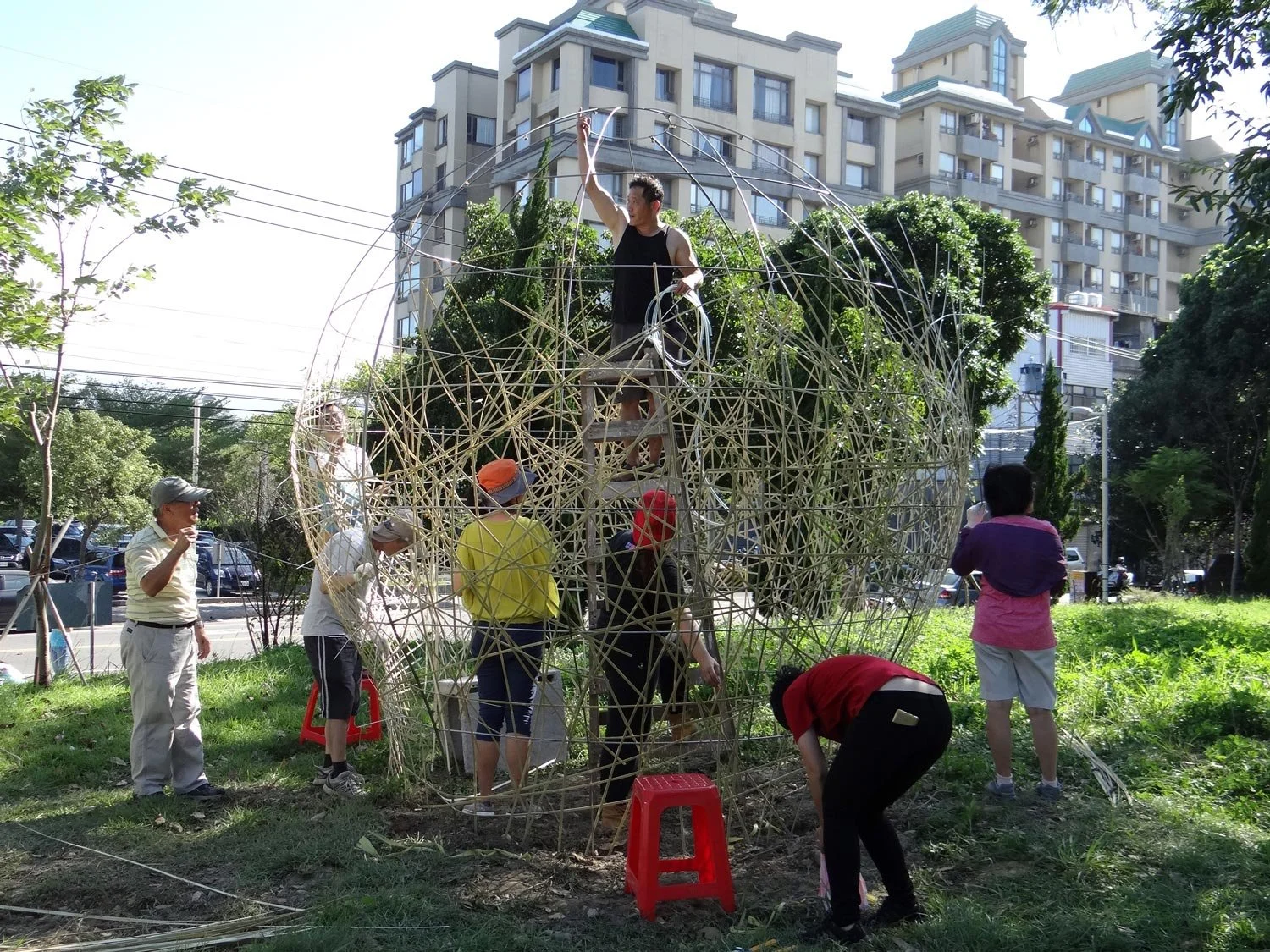
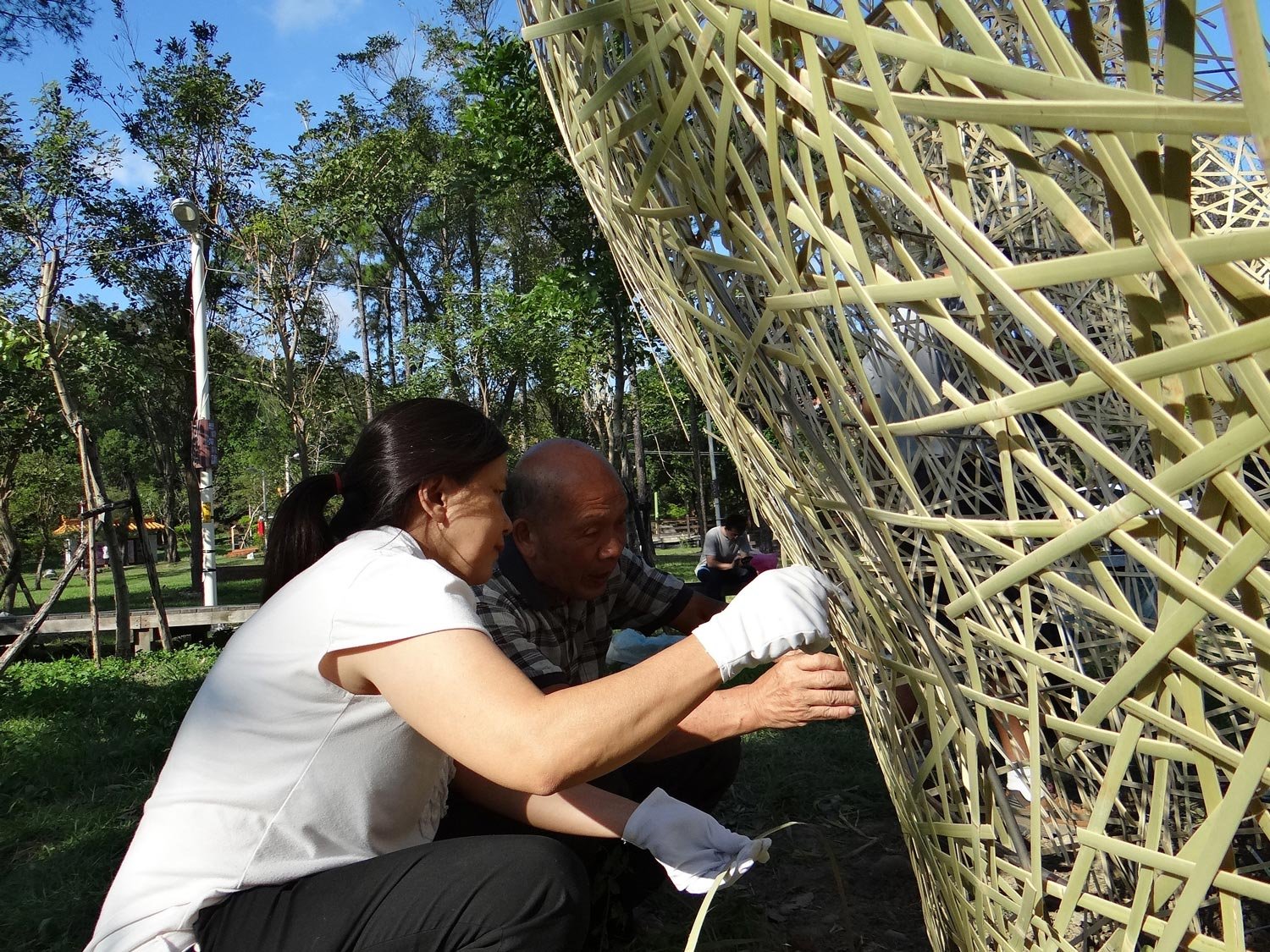
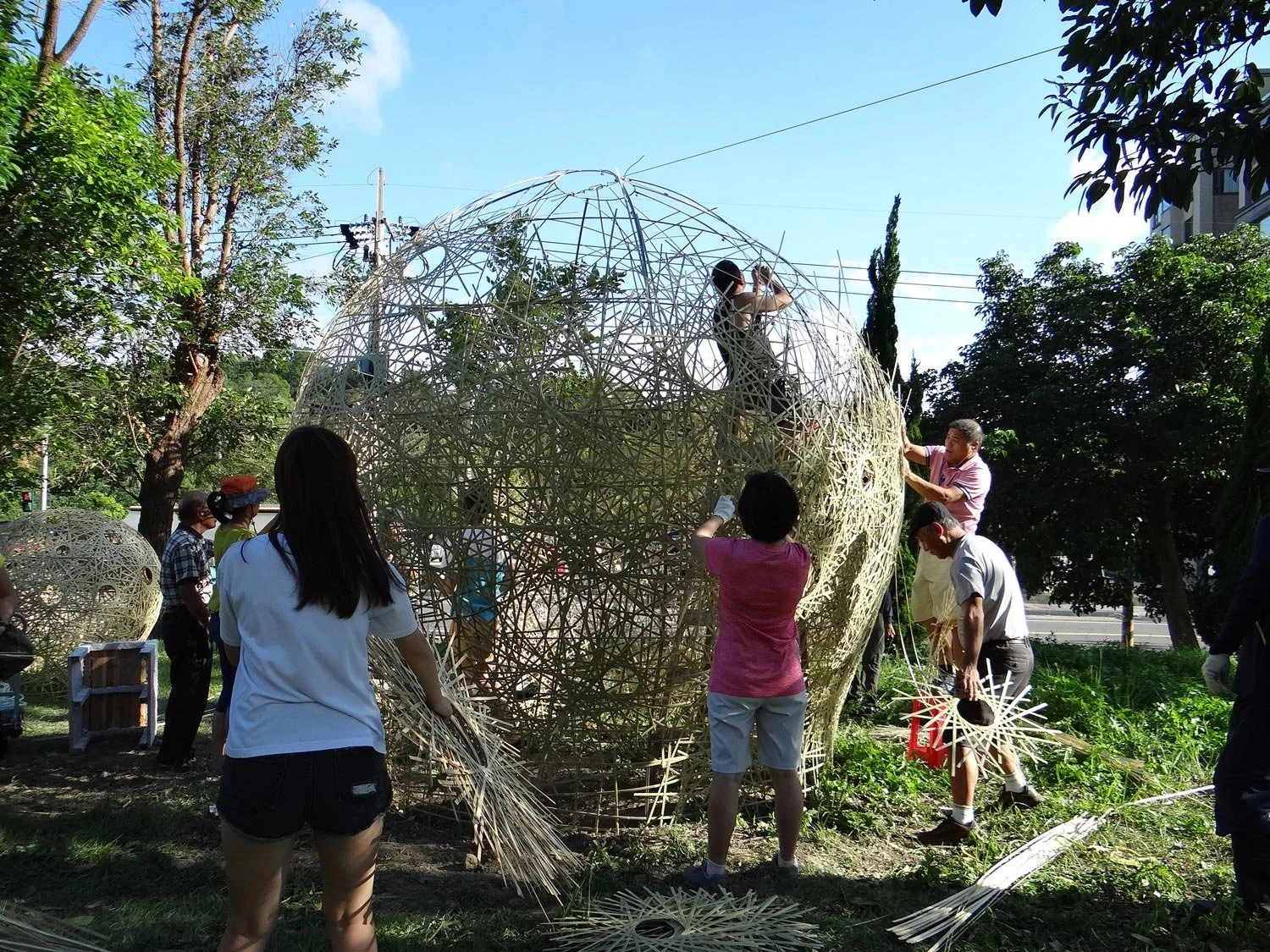
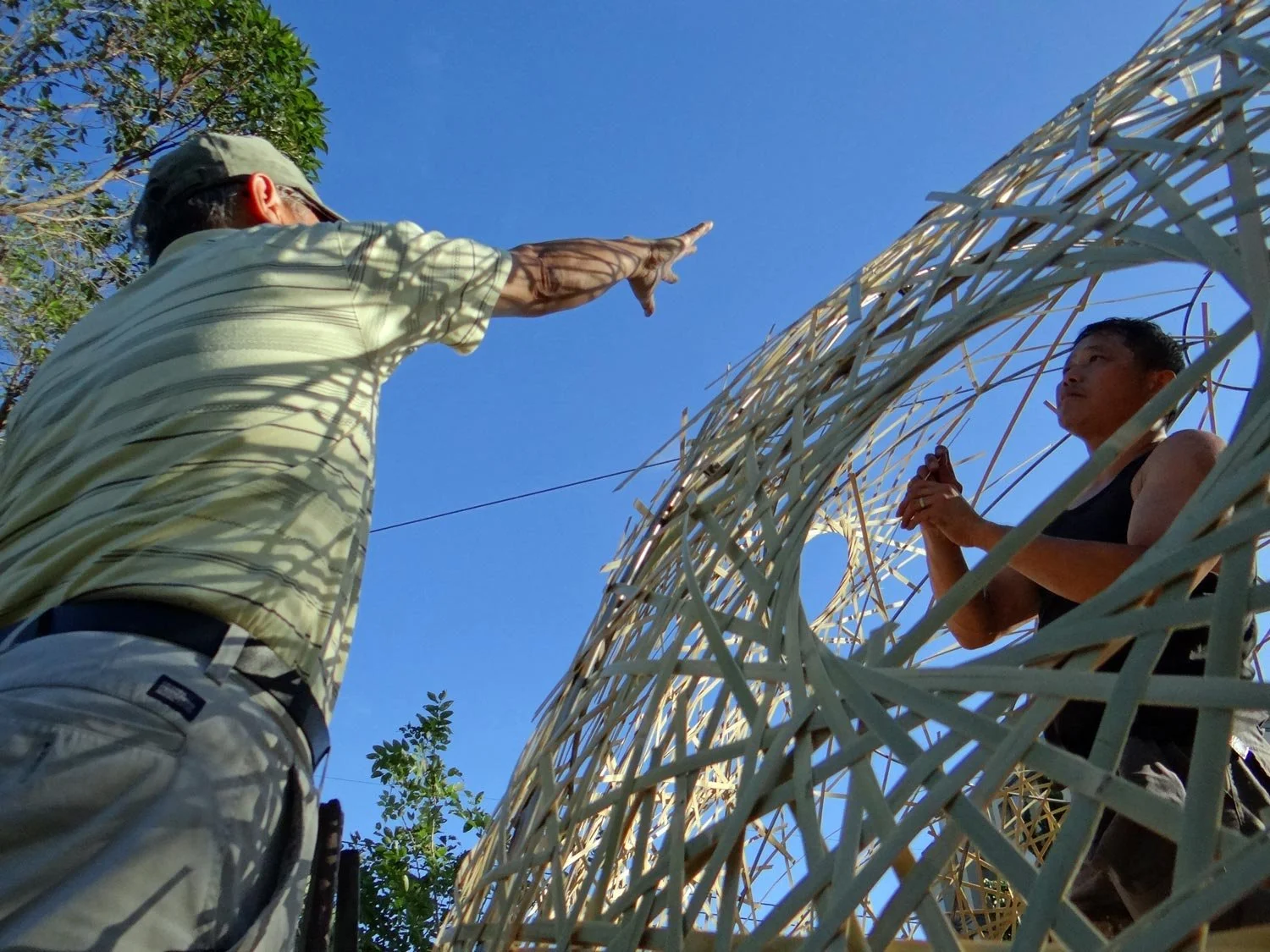
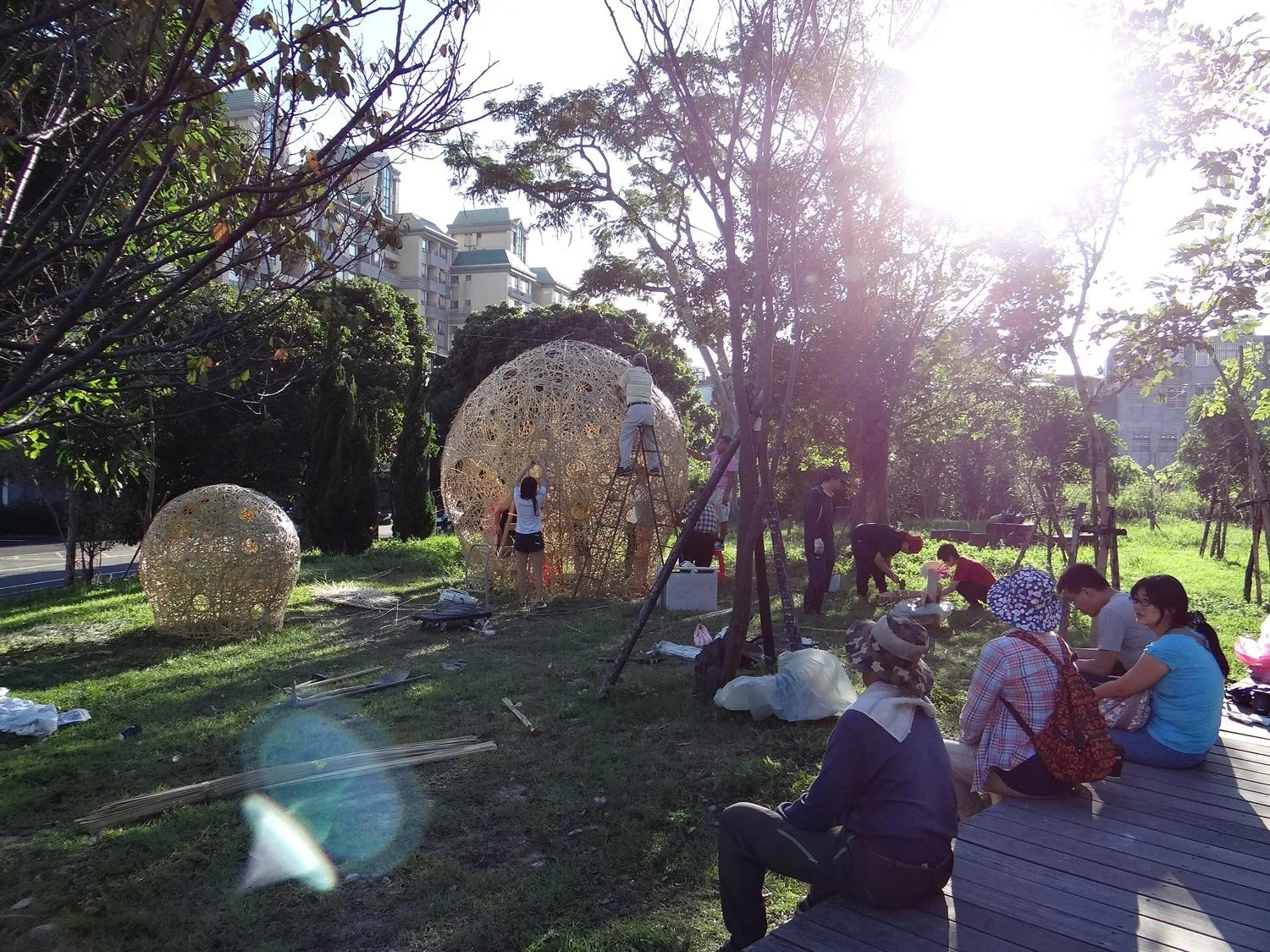
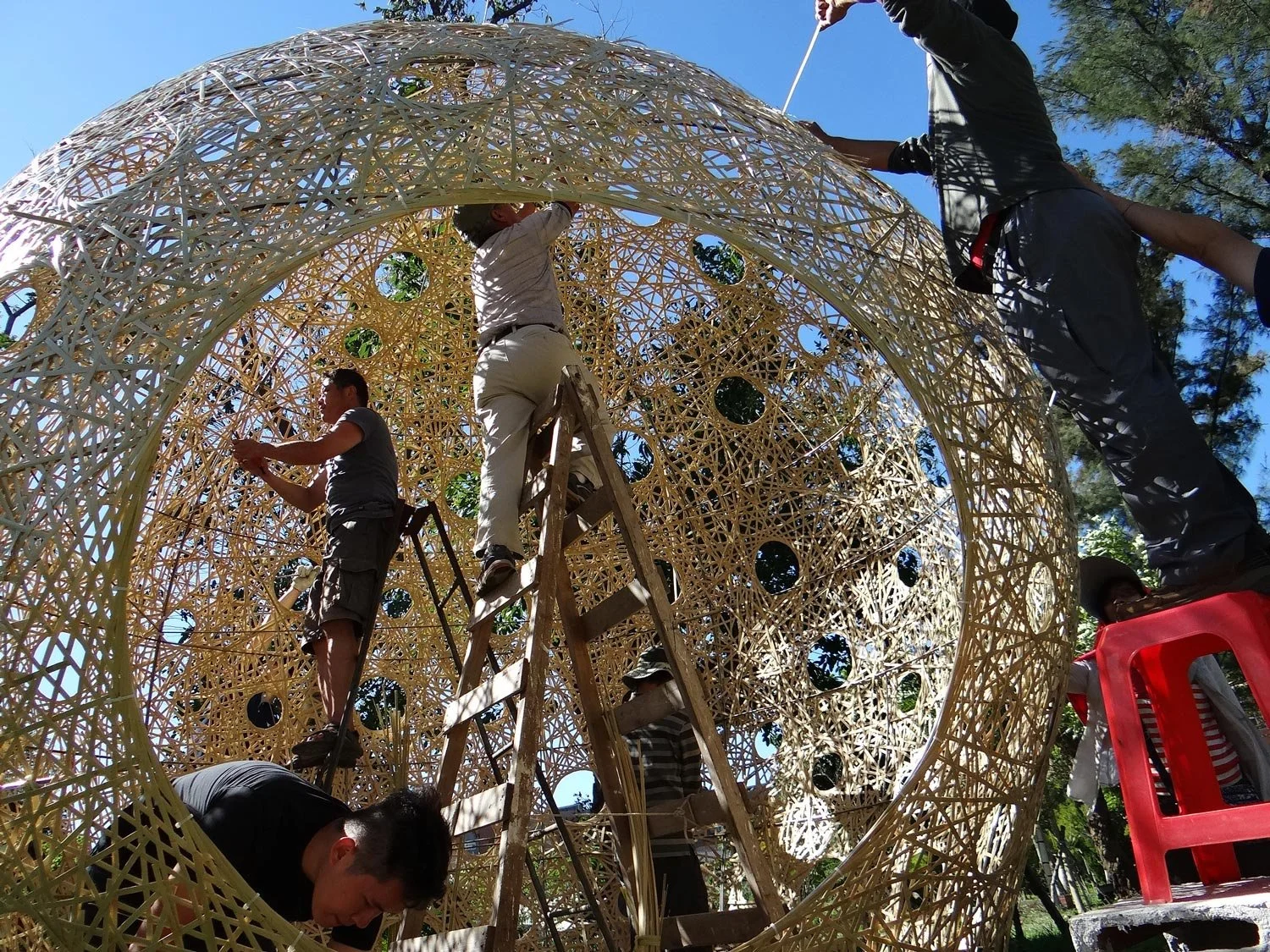
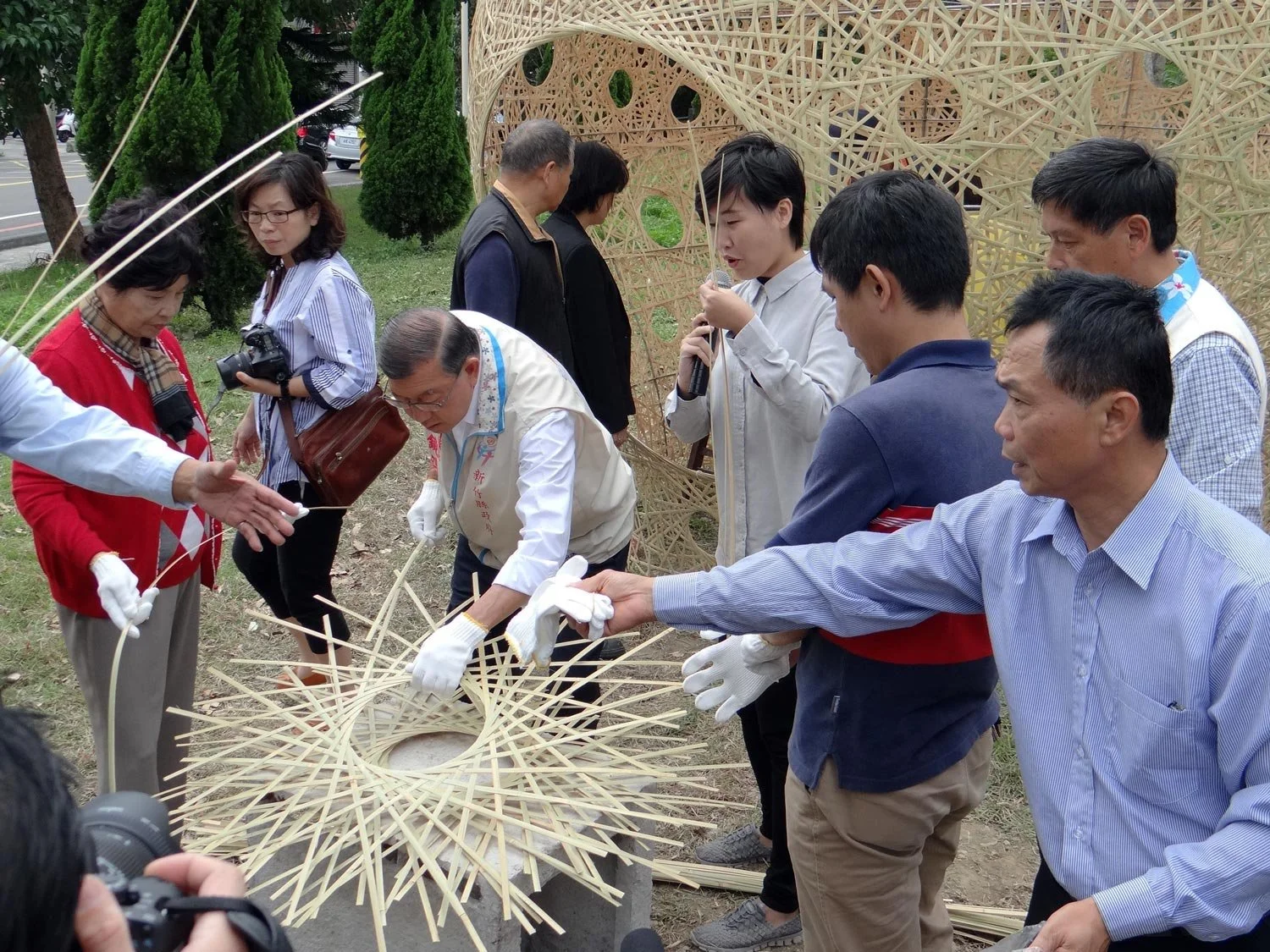
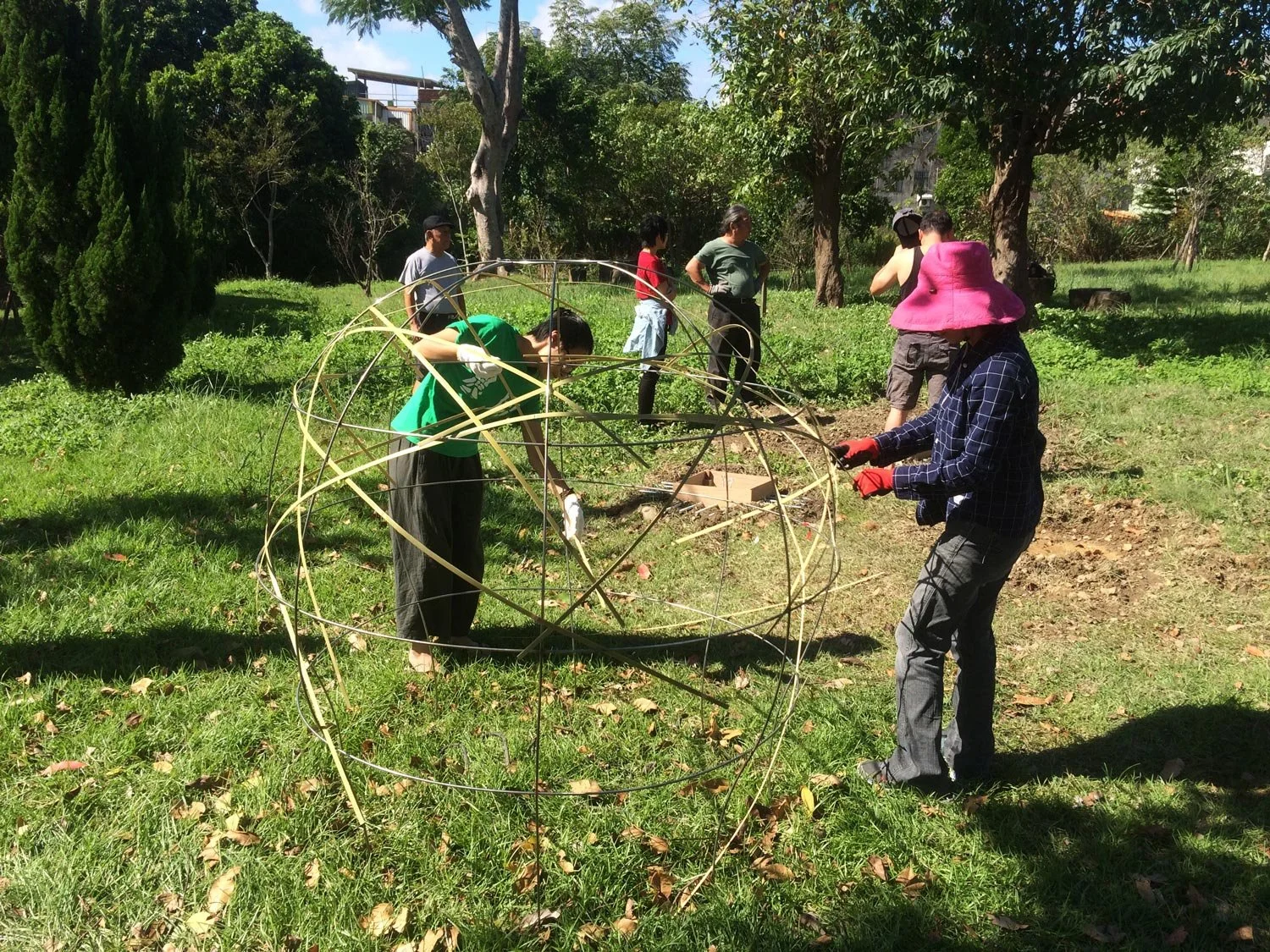
Cheng-Tsung Feng, a Taiwanese designer who specializes in bamboo craft design and art, recently completed a bamboo installation art called "beside" in the Teng Yu-Hsien Music Culture Park of Qionglin Township (Hsinchu County, Taiwan). The installation is a sculpture, a space for relaxation, and a light lamp; after completion, it has become a tourist attraction for local residents and visitors to take pictures with. This installation was not only made by him alone, but with sixty local residents of Qionglin participated in the production. It is surprising that, before this project, all the sixty residents never had the experience in bamboo weaving.
When received the commission, Feng thought about how to connect the installation art of the park with the local residents. Through the interaction with the residents he worked the outline out, and decided to design an installation that people can make together, even, has to have everyone make together. As an object that the residents will see every day, “if they can participate together, then there will be more feelings attached,” Feng took this as the goal for design.
Therefore, Feng chose two approaches of bamboo weaving—circle weaving and random weaving—from the traditional procedures. The two kinds of simple weaving methods are from the folk weaving technique that transcends time, culture and national boundary, and with which, this project enables an opportunity for the residents to be in contact with the endangered traditional weaving culture, which is fading away from our daily life.
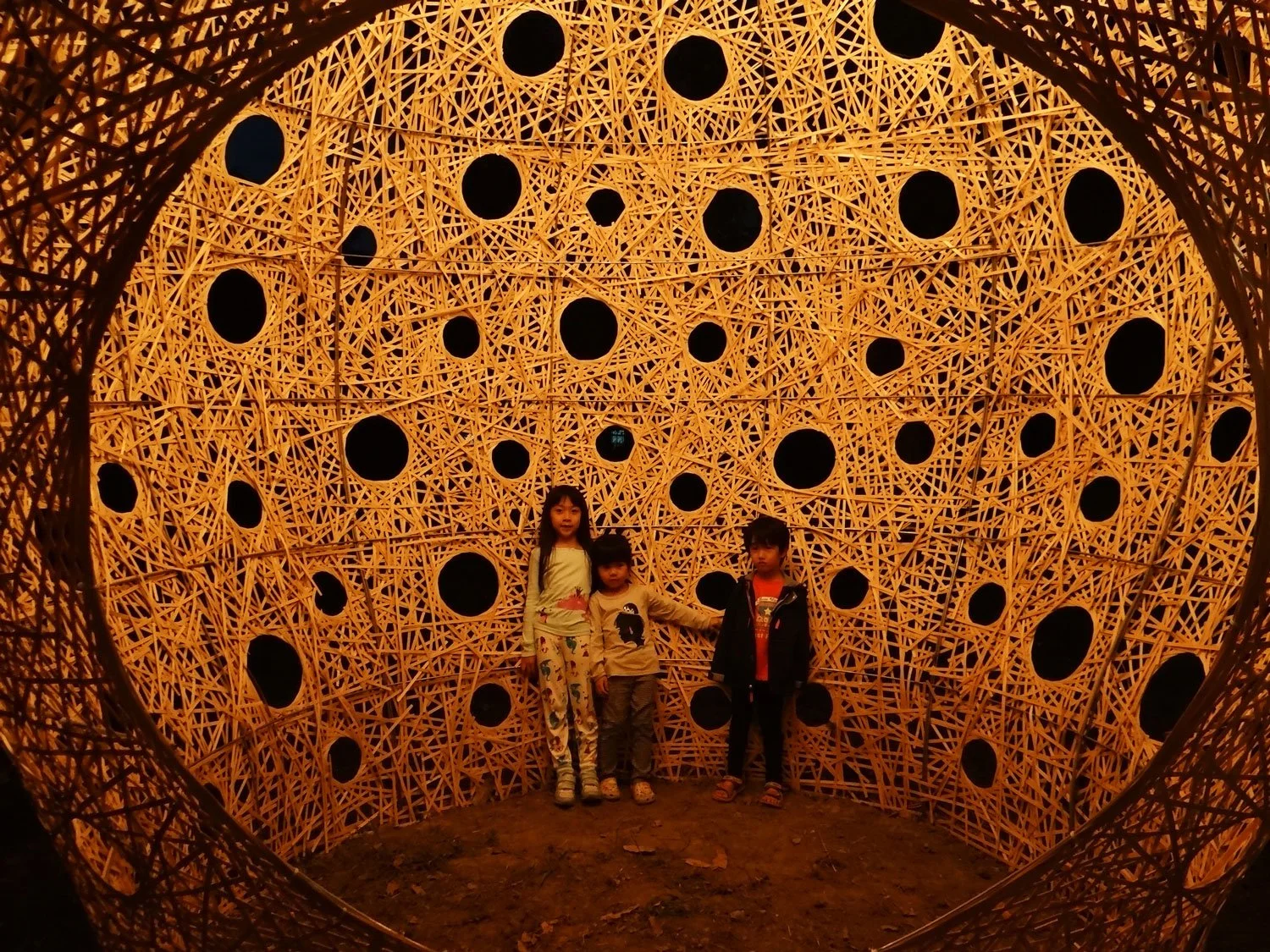
Among the two weaving methods, “circle weaving” is a technique used in making a container’s mouth, free in adjusting the size of a circle. Due to the windy environment of Hsinchu area, “circle weaving” is adequate in creating numerous small holes for reducing the resistance to airflow. For the visual effect, in the daytime, the holes create the line-of-sight penetrates the layers, a kind of lace-like meticulous effect; in the night, the lights pass through different holes and create light spots.
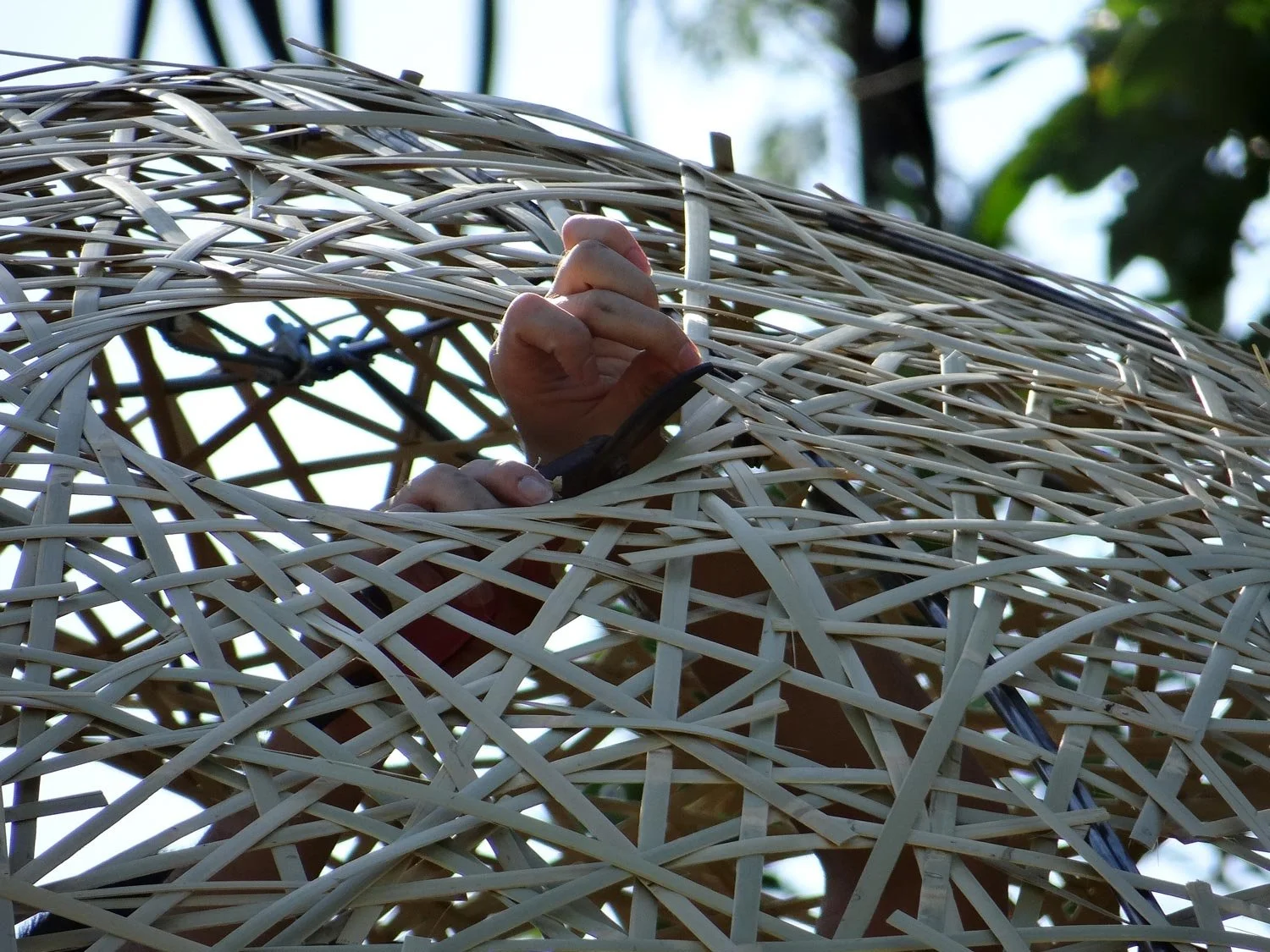
While the “random weaving” is accessible for the residents without any bamboo weaving experience, and for them to come to help randomly. With the weaving principles clearly passed on to the participants, they can easily learn the ropes of weaving even in one or two hours, as well as the future maintenance.
Conceptually, Feng is keen to express the notion of "relationship"—the intimate, gentle, companioning, interdependent connection—which is embodied in/as the installation that is indescribable, but with the different shapes and sizes of the holes that attached with and look at one another, thus represents the relationships between young and old, mother and children, grandfather and grandson, and so on.
Through the conception made by Feng, the traditional bamboo weaving technique reappears with a fresh look in the lives of the local. By means of the co-production with the residents, the traditional craft art is no longer a professional skill, but an approachable wisdom for ordinary people.
artist | Cheng Tsung FENG
photographer | Ci Xia LIN
2016
旁邊
尺寸 | 4.3*3.5*3.5 m, 1.35*1*1 m
材質 | 孟宗竹, 鋼
范承宗是一位專注於竹工藝設計與藝術的台灣設計師,最近他在芎林鄉(Xiong Lin Township)的鄧雨賢音樂文化公園(The Teng Yu-Hsien Music Culture Park)完成了一件名為「旁邊(beside)」的竹編裝置藝術,它是一個雕塑、一個休憩的空間,也是一盞燈,完成之後,它更成為了當地居民和旅客爭相拍照的景點。這個案子不只是他獨力完成的,而是由六十位芎林在地的居民共同參與製作,令人驚訝的是,這六十位居民在此之前,全是從來沒有竹編經驗的新手。
在接到這個委託時,范承宗思考著要怎麼讓公園的裝置藝術能與居民拉近關係,幾次和居民們互動後才大致確定方向,他想要設計成一個大家能夠一起做,甚至必須要大家一起做才能夠完成的裝置,這是居民而言是會天天看見的東西,如果能由他們一起參與的話,也比較有感情吧,范承宗便以為目標進行設計。
他從傳統竹編工藝中挑選了兩種竹編方式 – 輪口編(circle weaving)和自由編(random weaving),兩種簡易的編織方式都是來自民間傳統器物中的編織手法,希望居民們能夠藉由這次機會,親手接觸到已經漸漸消失在我們生活中的傳統編織工藝。
輪口編是來自編織容器時製作開口的方式,能夠自由控制圓圈的大小,由於新竹風大,選用輪口編在上頭造出無數個大大小小的孔洞,能夠讓風通過時降低一些阻力,白天時,能夠產生視覺穿透的層次感,有種類似蕾絲的細緻效果,夜晚時,大大小小的孔洞也是光線的出口,透過輪口處較強的光線,像是發光的斑點。
自由編織則是考慮到來幫忙的鄉親都沒有製作竹編的經驗,而且每個人能來幫忙的時間或長或短,自由編織只要溝通好幾個原則之後,大家即使撥空來貢獻個一兩小時,也能馬上進入狀況,而且日後若是有些地方破損了,已經學會的大家也能夠自行維護。
在概念上,范承宗希望純粹地表達「關係」,親近的、溫柔的、陪伴的、互相依靠的關係,最後的樣子大家或許說不上來它們到底是什麼,但能看見一個大的,身旁有一個小的,大的開口還對著小的,就像大的在看著小的,這樣的安排就容易讓人聯想到長幼關係,感覺就像是媽媽和孩子、爺爺和孫子等等。
傳統竹編工藝經由范承宗的構思,以一個新鮮的樣貌出現在居民的生活之中,經過居民一起製作的過程,傳統工藝不再只是專業人士的技藝,而是平易近人的常民智慧,就如作品的名字「旁邊」一樣,這些傳統的寶藏就在我們旁邊。
藝術家 | 范承宗
攝影 | 林賜霞