Taiwanese Crafts at LTU


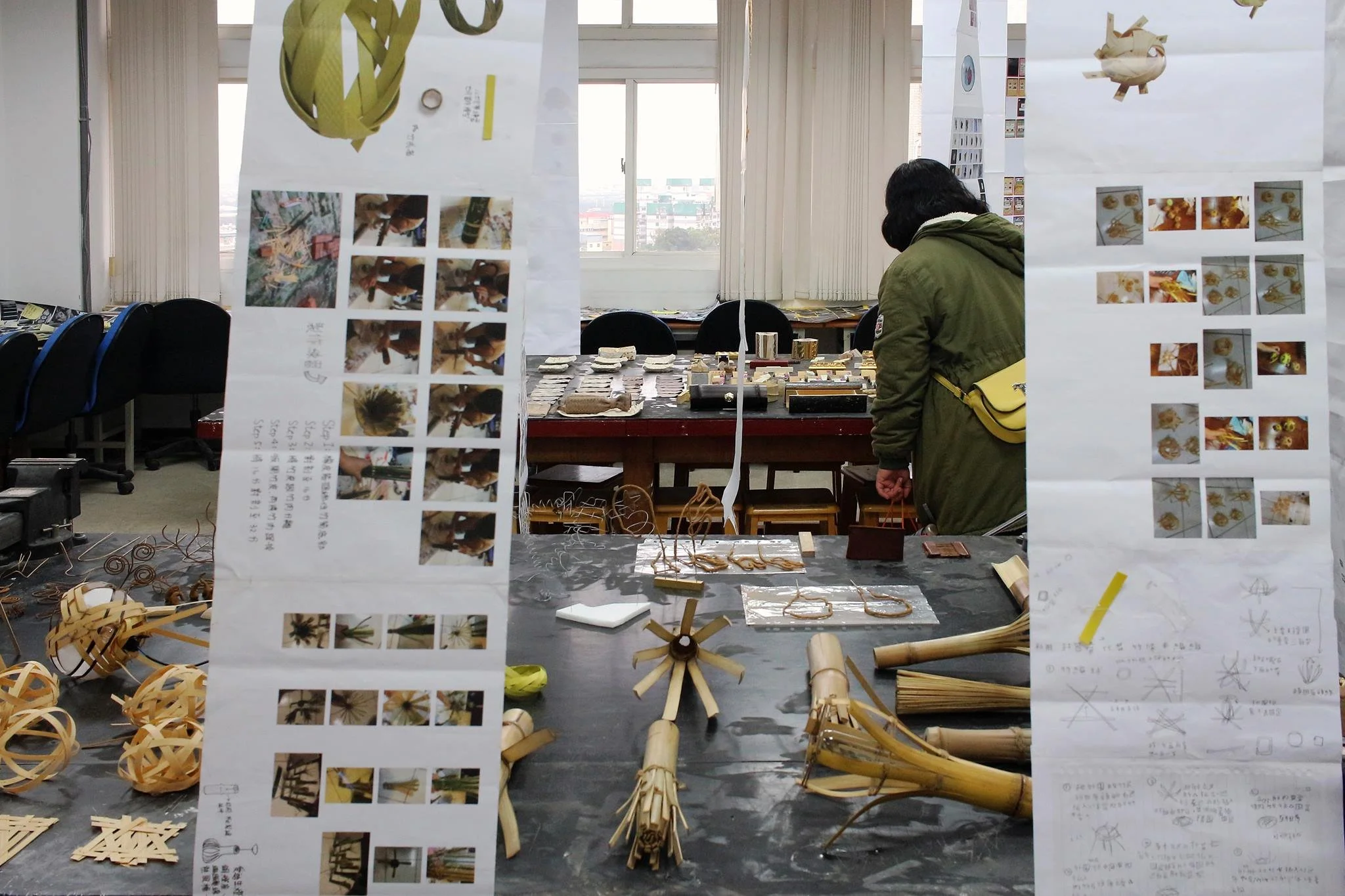


This semester, I taught a sophomore elective course titled Taiwanese Crafts at Ling Tung University, with 31 students enrolled. In the end, 14 students completed the course. For a class that’s so demanding and worth just two credits, I truly appreciate everyone’s hard work.
The course began with each student selecting three folk crafts they were interested in. They conducted basic research, gave presentations, and engaged in discussions. Next, they had to find a local artisan who practices that craft and is willing to teach them.
“How do we find one? Where should we go? What if we can’t find anyone? How do we convince them to teach us? What if they’re too busy?”—so many questions popped up right away. My response to all of them was: “Figure it out yourself. You’re adults now—if you can’t even solve this, just drop the class. That’ll fix everything.”
I laid out a zigzag-bound visual process map on the table from when I learned how to make bamboo steamers. I jokingly called it my Along the River During the Qingming Festival. Next to it, I placed the lopsided steamer I made back then, explaining the course structure and repeatedly emphasizing:
“This is an elective. No one forced you to take it. It’s a lot of work for just two credits. Totally not worth it.” I said it jokingly, but sure enough, some students dropped the class.
Once topics were chosen, I advised students to prioritize location and transportation based on my own past difficulties. Ideally, they should pick something in central Taiwan within scooter range or close to home, so they could continue learning on weekends. This way, it would be easier to ask their artisans for help when they hit production or material roadblocks. We ended up with students learning blacksmithing in Nantun, bamboo craft in Caotun, incense making in Lukang, papermaking in Puli, and water caltrop dyeing in Guantian, among others.
After confirming their topics, students arranged their own time to visit the artisans and learned to make one simple object by hand. They had about two to three weeks to complete and present their work. Weekly progress updates were required. Alongside this, they documented every step of the process in photographs, capturing even the smallest details. These images were then arranged in sequence on paper and labeled with colored stickers to indicate shape, material, and method.
Whenever a material was used or a shape was cut, they added the respective sticker. The methods—those unique and valuable parts of the process—were often how the pieces were joined, formed, or altered. These methods represent generations of accumulated wisdom. Students illustrated and described their findings, and thus began their own versions of Along the River During the Qingming Festival.
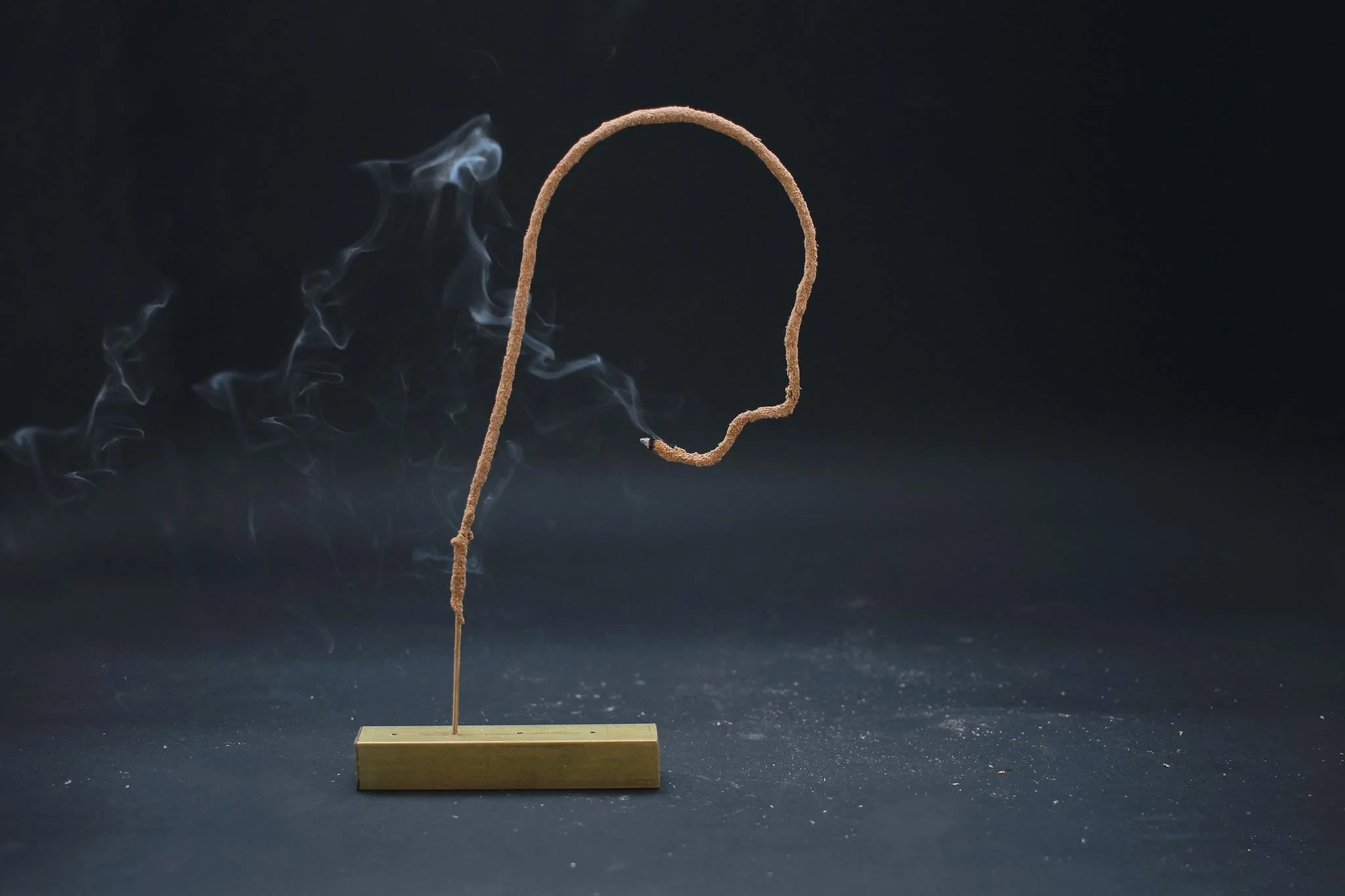
The next several weeks were dedicated to material experiments—the most time-consuming part of the course. Students identified portions of the process that could be modified and created many test pieces. Depending on the complexity of the craft, some brought five experiments, others thirty. We discussed techniques and results in class each week. Every session brought surprises: some students boiled bamboo in soy sauce, vinegar, and hydrochloric acid; others used pepper powder and baby formula to make incense; still others dyed fabric with chess pieces, mahjong tiles, or barbecue mesh. It was all incredibly fascinating.
I intentionally avoided pushing students to decide on a final product too early. Instead of fixating on outcomes, I wanted them—just entering their second year—to enjoy the tactile, exploratory process. From each experiment, they learned how to adjust for the next iteration. After weeks of testing, they began producing interesting, beautiful, and compelling samples. Only then did we start turning them into objects. If one came out poorly, they made another, slightly better one. Week by week, they refined their work—it was anything but easy.
In the end, all final projects were made by the students themselves. Though they may lack the polish of a master’s craftsmanship, I find their raw forms uniquely precious.
Today marks my last day as “Teacher FENG.” I’ve learned so much from every discussion with you throughout the semester. I truly loved your Along the River During the Qingming Festival pieces, your experiments, and your final creations. Congratulations on achieving such rich results. Thank you for your hard work. Until we meet again.
#Course Structure
18 weeks total:
6 weeks of study, documentation, and deconstruction
6 weeks of experimentation and exploration
6 weeks of application and design
#Students & Their Crafts:
Szu Yu LAI|Blacksmithing
Yi Chi CHU|Incense Making
Li Ling LIU|Enameling
Li Chieh CHEN|Water Caltrop Dyeing
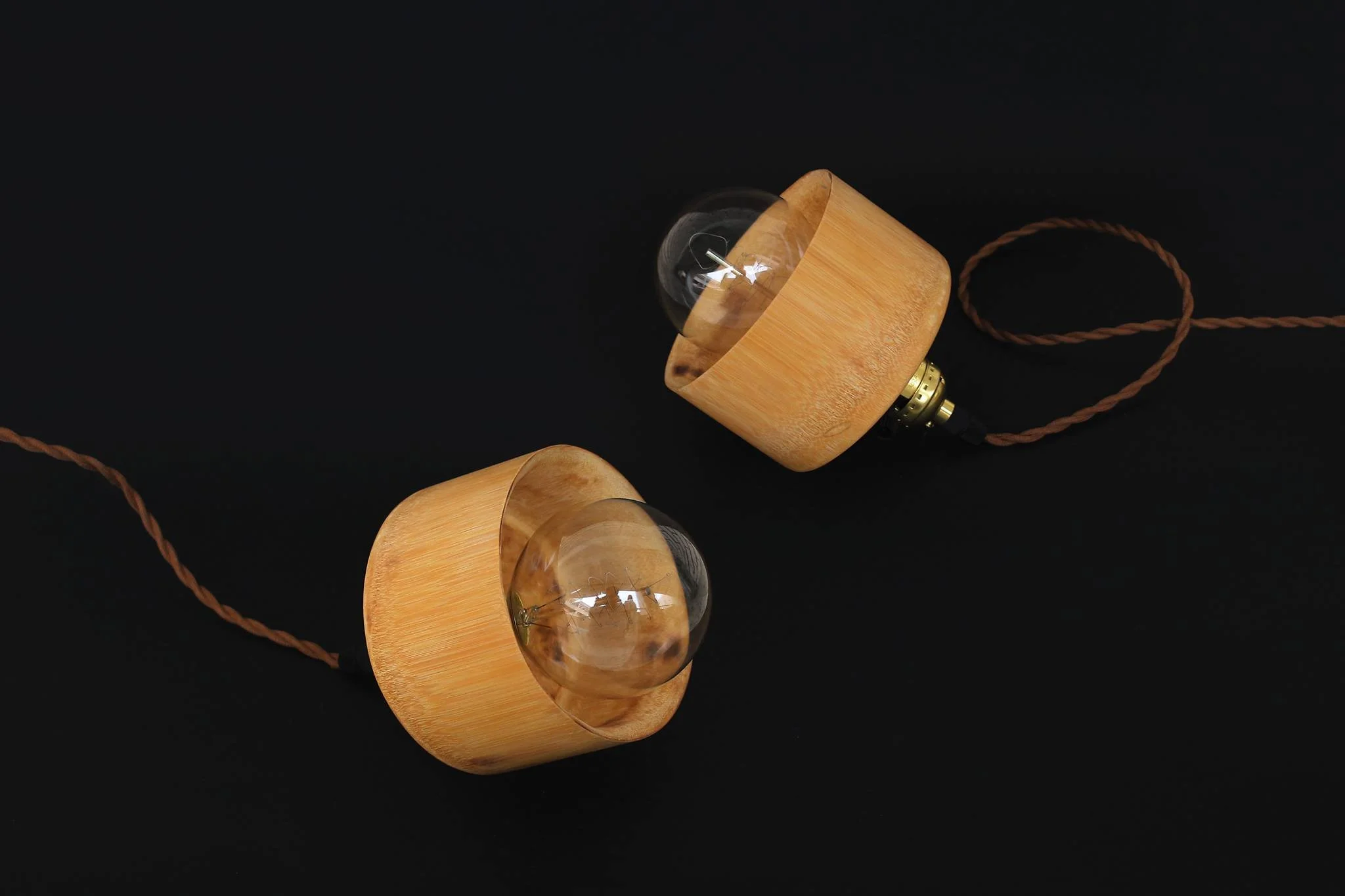
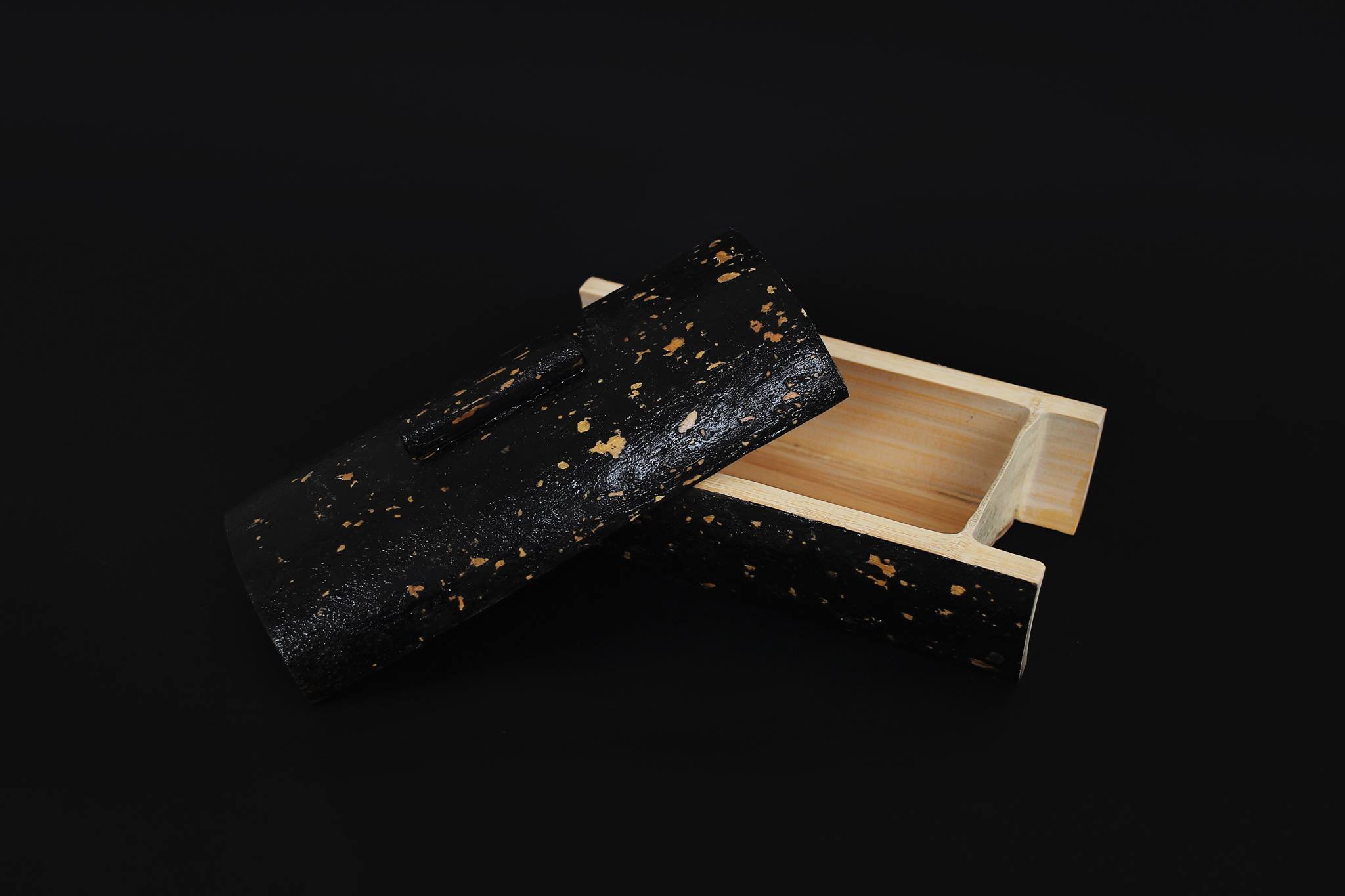
Cheng Yuan SHIH|Bamboo Craft
Ya Li TSAI|Frame Making
Chiu Hsuan LAI|Papermaking
Tzu Hsiang CHO|Incense Making
Wan Ting CHANG|Bamboo Craft
Kuang Chun CHENG|Bamboo Craft
這學期在嶺東科技大學帶大二的台灣工藝課,有三十一個人選修,最後有十四位同學完成,如此不好得手的兩學分,真是辛苦大家了。
這門課一開始請同學們各自去找三個自己感興趣的民間工藝,先做簡單的資料收集,帶來簡報和討論,接著要去尋找以此為業、而且願意教你的師傅。「要怎麼找?去哪裡找?找不到怎麼辦?怎麼說服師傅願意教我?萬一他們沒空怎麼辦?」馬上冒出許多問題,我的回答都是:「自己想辦法呀,年紀都這麼大了,連這點小事都搞不定的話就退選吧,退選就沒問題了。」
在桌上攤開做蒸籠時的經折裝紀錄,我戲稱這是「清明上河圖」,旁邊放上我那時候做的蓋不起來的菜鳥蒸籠,跟同學們說明這門課要做的事,並再三強調:「這是選修課,沒有人逼你選,很麻煩卻只有兩學分,很不划算的。」雖然是用開玩笑的口吻說,果然陸續有些無緣的同學退選了。
接著是選擇題目的階段,根據我自己以前遇到的困難和經驗,常建議同學們重視地域和交通因素,儘量選擇自己騎機車就可以抵達的中部地區,或是自己的家鄉,這樣週末回家的時候還可以去,這是希望在過程中如果遇到材料、製作上的困難,比較容易尋求師傅的幫助。於是我們有了南屯打鐵、草屯竹藝、鹿港製香、埔里造紙和官田菱角染…等等。
決定題目之後,各自找時間去向各自的師傅學習,跟著他親手做一件簡單的器物,兩三週之內要完成帶來,每週都要看進度,除此之外,還要用照片記錄製作的過程,每一個小細節都儘量記載下來,收集起來之後,按照順序排列在紙張上,用三種顏色的貼紙,以形狀、材料、方法去標示。過程中拿了一種材料,切了一種形狀,就貼上對應的貼紙,而方法,則是過程中獨特、珍貴的部分,可能是組合、成形的方式,或是改變材料特徵的方式,很聰明的、經過許多世代無數人調整、累積而成的智慧,試著用簡單的插圖和文字說明自己的發現,開始做你的清明上河圖。
接著是為期好幾週的材料試驗,是花最多時間的部分。從上一階段的製造過程和貼紙中,尋找能夠嘗試改變的部分,要做許多個試驗品,依照不同工藝的困難度,有的人要帶五個,有的人要帶三十個,然後再針對帶來的試驗品討論做法和效果。每個星期都很新鮮,能看見同學們用千奇百怪的方式處理材料,有的同學拿醬油、醋、鹽酸來煮竹子,有的同學拿胡椒粉、奶粉來製香,還有同學用象棋、麻將、烤肉網來染布,真是非常有意思。
一路上都儘量不讓同學們馬上去想最後要做什麼器物,比起結果,更希望大家在剛升上大二的這個時期,能夠樂在親手摸索、實驗的過程裡,能夠從每次的試驗品中去推演下一次的嘗試該怎麼調整。摸索了好幾週之後,同學們陸續試出了有趣的、美的、吸引人的試驗品,直到這裡我們才開始嘗試運用做成器物,做壞了、不好看,就再改做一個比上次好一點的,一週一週慢慢做、慢慢改,還真是不容易。
最後的作品都是同學們親手做的,不像出自師傅的巧手那樣精美,但在我看來,那些樸拙的輪廓是再珍貴不過的。
今天是我當范老師的最後一天,這學期我也從每次和你們的討論中得到很多,我很喜歡你們的清明上河圖,你們的試驗品和你們最後的作品,恭喜各位做出這樣豐富的成果,辛苦了,我們後會有期。
課程共十八週,六週學習、紀錄、解構,六週實驗、探索,最後六週應用、設計。
賴思妤|打鐵
朱亦琪|製香
劉莉苓|琺瑯
陳俐潔|菱角染
施政源|竹藝
蔡雅莉|製框
賴秋瑄|造紙
卓子翔|製香
張婉亭|竹藝
鄭光均|竹藝








2016
Taiwanese Craft Workshop at LTU
In the elective course “Taiwanese Crafts” offered at the College of Design, Ling Tung University, artist Cheng Tsung FENG designed a hands-on curriculum that combines craft learning with experimental creation, drawing from his own fieldwork experiences. Spanning 18 weeks, the course is divided into three phases: research and documentation, material experimentation, and object design.
Students are required to select a traditional Taiwanese craft, visit a local artisan, learn the techniques, document the process, and compile their own visual “Along the River During the Qingming Festival.” By using stickers to mark materials, shapes, and methods, they gradually deconstruct the logic of the craft and proceed to explore diverse material experiments. These range from bamboo weaving, blacksmithing, incense-making, and papermaking to water caltrop dyeing—resulting in a vibrant mix of cross-disciplinary combinations and unexpected outcomes.
Feng intentionally downplays the idea of a “final product,” encouraging students to embrace failure, revise, and reproduce. Creation is seen as an ongoing process of iteration and observation. Though the outcomes may lack the refinement of a master’s craftsmanship, they reflect an honest understanding of materials, techniques, and local culture.
This seemingly modest two-credit course ultimately fosters a rare hands-on attitude and experimental spirit, returning art education to its core: learning by doing, and learning through trial and error.
2016 | Taiwanese Crafts at LTU | 2015/09 - 2016/01|College of Design, Ling Tung University | Taichung
planner & lecturer|Cheng Tsung FENG
students|Szu Yu LAI, Yi Chi CHU, Li Ling LIU, Li Chieh CHEN, Cheng Yuan SHIH, Ya Li TSAI, Chiu Hsuan LAI, Tzu Hsiang CHO, Wan Ting CHANG, Kuang Chun CHENG
2016
嶺東科技大學設計學院「台灣工藝」課程
在嶺東科技大學設計學院開設的「台灣工藝」選修課中,藝術家范承宗以自身田野經驗為基礎,設計出一門結合工藝學習與實驗創作的實作課程。課程為期十八週,分為學習與紀錄、材料實驗、器物設計三個階段,學生需自行選定一項台灣傳統工藝,拜訪在地師傅、學習技藝、記錄製程,並以照片與圖文建立屬於自己的「清明上河圖」。透過貼紙標示材料、形狀與方法,學生逐步拆解工藝邏輯,再展開多樣化的材料實驗,從竹藝、打鐵、製香、紙作到菱角染,各種跨域組合與錯誤嘗試交織出豐富成果。范承宗刻意弱化「作品」的終點,鼓勵學生從失敗中修正與再製,將創作視為持續推演與觀察的過程。儘管成果未若師傅手工精緻,卻反映出學生對材料、技法與地方文化的真誠理解。這門看似不划算、只有兩學分的課程,實則培養了難得的手作態度與實驗精神,也讓藝術教育回歸「做中學、錯中學」的本質。
2016|嶺東科技大學設計學院「台灣工藝」 | 2015/09 - 2016/01|台中
課程策劃與講師|范承宗
學員|賴思妤、朱亦琪、劉莉苓、陳俐潔、施政源、蔡雅莉、賴秋瑄、卓子翔、張婉亭、鄭光均