Hualien Plants Color


Art Director | Cheng Tsung FENG
"In this Hualien Color project, the design plays the function of serving the five plant materials. We intentionally remove the strong design shapes and intentions, and the design must not override the materials themselves, so as to let the viewers focus on the possibilities and experimentation of the plant materials and color generation.”
Cheng Tsung FENG, who loves ancient wisdom and traditional craftsmanship, seems to be more confident when talking about his role in the Hualien Color 2 project. “We have accumulated a certain degree of familiarity with natural materials,” he says.
This year, we chose to use five plants commonly found in Hualien as keys, and explored the colors brought to us by plants from the wisdom of craftsmanship accumulated in human history. After touching the surface of the plants, we will explore the results of the inner layers in depth. Just as people have been living with plants for a long time, the plant colors that have been accumulated over time are the results that this year's project hopes to bring to the audience.
"At each stage, we seek out the right people and materials, and guide them to test the direction and possibilities of the materials. These materials are full of opportunities for application in the future, and through our demonstrations, we have shown how the five materials can be used in a variety of ways and how they can be applied." Hualien is a city that takes time to recognize, and its fascinating value is that it is difficult to get there quickly.
藝術總監|范承宗
「設計在本次花蓮色計畫中扮演的是服務五種植物材料的功能,我們有意地去掉強烈的設計造型與意圖,且設計不得凌駕於材料本身,讓觀者聚焦在植物材料與色彩生成的可能性與實驗性。」
喜愛古老智慧與傳統工藝的范承宗,在聊起花蓮色2計畫中與他所扮演的角色,彷彿又更有自信些。「我們已經累積到了第二年,對天然材料有一定程度的熟悉。」
今年度選以花蓮地方常見的五種植物為藥引,從人類歷史中積累的手工藝智慧,探究植物帶給我們的顏色。在觸碰到植物的表層後,深度探索裏層的成果。如同人們長期與植物共處互依,在時間的長河中積累後得以窺見的植物色,是今年度計畫希望帶給觀眾的成果。
「我們在每個階段也會去尋找合適的職人與材料,引導他們測試材料的方向與可能性。這些材料在未來也充滿被應用的機會,而我們也經由示範,展示五種材料被使用的多元面貌及應用可能。」花蓮是座需要時間認識的城市,難以速成速得是他的迷人價值。


Textile Craftsman | Si Ray CHEN
"The climate and growing environment in the north and south of the island have caused the same plants to have different types of characteristics. It is only after understanding the original living environment of the plants and touching and dismantling them that we can recognize their unique characters and understand how the materials can be used and presented. Doing fiber is not just about sitting at the desk and playing with materials!”
Textile Craftsman Si Ray CHEN specializes in weaving, dyeing, papermaking, knitting, and other fiber-related technologies. Fiber design is not only about manufacturing and producing existing plant materials, but also includes natural harvesting, as well as the state and identification of various plant roots, stems, leaves, fruits or stamens. The fiber testing process is like an adventure. Five types of plant materials are collected from the sourcing end, and undergo the process of plant extraction (microscopic), fiber extraction (visible), and so on. Leaves, stems, leaves, leaf blades, leaf sheaths, or barks are cut with a penknife, kitchen knife, or twigs, and the skin is peeled off to extract fibers and to test the parts of the plant that can be used in actuality. In addition, the raw materials are combined with various variables and subjected to a stress test (arbitrary durability in use) to produce textural and structural changes in the plant.
"The process of extracting fibers from plants is very interesting because the fibers are concentrated in different parts of the plant, and the process is like opening a surprise box, sometimes nothing is left in the end of the dismantling process, and sometimes it's just hard wood with no fibers, but in any case, you won't know until you've tried it! “ In addition to combining existing expertise, Ray also made many bold attempts in the project, allowing the fiber to generate more variations of the same.
染織工藝|陳思睿
「島嶼南北氣候生長環境,致使同種植物也有著不同的型態特徵。理解植物原有的生存環境,進行實際的碰觸與拆解後,才能體認到這些植物的獨特性格,了解到材料可以如何被運用與呈現。做纖維不單是坐在桌前敲敲打打或把玩材料啦!」
纖維人陳思睿,擅長編織、染色、造紙、織布等纖維相關技術的實踐。纖維設計不單是將現有的植物材進行製造與生產,還包含了天然採集,以及各類植物根、莖、葉、果實或花蕊的狀態與辨認。纖維的測試過程就像一場冒險,從採集端蒐集而來的五種植物原料,歷經植物萃取(微觀)、取纖(可見)等過程,以筆刀、菜刀或樹枝剪取其葉片、植物莖、葉片、葉鞘或樹皮,剝除表皮取纖維,測試植物可以實際被使用的部位。或將原材料結合各種變因,進行壓力測試(使用上的任性耐久),讓植物產生質感與結構的變化。
「植物取纖的過程很有趣,因為纖維會集中在植物的不同部位,過程就像在開驚喜箱,有時拆解到最後什麼都沒有剩下,有時會是堅硬的木材,沒有纖維,但總之都是要試過了才知道!」結合既有的專業知識之外,思睿這次在計畫中也進行了許多大膽的嘗試,讓纖維生成更多異同的變化。


Textile Designer | Tzu Chi YIN
“We are familiar with the design of textile products, many of which focus on totems or the expression of weaving techniques, but in this year's Hualien Color project, we hope to highlight the color and luster of plant dyeing, so that the viewer can experience the uniqueness of the terroir materials themselves,” he says.
After coming into contact with industrial design during his graduate school years, Tzu Chi YIN unexpectedly dived into the field of graphic design, and combining his own background and specialization, this year he focuses on the development and production of products. "The product design of the Hualien color is different from the previous product design, which belongs to the crafts category, and has many variables. The climate of each season in Taiwan affects the plants that grow in each season, and the color and texture of the extracted plants cannot be quantified and standardized, which is also the most beautiful quality of his work.
In the early stages of product design, we first communicate in writing to imagine the spatial environment of the store, from lighting and interior decoration to how the store uses the space, comparing the results of the plant samples with the atmosphere of the store, and matching the materials and colors. Through the trial and sampling results, the designer's experience and ability to control the color and texture of the fabrics are tested and adjusted step by step.
"Some of the plants are dyed with similar colors, so we use the angle and ingenuity of the fabrics to differentiate them. For example, the texture of banana leaf veins is sewn onto the fabric, or the holes between the leaves of a structured tree are used as a shape to separate the structural characteristics of the products.” This year, the focus is also on the colors and textures of the five species of plants in Hualien, keeping the style of the objects simple and leaving room for the unique texture and expression of the plants in Hualien.
織品設計|銀子奇
「我們熟悉的織品產品設計上,許多會著眼於圖騰,或是編織技藝的表現,但在今年花蓮色的計畫中,我們希望凸顯的是植物染的色澤表現,讓觀者體驗到風土材料本身的獨特性。」
研究所時期接觸工業設計後,銀子奇意外地轉入平面設計的相關領域,結合自身背景與專業,今年主攻產品的開發與製作。「本次花蓮色的產品設計,有別以往,屬於工藝類的產品設計,有諸多變因,台灣每一季的氣候影響著每一季生長出來的植物,萃取出來的植物色澤或質地,沒有辦法被量化及統一,而這也是他最美的特質。」
在產品設計初期,首先會以文字方式溝通想像,店內的空間環境,從光線、室內裝潢到店家如何運用空間,對照植物的試片成果與店內氛圍做比對,進行材質與顏色的媒合。透過試片以及打樣的成果步步調整,考驗設計師的配色與織品紋理掌控的經驗與功力。
「部分植物染出來會有些許相近的顏色,我們則運用織品可呈現的角度與巧思,做出區隔。例如將香蕉葉脈的紋理,車縫於布料上,或是以構樹葉片間的孔洞為造型,來獨立出產品在結構上的特徵。」今年同樣將焦點擺在花蓮五種植物的顯現的色彩與肌理,讓物件的樣式保持單純,將空間留給花蓮植物所產生的獨特質感與表現。


月桃 Beautiful Galangal
【Habitat and Conditions】Taiwan's middle and low altitude, seashore or mountainous areas can be rough growth, excellent shade tolerance, environmental adaptability, like high temperature and humidity, because of Taiwan's climatic conditions, both in the mountains and fields or the city can be common.
【Biological Characteristics】There are a total of 18 species of Beautiful Galangal in Taiwan, the aroma and fruit will vary slightly depending on the species, similar to lemon with lemongrass, ginger flower mixed with the smell.
【Collector】Mosi, Miaw Mann CHEN, Si Ray CHEN
【Uasge】The flowers, fruits, leaves, and stems of the plant can be used as a spice in the lives of ordinary people, and can be used to make moon peach tea, cook rice, and wrap food, while the leaf sheaths of the stems, after drying, can also be used as materials for weaving. The leaf sheaths are dried and used for weaving. Nowadays, the essential oil is refined and used for aromatherapy, and its use has gradually progressed from a cooking ingredient to a health care product.
【Location】23°49'4.2690" N 121°50’2.6424" E
The harbor tribe is composed of five major clans: the Cilangasan Maokongsan Clan, the Pacidal Sun Clan, the Monali Thatched Grass Clan, the Cikatopay Pig Trough Clan, and the Sadipongan Bird's Nest Clan. With the efforts of the clansmen to revitalize their culture of life, the eight classes of the youths have a complete system, and apart from the annual ilisin festival, the men perform the “Sea Festival” in May every year. In addition to the annual ilisin festival, the men perform the “Sea Festival” festival in May every year. At Pangcah, which specializes in gathering, you can always see people bending over to “get something” at different times of the year. Waves may be running on the reef, an unassuming herb in the forest, or a plant that is thought to be an ornament at the entrance of the house, but in an instant it becomes a dish on the table, and natural materials are often used as food utensils, so the aesthetics of life, which is “available everywhere and at hand,” is deeply seared into the blood of the Pangcah people.
【Collecting Process】Strolling with Mosi on Taiwan 11 line, from time to time to see the changes in the Pacific Ocean, and the road to say hello to the residents, but also be forced to sit down to eat a meal, from the start of the collection to eat when it is less than 50 meters away from the starting point. I couldn't help but ask where our collection site was located. ..... "The roadside is all there, so feel free to walk around and take it, and then you'll see it, it's a kind of harbor sense. As soon as Mosi's words left his mouth, he turned into the slope of a bush. "Look, I can't take all of them, the red stems underneath are very tasty, it quenches your thirst! Take some of the leaves too, they're good for wrapping, and the fruits are good for eating, too. What did you say you were going to do with the Galangal ?"
【生長環境與條件】台灣中低海拔地區,海濱或山區可粗放生長,耐陰性極佳,環境適應力強,喜歡高溫潮濕的環境,因台灣的氣候條件,無論在山野間或城市之中皆能常見。
【植物特徵】台灣共有18種月桃,香氣與果實會因種類不同而略有差異,近似於帶有檸檬與香茅、野薑花的混和性氣息。
【採集者】Mosi 、陳妙曼、陳思睿
【用途】從花、果、葉、莖全株可用,常民生活中,作為香料使用為大宗,可以製作為月桃茶、煮飯、包裹食物等,莖狀的葉鞘經過曬乾處理,也可作為編織用材料。現今更提煉月桃精油,作為芳療使用,用途逐步從烹調類食材往養身保健領域邁進。
【位置】23°49'4.2690" N 121°50’2.6424" E
港口部落為五大家族:Cilangasan貓公山氏族、Pacidal太陽氏族、Monali茅草氏族、Cikatopay豬槽氏族、Sadipongan鳥巢氏族所組成,在族人復振其生活文化的努力下,青年八大階級制度完整,除了ilisin年祭之外,男人們在每年五月執行「海祭」。擅長採集的Pangcah,隨時可見到在不同的時序裡,都有人們彎著腰在「拿東西」。可能在礁岩上跑著浪、山林間不起眼的草本植物,家裡門口以為是觀賞用的植栽,瞬間就會成為桌上的料理,也時常使用天然素材為食器,「隨處可見,隨手可得」的生活美學深深烙在族人的血液中。
【採集過程】跟著Mosi大哥在台11線輕鬆漫步,時不時看著太平洋的變化,跟路上的居民打招呼,還被強制坐下來吃了頓飯,從出發採集到吃飽時才離出發地不到50公尺。忍不住詢問我們的採集地在哪時....。「路邊都有哇~~~隨便走隨便拿,等等就會看到了啦,這是一種港覺。」Mosi大哥話音剛落下就轉進一個樹叢邊坡處。「你看~~拿不完啦,它下面這個紅紅的莖很好吃哦,解渴!葉子也拿一點,可以包東西,果實也可以吃,都拿一些~咦?你剛剛說要拿月桃幹嘛去了?」



Xindi
Xindi is a heartwarming family endeavor run by three members from Hong Kong: Ah Man Cheung and her parents. The name “Xindi” (心地) is borrowed from a phrase often seen in Japanese lifestyle magazines, referring to a calm and comforting atmosphere. With that in mind, Xindi hopes to quietly accompany people in their everyday moments—offering a sense of peace and grounding through simple joys.
Each bowl of shaved ice is a handcrafted work of edible art, lovingly prepared by the Cheung family. From the mother hand-rolling and boiling the glutinous rice balls, to the father’s steady rhythm shaving the ice, to the delicate plating of silky fermented rice pudding—each step is done with care and harmony. Finally, a drizzle of osmanthus syrup completes the creation, ready to be served with grace.
Just how delicious is it? A glance at the calligraphy on the wall—gifted by a guest and bearing the dish’s iconic name “Osmanthus Syrup Snow Ice with Fermented Rice”—says it all.
Nestled behind a courtyard in the Old Railway Walking District of Hualien, Sindi Daily reflects the family’s vision of a meaningful space. Surrounded by natural light on three sides and coexisting with greenery, the shop was carefully chosen to be more than just a place to eat—it’s a place that feels like home.
Driven by the longing for a taste of childhood memories, the family set out to recreate the flavors passed down from their Shanghainese grandmother. Their fermented rice (jiu niang) is made fresh every day, following traditional methods, along with homemade rice balls and fragrant osmanthus syrup.
The shop’s signature dessert—Osmanthus Syrup Snow Ice with Fermented Rice—takes three days to prepare. Using organic glutinous rice, the jiu niang is fermented by hand, then layered with housemade osmanthus syrup and soft, chewy rice balls. The result is a dish rich with memory, craftsmanship, and care.
【Space Requirements】
1.Window frame–shaped decorative elements
2.Zen-inspired muted tones
【Decorative Accessories】
One of the most distinctive features of the Xindi space is its ample natural light, streaming in from three sides of the house. Along the window frames, subtle touches of greenery are placed, while the walls are adorned with large compositions of dried foliage. The materials are intentionally chosen in low-saturation tones, allowing them to quietly blend into the space without drawing excessive attention.
Responding to the spacious, high-ceilinged interior and its tri-directional daylight, one window frame was selected as the anchor for a site-specific installation. Using Galangal leaves dyed in soft gradients, the leaves are woven into cotton cords that gently hang as decorative elements. The circular arrangement formed by the rise and fall of the cords is inspired by the rounded shape of Galangal fruit.
The composition embraces balance and restraint. Varying densities in the hanging lines create a visual rhythm while intentionally leaving open spaces across the window—allowing light and air to flow freely, and imbuing the room with a sense of serene minimalism and meditative calm.
心地日常
心地日常由來自香港的蔣雅文、蔣爸及蔣媽一家三口共同經營。「心地一詞取自於日本雜誌上的常見用語,意指安定的氛圍感,心地日常便是希望陪伴在大家的日常之間,將安心的氛圍傳遞給每個人的意涵!」
每碗冰都是蔣家三人齊心合力打造的碗上藝術作品,從蔣媽搓揉滾煮湯圓,蔣爸不疾不徐的刨著冰,到手工嫩酒釀擺盤,最後淋上桂花蜜淋醬端至客人桌前,每碗製作都不能馬虎。
這碗冰究竟有多美味?看著牆上來自客人贈送的「桂花蜜酒醬雪花冰」宇宙無敵招牌的書法題字,便不言而喻。
心地日常位於花蓮舊鐵道步行區的院子後門,店面坐落在有院子的空間,是蔣家人在選址上的堅持。三面採光,與植物共存,讓心感到安定,才是生活的感覺。
由於在台灣難以吃到回憶中的酒釀,蔣家三人憑藉著對上海阿嬤的家傳口味,復刻出現今心地日常販售的版本。酒釀的釀造承襲自上海阿嬤家的手藝,從酒釀到入口的湯圓、桂花蜜,皆是每天新鮮製作。
手工嫩酒釀,需以手工製作歷經三天方能完成,以有機圓糯米新鮮製成的發酵酒釀配上桂花蜜淋醬、手工揉製湯圓,便完成了如今的心地日常招牌—「桂花蜜酒醬雪花冰」。
【空間需求】
1.符合窗框造型的裝飾
2.帶有禪意的色調
【裝飾品】
「宅內的三面採光是這個房子的最大特色,窗緣邊我們選用了綠色植栽點綴,牆面則以大面積的乾燥葉片點綴,選用的都是低飽和度的乾燥材,不過度搶眼。」
回應心地日常宅內挑高寬闊與三面採光的特性,運用了其中一面窗框作為載體,以月桃葉漸層染色於棉繩上成為裝飾品。由線的高低坐落形成的圓型造形,則是取自於月桃果實的形體。整體設計呈現上,因疏密的安排為窗戶留有呼吸空間,創造優雅留白的禪意。


Banyu Space
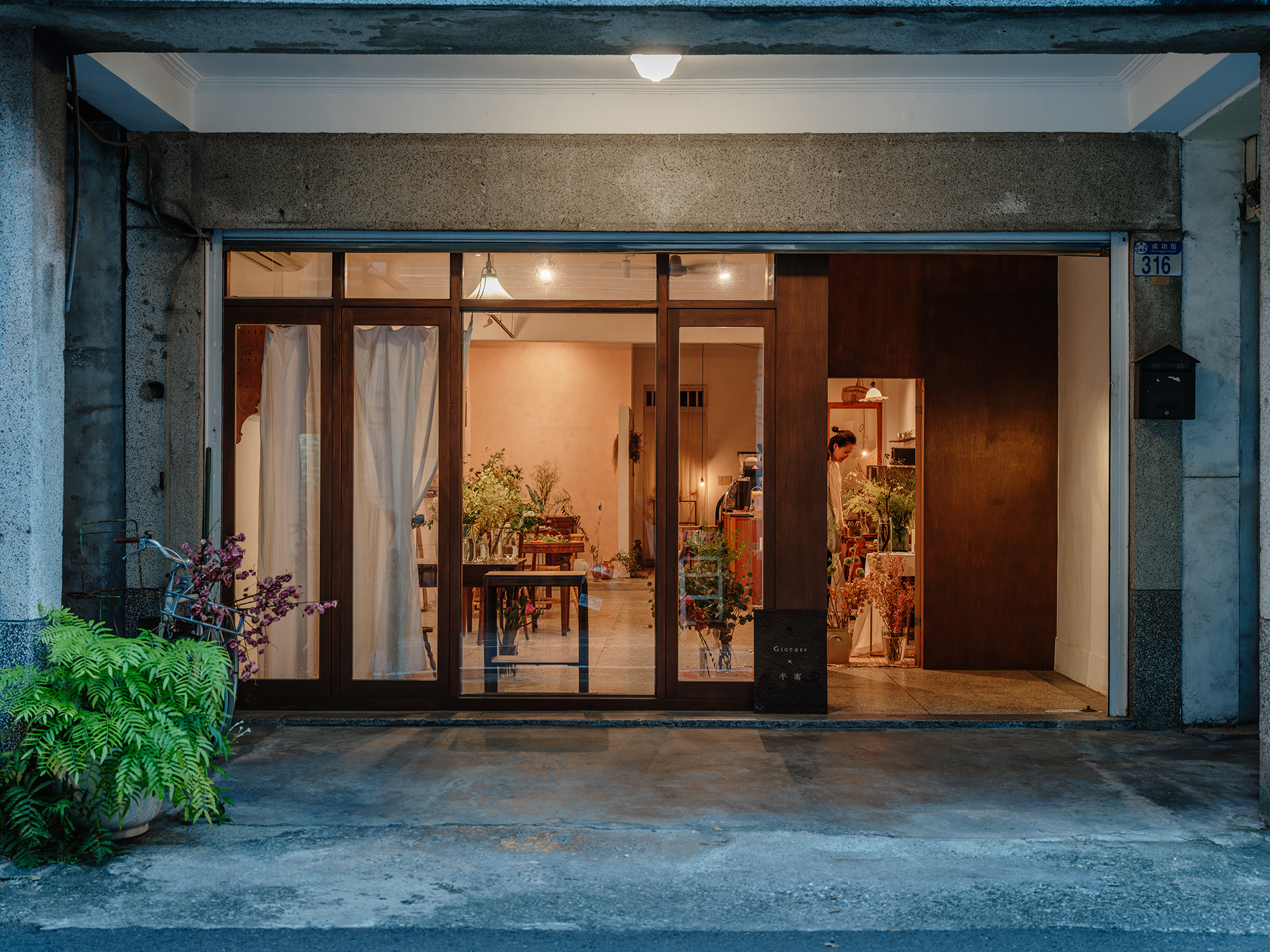
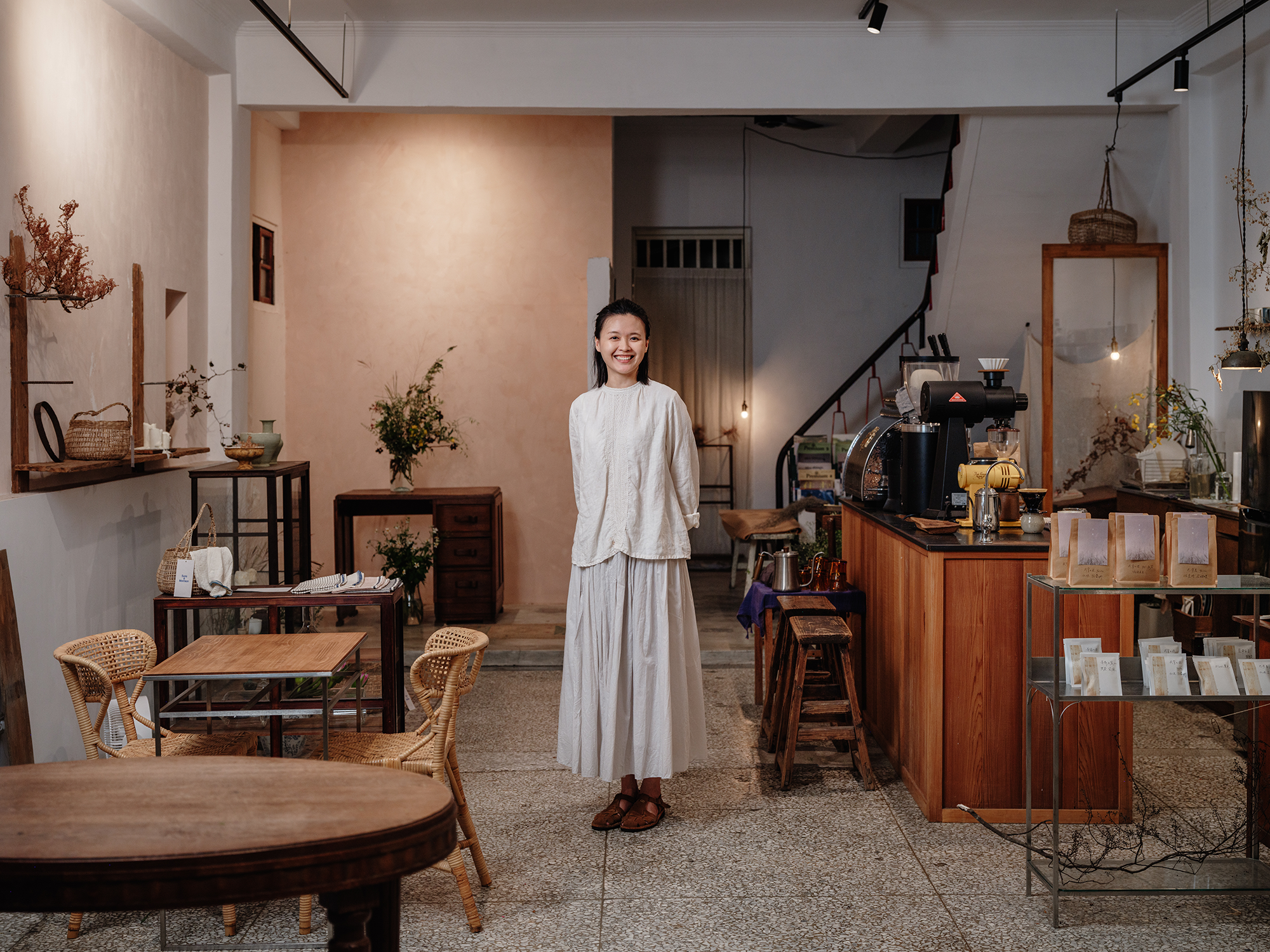
Nestled in a quiet residential alley of old Hualien City, Banyu Space was intentionally located by its founder, Yi-Yong. “When we travel, we love wandering through local neighborhoods—sometimes, you turn a corner and unexpectedly discover a quiet little shop. That feeling of gentle surprise is exactly the atmosphere I want to create,” she shares. Banyu is a space where her favorite travel memories are subtly woven into every detail—from the interior arrangement, the roasting of coffee, to the making of each dessert. These elements come together to express the aesthetic experiences she’s collected through life.
“We’re not a ‘Japanese-style’ café, nor are we a retro house café. Banyu simply reflects our own rhythm, our own sensibility.” Much time and thought were spent curating objects from different eras, carefully composing a visual scene that mirrors the one in her mind.
Located in the historic Gouzaiwei district of Hualien, Banyu Space once housed the old Meiqi dry cleaner. A few years ago, the space was lovingly transformed. Alongside coffee, desserts, and curated lifestyle items, floral arrangements became a new part of the daily setting. The soft aroma of coffee and flowers now lingers in the air—welcoming guests at any time of day with a quiet, fragrant presence.
The café offers hand-brewed pour-over, espresso-based drinks, artisan desserts, and teas. It’s not just a café, but also a small exhibition space showcasing works by artists invited by Yi-Yong—featuring handcrafted pieces such as weaving, ceramics, and other tactile forms of craft. Through Banyu, these objects find a way to connect with a wider audience.
Coffee, for Yi-Yong, is the most genuine portrait of everyday life. All beans are roasted in-house, with a focus on pour-over and espresso, as well as take-home options like whole beans and drip bags—ideal for those who enjoy light, fruity brews. In recent years, floral work has also become part of Banyu’s creative offerings, including bouquet orders, custom floral design, nighttime flower bars, and flower arranging workshops woven into daily life.
【Space Requirements】
1.Designed to harmonize with in-store curated objects
2.Flexible placement to adapt to spatial arrangements
3.Natural hues that enhance the aesthetic of selected items
【Rug】
“Banyu is our way of expressing a refined sense of everyday aesthetics—a distilled portrait of how we live. That’s why there is coffee, curated objects, and in recent years, an extension into scent and floral arrangement.”
The seating inside is intentionally spaced, allowing room for vintage pieces and selected objects to breathe. While these items may appear to be casually placed on the floor or against the walls, each position—each pairing of vessels, their heights, and relationships—is a reflection of Yi-Yong’s personal aesthetic practice.
A handcrafted floor mat woven from the sheath fibers of Galangal leaves rests gently on the ground like a magic carpet—carrying with it the tastes, choices, and sensibilities of Banyu. It resonates with the hand-made quality of the surrounding objects and offers them a quiet, grounded resting place within the space.
半寓咖啡
半寓咖啡開在老花蓮市區寧靜的住宅巷弄之間,是店主一詠刻意的選址,「在旅行的時候我們很喜歡走進住宅區巷弄,偶爾會在某個轉角留意到一間店,安安靜靜卻又驚喜,是我希望傳遞的氛圍。」將鍾愛的愜意旅行經驗,融入半寓的環境之中。從空間的陳列,咖啡的烘焙,甜點的製作,皆是半寓的一點一滴與用心,體現著著他們在生活中所經歷的美感經驗。「我們不是日系或是老宅咖啡廳,我們的風格,就是半寓的。因此花了許多時間在嘗試不同時期物件的安置,還原出腦海裡關於一個美的畫面。」
半寓咖啡座落在老花蓮的市區溝仔尾,前身是美琪乾洗店。
幾年前店內重新整理之後,除了咖啡、甜點及選物外,亦加入了花藝與空間的搭配。淡淡的咖啡與花香就如同是這裡的主人,在任何時間來到半寓都能感受到這樣的香氣繚繞。
店內主要販售手沖、義式咖啡、手工甜品及茶類等飲品項目,是咖啡館,也同時是小型的展覽空間,展示著由一詠邀請而來的器物作家,包含編織、陶藝等各類工藝物件,透過半寓這個平台分享給大眾。
咖啡是一詠他們生活之間,最真實的畫面。咖啡採自家烘焙,主要提供手沖、義式咖啡等品項。另外販售自家烘焙的咖啡豆與耳掛包,提供給喜歡品飲帶有果香輕爽氣息咖啡的朋友。而這幾年也開始結合選花、花束及花藝設計訂製、夜間花檯以及生活花課。
【空間需求】
1.配合店內選物進行搭配
2.可搭配店內環境擺設自由移動
3.襯托店內選物的自然色調
【地墊】
「半寓是我們對細膩生活美感的呈現,也是我們的生活縮影。因此有咖啡,有選物進駐,近年也開始進行氣味的延伸,到花的陳列與擺放。」
店內不過度擁擠的座位,保留了許多讓老件與選物呼吸的空間。這些選品或古物看似隨性的被安置在地面或牆面,但擺放的位置,器皿的高低與搭配,都是一詠的美學實踐。
以月桃葉鞘纖維所編織而成的手工地墊,如同一張魔法飛毯,承載了半寓的喜好、選擇與品味,更呼應了這些物件原本的手作氛圍,也提供了店裡物件們一個新的安居場所。


芭樂 Guava
【Habitat and Conditions】Guava, often called the “national fruit,” is highly adaptable and thrives in warm, humid climates with plenty of sunlight. It requires well-drained soil and protection from strong winds. Once planted, the tree can bear fruit within the same year.
【Biological Characteristics】The bark is brown but peels easily, giving the trunk a smooth appearance. The leaves are long and oval-shaped, with a lighter-colored underside covered in fine, soft hairs. The history of its cultivation in Taiwan dates back at least 200 years.
【Collector】 Yan Ju HUANG, Chan Wei HSU, Hong Lin LIU
【Uses】Rich in vitamin C and easily accessible, guava is regarded as the “national fruit.” The native Taiwan guava has softer flesh and a more intense flavor, and its juice was once extremely popular. Besides its fruit, guava leaves are used to make tea—refreshing and caffeine-free, typically prepared like white tea. Additionally, the leaves serve as a fiber source for handmade paper production.
【Location】 23°50'0.5575" N 121°36’74.0230" E
Ruisui Township, formerly known as “Shuiwei,” has about two-thirds of its population engaged primarily in agriculture. Nestled in a narrow valley between the Coastal and Central Mountain Ranges, the area benefits from diverse natural conditions. The Xiuguluan, Hongye, and Malangou Rivers flow through the township, supporting a thriving agricultural and livestock industry. The region is known for its abundant production of tea, fruits, and other cash crops, and it is also famous for its natural hot springs. Ruisui is considered one of the most developed agricultural and tourism leisure areas in Hualien County.
The township is home to nearly equal populations of Minnan and Hakka people alongside indigenous communities, creating a richly diverse and harmonious cultural environment. Throughout the year, various seasonal events and festivals celebrate the unique traditions and heritage of each group, making Ruisui a vibrant tapestry of nature, culture, and community.
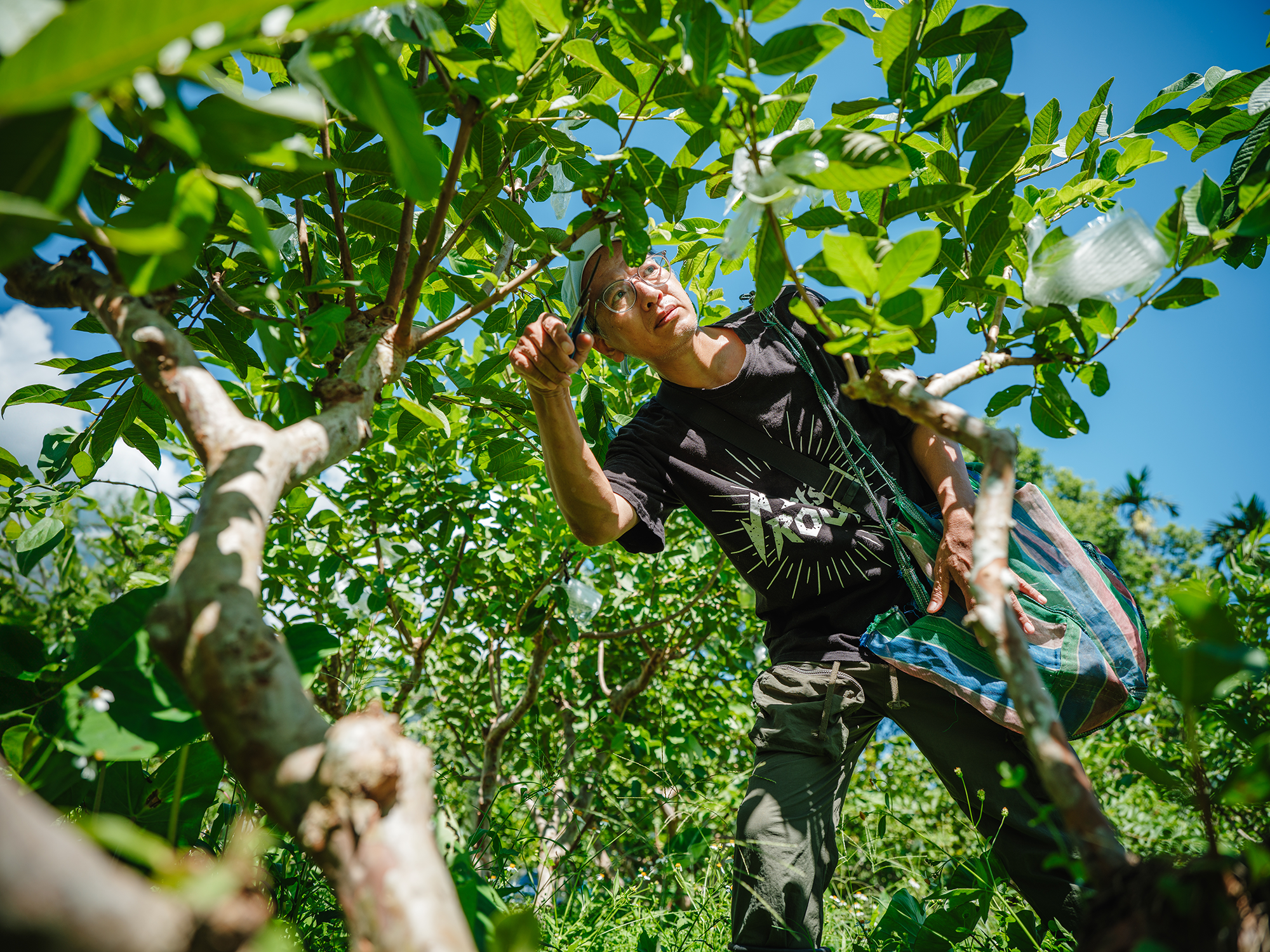
【Collection Process】Having previously worked as a senior sales professional in a luxury brand, Yan Ju HUANG understands that the key to making customers fall in love with a product lies in creating a unique experience and process around it. “Mile Orchard is more than just a producer. After returning to manage my family’s orchard, I shifted to organic and herbal cultivation methods, and also introduced agricultural experiences for customers. Getting hands-on with the crops is a completely different experience from simply buying the fruit,” he explains.
HUANG has always sought to create diverse ways for people to engage with his work. “I’ve never heard of anyone making lighting fixtures from guava leaves before, but if this helps promote guava in a new, even premium way, then it’s absolutely something to support!” Huang tends to the fruit trees, looking at the leaves in his hands with hopeful anticipation.
【生長環境與條件】人稱「國民水果」的芭樂,適應性廣泛,喜好日照充足與溫暖潮濕的氣候,需排水性良好且避風環境,當年定植,同年即可結果。
【植物特徵】皮為褐色,但易脫落使樹幹呈現平滑狀,葉子呈長橢圓形,背面顏色較淡,有細柔毛,於台灣的種植歷史至少可追溯兩百年。
【採集者】黃彥儒、許展維、劉鋐霖
【用途】因富含豐富的維他命C,且取得容易,被視為「國民水果」,原生種土芭樂肉質較軟且味道濃郁,榨汁飲用曾紅極一時。芭樂葉除了可以拿來製茶,味道清爽且無咖啡因,多數採用白茶製法,葉子本身也可作為纖維材料製成手抄紙。
【位置】23°50'0.5575" N 121°36’74.0230" E
瑞穗鄉舊稱「水尾」,有三分之二的人口以農業為主要工作,因緊鄰海岸山脈與中央山脈的狹窄縱谷區段,天然條件多元豐富,更有秀姑巒溪、紅葉溪、馬蘭鉤溪流經此處,因此農業與畜牧業發達,盛產茶葉、水果等經濟作物,更因有天然溫泉而遠近馳名,是花蓮縣內農業與觀光休閒產業發展最為成熟的地方。同時,鄉內閩客與原住民族人口接近各半,是一個多元族群共融的鄉鎮,一年當中有屬於各族群的時序與節慶,從產物到人文精彩萬分。
【採集過程】本身原來在精品品牌工作擔任資深銷售的黃彥儒,深知讓顧客喜歡上一個東西的關鍵,來自於創造它的獨特經驗與過程。「彌勒果園不只是生產者,我回來接手家中的果園後,除了採用有機與草本種植的方式改變照護方法,同時導入顧客農事體驗,親自去接觸農作物,和單純購買的行為是完全不一樣的。」喜歡讓一件事情有多元的方式被體驗是黃彥儒一直在做的嘗試。「我從來沒聽過有人拿芭樂葉來製造燈具,但如果因為這樣而讓芭樂多一種方式被推廣甚至精品化,一定要支持啊!!」黃彥儒梳著果樹,對手中的葉充滿期待。



Peaceful BrunFee
Peaceful BrunFee (formerly Pinghe Restaurant) is the first café brand of the Hehe Universe series to open in downtown Hualien. It continues the vision and ethos of founder Shen Shize, who runs the Hehe series with a quiet, steady spirit: “I follow the rhythm of my own heart—not simply because it’s what everyone else is doing.” Originating from Pinghe Village in Shoufeng Township, the Xiaohe brand carries the gentle pace and character of its birthplace into every store. Currently, four Xiaohe locations in Hualien—Xiaohe B&B, Xiaohe Valley, Xiaohe Point, and Peaceful BrunFee—serve the needs of travelers, each expressing a unique perspective of the Hehe Universe.
Formerly focused on Asian-style charcoal-grilled cuisine, Peaceful BrunFee will transform into an all-day café in November, offering coffee and brunch. This shift reflects a refined pace for the brand—one that echoes the slower, thoughtful rhythm of life in Pinghe Village, encouraging guests to linger, stroll, and savor their time.
The original name Pinghe Hotel comes from Pinghe Village in Shoufeng, Hualien—Shen’s hometown and the birthplace of the Xiaohe philosophy. Known for its open-flame grilled dishes—including appetizers, brunch, and rice bowls—the café also offers signature donuts, waffles, and smoothies perfect for a leisurely afternoon treat.
Staying true to Xiaohe’s brand spirit, Peaceful BrunFeewill continue to serve a delightful selection of menu items such as ice cream milkshakes, fresh fruit smoothies, soufflé pancakes, handmade curry pork patties, mentaiko udon, and meatballs—promising more to look forward to.
【Space Requirements】
1.Light fixture as a decorative element above the counter
2.Creates a visual focal point upon entering the space
3.Lampshade must be light-permeable
【Pendant Lamp Shade】
“The lifestyle in Hualien is defined by effortless simplicity and a natural, unpretentious atmosphere—yet always grounded in thoughtful intention.”
Making the dining space feel engaging and inviting became the key design focus for the lighting fixtures. In a space meant for relaxed gatherings among friends, the foremost consideration was ensuring that the lampshade would allow light to pass through, providing ample illumination.
Inspired by guava leaves, the lampshade design uses their naturally short fibers to form paper-like sheets, shaping the body of the fixture. When lit from within, the lamp softly reveals the delicate textures and natural hues of the leaf veins—uncontrived, yet immediately eye-catching as guests enter the space.
小和步朗
小和步朗(原平和飯店),作為和和宇宙系列首間開設於花蓮市區的Cafe品牌,延續著主理人諶世澤經營和和系列店家的態度精神:「按照自我內心的步調去走,而不是因為大家都在做,我就跟著一起做。」源自於壽豐鄉平和村的小和,每間店皆帶有獨特的平和世界風采,融入在每個系列的DNA裡頭,目前在花蓮共擁有四家店「小和民宿」、「小和山谷」、「小和好點」及「小和步朗」,打理且供應著遊客在旅遊中的一切所需,持續傳遞著獨特的平和宇宙觀。
從亞洲風格的炭烤料理,在今年11月之後將轉變成為全天供應咖啡與早午餐的cafe,是品牌小和對店內步調的調整。希望以輕食與咖啡的形式,延續花蓮壽豐平和村的生活步調,讓客人更有餘韻的漫步停留。
平和飯店,店名源於花蓮壽豐鄉的「平和」村,是諶世澤生長的地方,也是小和系列的起源地。主打「直火碳烤」的料理,包含開胃菜、早午餐和飯類餐點,另外招牌的甜甜圈、鬆餅和果昔飲品等,適合午茶時段享用。
延續小和品牌精神的餐點,小和步朗未來將持續提供包含冰淇淋奶昔、新鮮果昔、舒芙蕾鬆餅、手打肉排咖哩、明太子烏龍麵及肉丸等,敬請期待。
【空間需求】
1.櫃檯上方的燈飾點綴
2.創造民眾一進到店內的視覺亮點
3.燈罩需透光
【燈罩】
「花蓮的Life Style就是不過多的刻意、不造作的自然氛圍,但用心不可少。」
要如何讓用餐的空間變得有趣,是這次在燈罩設計上的要點。適合三五好友輕鬆聚餐的空間,首要考量便是燈罩需透光,確保光源充足。以芭樂葉片為表現的材料,結合其原有的短纖維特性,以造紙方式圈出燈罩的空間。透過燈泡的光源,投射出芭樂葉脈的纖維紋理與自然色澤,不矯揉造作,但卻是民眾一進到店內的視覺亮點。


Muron
Muron—a name inspired by the banyan tree—traces its origins back to a family-run tofu dessert shop beneath a banyan tree in Taipei. Quietly, it found new roots between the mountains and ocean of Hualien.
“To drink tea is, in essence, to wait,” says Naomi, Muron’s founder. Unlike the booming coffee scene, tea culture in Taiwan is a quieter presence. Through Muron, Naomi hopes to rekindle appreciation for the rich aromas and stories found in Taiwan-grown tea. From harvesting to processing, Naomi personally takes part in every step to ensure an authentic tea-drinking experience.
Housed in a former Japanese-era residence—once an official’s home for Taiwan Power Company employees—Muron retains original terrazzo flooring and hinoki cypress interiors. A private tatami room adds to the space’s quiet charm. The shop offers handpicked Taiwanese teas, Chinese-style desserts, and curated goods, making it a haven for mindful tea enjoyment.
Tea is an art of patience. Every detail—water quality, temperature, steeping time—shapes the final flavor. Muron’s menu features a range of Taiwanese teas, including premium brews, cold-steeped infusions, natural floral tisanes, tea-based cocktails, and delicately paired Chinese sweets.
The water used is sourced from mountain springs in Taiwan’s Central Range, ensuring consistency and purity. Naomi’s own high mountain oolong, handcrafted with care, is known for its unique floral and fruity notes. Each tea is served with a card detailing its origin, growing environment, and ideal brewing instructions, inviting guests to savor tea in its fullest expression.
【Space Requirements】
1.An element of the five-sense experience during tea appreciation
2.A tea setting that highlights and complements the character of the tea itself
【Tea Set】
"In the practice of tea ceremony, the most valued aspect is the engagement of all five senses, especially in experiencing the spirit of tea and the process of tasting it. The tea setting—not just a surface for serving tea but also a reflection of the host’s aesthetic sensibility—plays a central role in this ritual."
Placed on the surface of a tatami table, the tea setting becomes a vital part of the tea experience, emphasizing the senses of sight and feeling. It offers a visual focal point during the quiet, immersive moments of brewing and savoring.
Designed with careful proportion, the tea mat leaves two-thirds of the tabletop intentionally bare, unfolding horizontally in a staggered form that drapes naturally over the table’s edge. This arrangement prevents the cloth from catching when pouring or preparing tea. Dyed with natural guava leaf pigment to harmonize with the tea and the warm tones of the tatami space, the fabric retains subtle impressions of the leaf veins—echoing nature’s textures. Lightweight and easy to store, the mat is both practical and poetic, designed to quietly support the tea itself as the main character of the experience.
木容
帶有榕樹意涵的茶藝空間木容,從台北一棵榕樹下的家族豆花店發跡,悄悄地來到花蓮的山海之間,落地生根。「喝茶求的其實就是一個等字。在台灣,品茶的風氣不如咖啡興盛,希望能在這片好景致中,引領大家品一壺從土地長出來的香氣濃郁臺灣特色茶。」店主Naomi從採茶、抄茶到製茶工序都親手參與,為的是傳遞更好的飲茶體驗。通透明亮的茶室,白天、夜晚與香氣揉合出的百變樣貌,這樣的體驗,便是Naomi希望創造的靜謐木容時光。
木容目前所居的空間為日據時代建築,曾是台電提供給員工居所的官邸。店內保留了磨石子地以及原有的檜木裝潢的年代感,另外設有塌塌米座席的獨立和室空間。主要販售台灣手採茶、中式甜點以及選物商品,是間適合悠閒品茗的茶藝空間。
喝茶是等待的藝術。每款茶品合適的溫度、沖浸泡的時間以及泡茶的水質皆會引響到茶沖煮的風味。木容的茶品項目主要販售台灣茶,從茗茶、冰釀茶、天然花草茶、酒精性飲品、茶類特調到佐茶的各類中式甜品。每道茶品從準備到品茗都需要時間,希望每位來到店內的客人都能預留充足的時間,體驗茶道。
泡茶的水也是一種講究,木容使用來自中央山脈的山泉水,確保茶表現的穩定度。其中高山烏龍為Naomi自己製成,具有獨特果香以及花香氣。點茶皆會搭配茶卡,分享茶葉製成與生長環境,並記錄每一泡合適的沖泡時間與溫度,讓客人能喝到茶的完整風味。
【空間需求】
1.品茶時候作為五感體驗的一環
2.以茶為主角,襯托出茶特色的茶席
【茶席】
「茶道體驗裡最重視的是五感 ,主要就是在體驗茶的道跟品茶過程。而茶席便是飲茶的桌席,也能顯示出茶席主人的審美內涵。」
置放於和室桌面上的茶席,同為體驗茶道的重要環節,著重在五感中的眼和心,品茶環節中等待、沉浸與凸顯茶品的視覺停留點。
茶席的設計上,配合杯具的使用大小,刻意留白了桌面三分之二的空間,以橫式鋪排開來,參差的造型,自然垂墜於桌緣。這樣的設計讓沖煮或倒茶時,不易勾扯到布料。配合和室與茶品的成色,選用了芭樂葉植物染為茶席染色,紋理上則保留了些許植物葉脈紋理的造型,同時帶有輕盈、收納方便等特性。


構樹 Paper Mulberry
【Habitat and Conditions】The paper mulberry (Broussonetia papyrifera) is often considered a pioneer species in lowland or low-altitude areas. In Taiwan, it can be found across the island at elevations below 1,000 meters, thriving in fallow fields, roadsides, orchards, and forest edges. Highly sun-loving, it grows at an exceptionally rapid rate.
【Biological Characteristics】 Paper mulberry is widely distributed, highly adaptable, and remarkably resilient. It has vigorous growth and reproduces easily, quickly establishing itself in various environments. Its dense foliage often provides shade for more shade-tolerant secondary forest species.
The plant is dioecious, meaning male and female flowers grow on separate trees. Male trees produce long, spike-like flower clusters but do not bear fruit. Female trees develop round flower heads and bear spherical fruits that turn from green to bright orange-red when ripe.
【Collector】Sheng Da TSAI, Kai Hsuan KING, Zheng Yu LIN
【Uses】Due to its easy accessibility and rapid growth, the paper mulberry has long been used in various practical ways. When bent, the branches exude a milky white sap, which was traditionally believed to enhance lactation in animals. For this reason, it was often used as feed for cattle, goats, and deer—earning it the nickname "Deer Tree".
The tree's bark contains long, strong fibers with high cellulose content, making it suitable for papermaking. Indigenous communities have historically utilized the tree according to their needs—crafting bark into clothing, weaving ropes, creating dyes, and developing a unique bark cloth culture. During the flowering season, the male flower stamens can be cooked in soups or stir-fried, offering a distinctive texture and flavor, commonly referred to as "fuzzy greens".
【Location】23°89'97.355" N 121°48’0.1890" E
In the 1940s, during the outbreak of the Pacific War, the Japanese designated Liyu Lake and Tongmen Mountain as military defense zones. As a result, the Tongmenlan community within the defense zone was forcibly relocated. One group moved northward, settling about 400 meters north of the original village—this became present-day Tonglan. Another group moved southward, approximately two kilometers from the original site, to the foothills just south of Liyu Lake—this became the former site of Miyawan.
According to one account, the Miyawan community was originally established by the Tekedaya subgroup of the Seediq Atayal people, and was later inhabited by members of the Truku people. In the Truku language, Miyawan refers to a place abundant in Imperata cylindrica (white cogon grass). When building traditional thatched homes, people would come here to harvest this grass, and the act of collecting it was called Smiyawan, meaning “the place for harvesting white cogon grass.”
【Collection Process】You can see the paper mulberry tree in the mountains, fields, and along the way home—sometimes so often it blends into everyday life, other times it goes unnoticed entirely. “The first time I encountered the paper mulberry was when I went with Ina from Liuliu Indigenous Restaurant to gather male flowers for cooking. There were so many fine powders in the air, it triggered my allergies terribly, but it also made me deeply realize that the meaning of all things in the world lies in how much you understand them.” It can become a lamp, a drink, clothing, or food. Soaking the bark in clear stream water and rubbing it gently, I wonder—what will we transform you into?
【生長環境與條件】構樹常為平地或低海拔區域的先驅植物,分佈於台灣全島低海拔1000公尺以下之平地至山區,多見於廢耕地、道路兩旁、果園和森林的邊緣,非常喜歡陽光,生長極度快速。
【植物特徵】構樹的分佈廣、適應性強、抗逆性強,生長力旺盛,容易繁殖茁壯,為一些耐陰的次生林植物遮蔭。構樹為雌雄異株,雄株會開花,但不會結果,雄株的花為一根長條形的花束;雌株會開花也會結果,雌株的花是圓形的花球,雌株的果實為圓球形,成熟時,由綠轉成橘紅色。
【採集者】蔡昇達、金凱旋、林貞余
【用途】因取得容易且生長快速,並且凹折後有乳白色汁液,過去的人們認為可以增進動物乳汁分泌,可以供作牛羊鹿的飼料,因得別名為「鹿仔樹」。樹皮的纖維細長,含有很高的纖維質,可用來造紙,原住民族將樹依據不同需求做為衣服或編繩、染劑使用,並且發展出獨特的「樹皮布文化」,構樹開花時,雄蕊入菜煮湯也可清炒,是口感特殊的「毛毛菜」。
【位置】23°89'97.355" N 121°48’0.1890" E
於一九四十年代,太平洋戰爭爆發,日人將鯉魚潭與銅門山作為戰防區,在戰防區的銅文蘭社被迫遷移,一部分向北遷到原社北方四百公尺處,就是後來的銅蘭:向南的部分遷到原址南方二公里處,鯉魚潭稍南的山麓,也就是米亞丸的舊址。
有一說法,米亞丸社區原屬泰雅族賽德克亞族群德克達雅群人首先建立的部落,後來太魯閣族人才遷居於此。族語「Miyawan」是該地區盛產白根茅草,搭建家屋頂時,族人到此採茅草蓋茅屋用,稱採收白根茅草之地謂之「Smiyawan」。
【採集過程】在山林裡、田野間、回家的路上都能見到構樹的身影,日常到有時候根本沒看見它。「我第一次接觸構樹時是跟著流流社原住民餐廳的Ina去採集雄蕊入菜,超多粉的,鼻子過敏的要死,但也深刻理解世界萬物的存在意義,在於你能理解它多少。」可以是燈、是酒、是衣、是食物,將樹皮泡在清澈的溪水裡搓揉,想著,我們要把你變成什麼樣子呢?


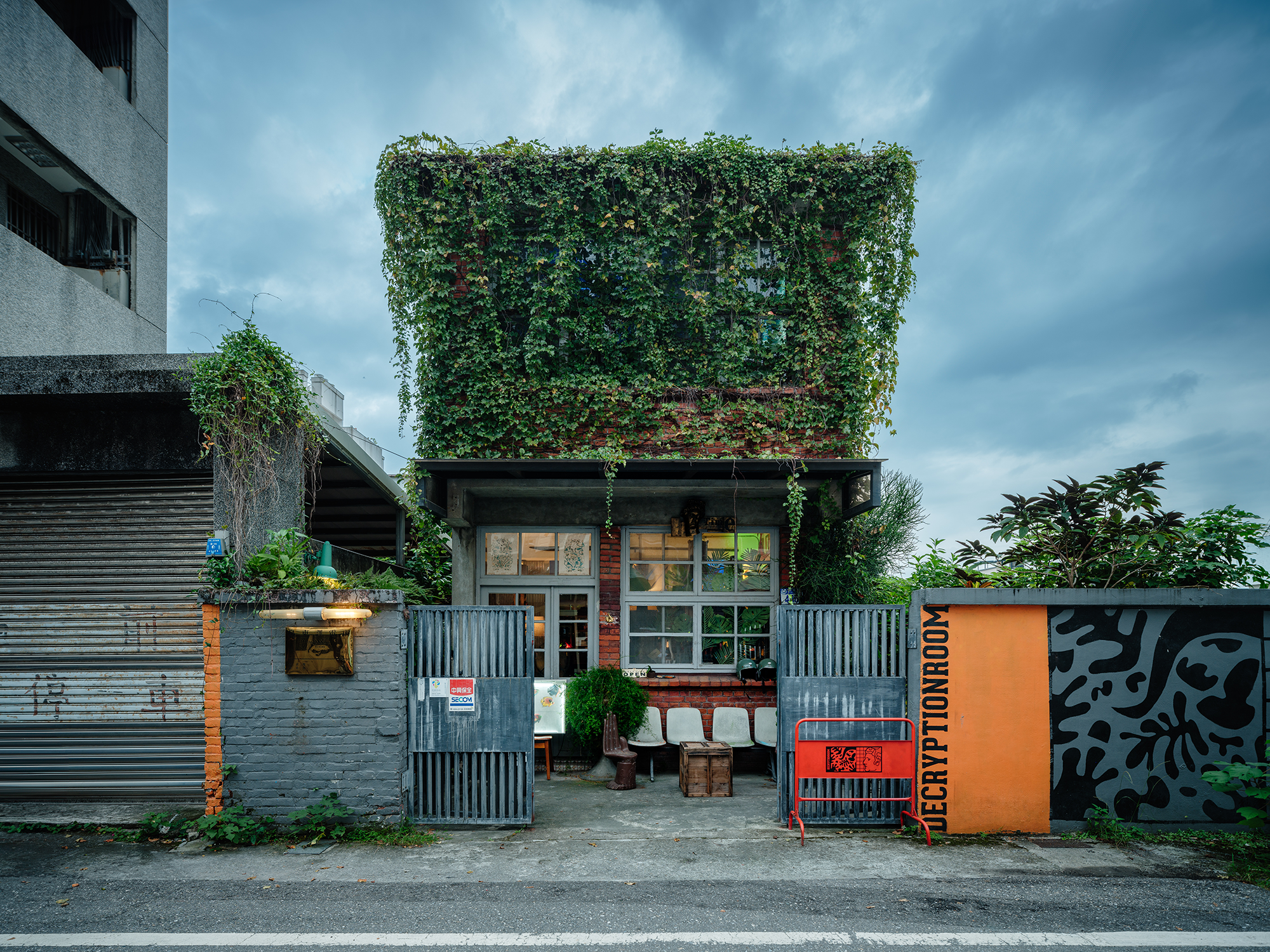
Decryption Room
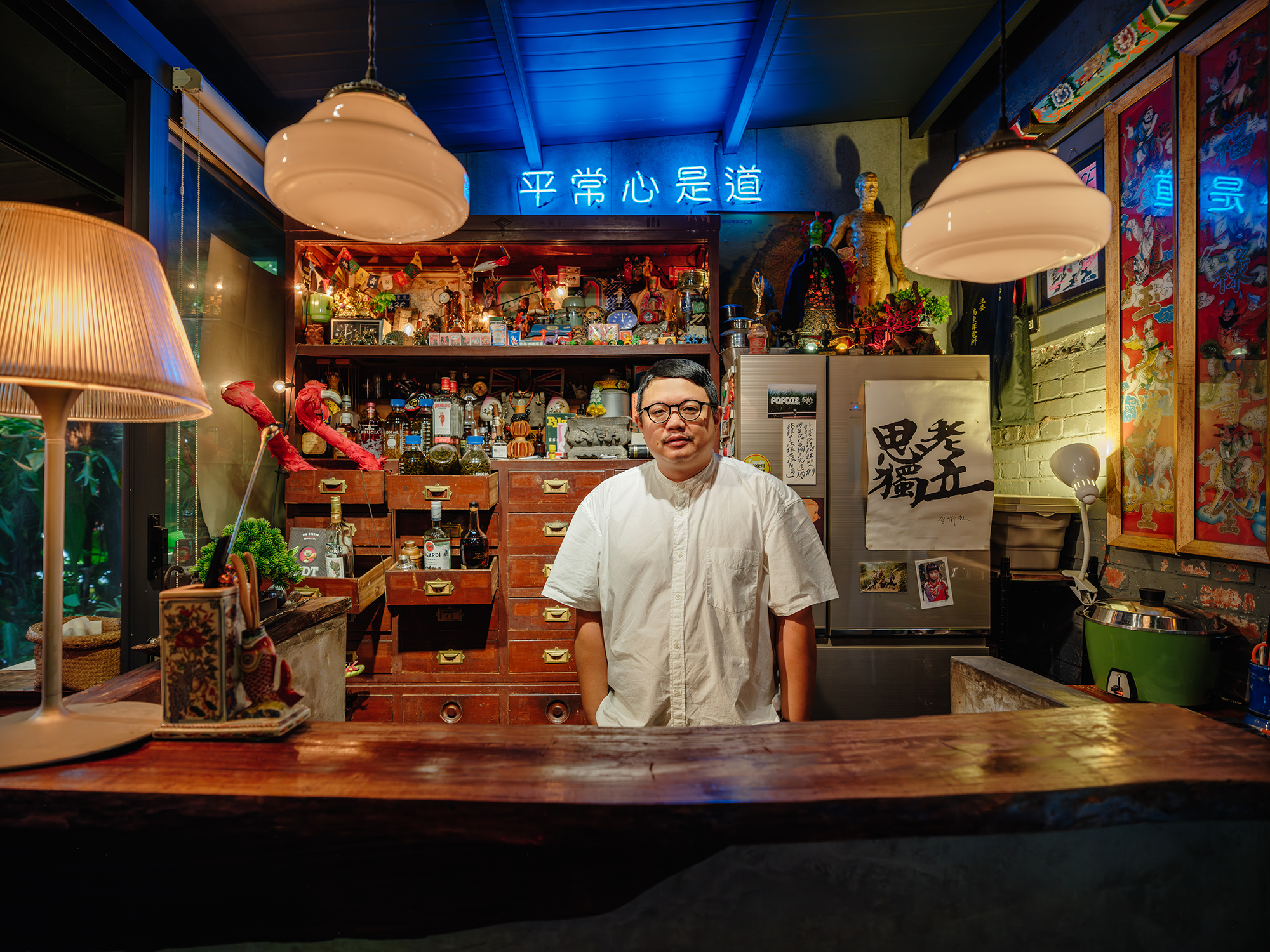
“Some of my best childhood memories were in Hualien. Now, the three of us run Decryption Room together—my mom handles the Hakka snacks, and I’m responsible for developing the drinks. But through all these foods and beverages, we want to share a sense of home.”
Before entering Decryption Room, you pass through a narrow green pathway between the building and a front wall, allowing only one person at a time. Sliding open the entrance door, the lush greenery outside contrasts vividly with the interior, where antique objects from different eras decorate the walls and corners in various poses—each a treasured piece collected by the owner, A-Guang. “They’re all artworks, rooted in diverse cultures and histories. Most people write diaries to record life, but for me, these objects are my memoirs, documenting my own growth!”
Located in Gouzaiwei, Decryption Room was formerly the dormitory for the director of the Taiwan Railway Police. The exposed red bricks and traditional house layout deeply attracted A-Guang to settle here. The seating is arranged casually, freeing the space from conventional store design constraints.
Decryption Room feels like a lifestyle bar, mainly offering six classic cocktails aimed at creating a relaxed, at-home drinking atmosphere for friends. It also blends in nostalgic touches like the sour plum juice often prepared by his mother and tea grown by his great uncle in Nantou. The space doubles as an art and culture hub, sharing A-Guang’s collection of artifacts and crafts gathered over the years.
The Hakka snacks are crafted by A-Guang’s mother, blending Hakka flavors with influences from his father-in-law’s Shanghai cuisine. Dishes like Hakka vegetable buns, pumpkin cake, and steamed rice with preserved meat in lotus leaf create a unique, mixed style. For A-Guang, it’s all about sharing his imagination and feelings about family and life.
【Space Requirements】
1.Non-traditional shading fabric
2.Reflecting the natural tree species outdoors
3.Maintaining gaps to allow sunlight to pass through
【Roof Sun Shade】
“The life trajectory of migration and settlement makes Island East Decryption Room a place of eclectic yet harmonious coexistence.”
This time, the design of the shading fabric departs from the conventional logic of such objects. It breaks free from the usual concept that shading fabric must completely block out light. Instead, it uses paper mulberry bark as the material for plant dyeing and takes inspiration from the natural gaps between the leaves of this tree species to shape the design. The result is a shading fabric with many small pockets.
This design not only echoes the thriving paper mulberry tree growing steadily by the window but also preserves breathing space, allowing sunlight to freely and unrestrictedly weave through the interior and exterior of the building.
島東譯電所
「小時候最棒的回憶都是在花蓮,現在一家三口共同經營島東譯電所,由媽媽負責客系小食,我則主責飲品的開發。但都是想透過這些餐飲,分享一個家的情境。」
進到島東譯電所之前,要先經過建物與前牆面之間,只能單人通過的綠色小徑。滑開店口大門,與外頭的一片綠意形成顏色對比,各時期的老件古物迎面而來,以各種姿態豐富著牆面及每個角落,都是負責人阿光的收藏。「它們都是藝術作品,源自不同的文化與歷史。一般人都是用日記在書寫生活,但對我來說,這些物件就是我紀錄整理自身成長的回憶錄!」
座落在溝仔尾的島東譯電所,其前身是台鐵鐵路警察局局長的宿舍。裸露的紅磚與家屋的格局,是深深吸引阿光落地深根的原因。店內只有隨性安排的座位,擺脫傳統店面就應該要怎樣的束縛。
島東就像是一間生活酒吧,主要提供六款經典調酒,旨在打造朋友在家隨性喝酒的感受,同時結合回憶中媽媽常準備的酸梅湯與三叔公在南投所種的茶。這裡同樣也作為一處藝文基地,分享著阿光在每個時期蒐藏而來的文物與工藝品。
店裡的客家小食由光媽一手開發,融合了客家與姑爺的上海菜口味特色,如:客家菜包、南瓜糕與臘味荷葉蒸飯,風格或許很混搭,但對阿光來說,都是在分享他對家及生活的想像與感受。
【空間需求】
1.非傳統形式的遮光布幔
2.呼應戶外的自然樹種
3.保留縫隙讓陽光穿透
【遮光布幔】
「遷徙與落腳的人生軌跡,讓島東譯電所成為一處混搭卻又協調的所在。」
這次的遮光布幔造型不同以往該物件被使用的邏輯,跳脫遮光布幔就該隔絕光源的框架思考。選以構樹皮作為植物染,再以該樹種葉片之間的孔洞為原型,作為設計造型,最後成為帶有許多小口袋的遮光布幔。這樣的設計思考除了呼應窗旁豎立年年更為茁壯的構樹,亦留了呼吸空間,供陽光無拘無束地自由穿梭於建築空間內外。


Hon Book Club
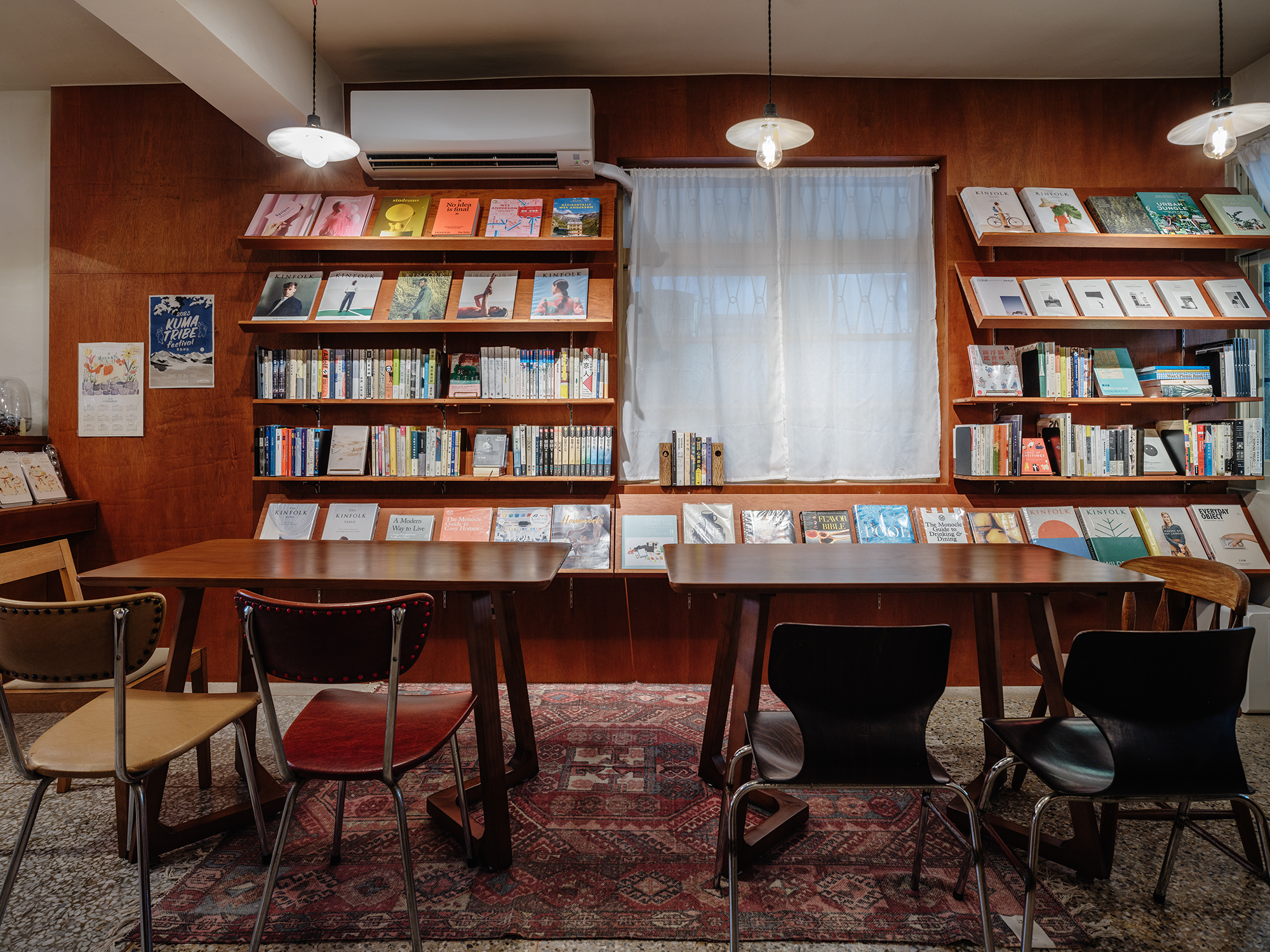
Li CHEN, who loves literature, and Zong Ye, who loves coffee, combined their passions to create Hon Book Club. Their shared theme is “home,” which inspired the name Hon. The scent of coffee beans and the gentle rustling of paper, coupled with the freedom of removing shoes, bring visitors closer to the world of books and coffee before their eyes. “Every book is like a piece of art — from the binding to the cover’s first impression, each contains the careful thought and craftsmanship of many people. We love reading books, but we also love appreciating their design and appearance.”
Located in the quiet residential area of Meilun, Hon Book Club’s interior blends Japanese miscellaneous goods style with British charm. The space is arranged like a cozy living room, with cherrywood tones and the feel of an old house inspired by the owners’ travels to bookstores and cafes in the UK and France. These elements form the main color palette of the decor and bookshelves.
Hon Book Club offers a variety of services to meet diverse daily needs — from work and rest to seeking inspiration and light dining. It’s a perfect place to immerse oneself in work or pause for a while to browse and read, providing visitors with more choices.
The collection of books and magazines spans five main categories: literature and art, ideal homes, food and soul, atypical design, and exploration of the earth. Visitors can browse and read on-site without time limits, while enjoying coffee or caffeine-free drinks to accompany their reading moments.
【Space Requirements】
1.Bookends that adjust according to the displayed books
2.Serve as decoration and visual surprises within the store’s book wall
【Bookend】
“We hope to shape Hon into the ideal home-like space — a cozy reading environment where the scent of books and coffee blend, allowing inspiration to converge.”
In response to the literary atmosphere of Hon Library, bookends made from paper mulberry bark were chosen as supportive design objects for the books. The surface reveals textured veins and patterns from the bark’s roasting process, while its color closely matches the cherry wood tones widely used in the store. Each book is like a small forest, where individuals embark on a personal journey to seek inspiration through the pages. Passing through these journeys, pausing briefly like birds resting in tree hollows nestled between the bookends. Amid the search for inspiration, facing the book wall brings an added sense of anticipation.
Hon圖書俱樂部
喜歡文學的陳莉與喜歡咖啡的宗燁,揉合了二人的喜好,於是Hon圖書俱樂部誕生了。家是他們希望和大家分享的主題,因此有了Hon這個名字。豆香與莎莎的紙張觸碰聲,在脫去鞋子的束縛之後,似乎又離眼前的書中咖啡世界更貼近了些。「每本書都像是件藝術作品,從裝幀到第一印象封面的設計,蘊含了許多人的巧思與細心。我們喜歡看書,更喜歡欣賞這些書的裝幀與面貌。」
位於美崙寧靜住宅區裡的Hon圖書,整體店內結合日雜與英倫的風情,空間的擺設宛如家裡的客廳,兩位經營者以自己印象中在英法旅行時書店及咖啡廳中常見到的櫻桃木色與老宅結合,作為店中裝潢與書櫃的主要成色。
Hon圖書的服務項目涵蓋了人一日生活的多元需求,包含工作、休憩、尋覓靈感以及簡單的餐飲供應。適合埋首於工作,而需要尋覓靈感時,也可以稍做停留,翻翻藏書,展開閱讀,為民眾提供更多選擇。
書籍及雜誌的選擇上則橫跨文學藝術、理想的家、飲食靈魂、非典型設計、探索大地等五大主要類別,於店內供民眾瀏覽閱讀,不限時間,平時也提供咖啡或無咖啡因飲品,陪伴度過閱讀的時光。
【空間需求】
1.配合書本改變陳列的書擋
2.成為店內書牆的佈置與視覺小驚喜
【書擋】
「我們希望將Hon打造成理想中的家的樣貌,愜意的閱讀空間,書與咖啡香的融合,能讓靈感匯聚。」
回應了Hon圖書館的書香空間,選用了構樹皮製作書擋,成為書本依靠的設計物件。表面可見樹皮因烘烤過後而顯現的脈紋肌理,色澤上則親近店內大量搭配的櫻桃木色。每本書都是小小森林,個人於紙間展開的尋找靈感之旅,穿梭其中,因短暫休憩而停留,如同在書檔間躲藏於樹洞中休息的鳥兒。找尋靈感之餘,讓人在面對書牆的時候,似乎又多了一份期待。



檳榔 Areca Nut
【Habitat and Conditions】Belonging to the palm family, this plant thrives in tropical or subtropical climates, favoring high temperatures, humidity, abundant rainfall, and frost-free conditions year-round. Mature plants reach a height of approximately 10 to 20 meters and can live up to 50 years. It takes about five to six years from planting for the betel palm to flower and bear fruit.
【Biological Characteristics】The inflorescence emerges from the leaf axils as a spike, with pale yellow-green flowers that emit a subtle fragrance. After flowering, dry fruits develop—ovoid drupes clustered together. Each tree produces 3 to 4 spikes bearing fruit once annually. When the betel palm flowers, its scent wafts through the mountain forests with the summer night breeze, becoming an iconic aroma of Hualien’s summer evenings.
【Collector】 Vilian Manququ, Tulbus Manququ, Laung Tanapima
【Uses】Beyond its use as food, the entire betel palm is utilized and holds important roles across different cultural groups. During weddings, funerals, and celebrations, it serves as dowry or gifts; in rituals, it is offered as ancestral offerings or used as ceremonial tools, each with its own customs and forms. Betel palm flowers can be distilled into essential oils, the betel nut core can be used in cooking, and the leaf sheaths serve as children’s toys or can be crafted into utensils.
【Location】23°56'6.1725" N 121°35’1.8238” E
The Mayuan Tribe, located at the foot of the Central Mountain Range in Wanrong Township, is currently the only settlement of the Dan subgroup of the Bunun people in Eastern Taiwan. Between 1933 and 1937, about 1,300 tribe members were relocated to Wanrong Township, Hualien, under the Japanese government’s group migration policy. Due to Mayuan’s lower altitude and different environmental and climatic conditions, as well as exposure to unfamiliar diseases, around 18% to 20% of the tribe members succumbed to malaria. Since 2009, the youth of the Mayuan Tribe, concerned about the gradual disconnection between traditional territories and cultural practices from daily life, have initiated a series of efforts to reconnect with their roots and apply ancient wisdom in contemporary ways, prompting a renewed reflection on the profound meaning of "Ming Bunun".
【Collection Process】“Now I’m taking you to gather at this place, which used to be the Mayuan Public School during the Japanese era. Over there is the intact flag-raising platform facing toward Japan. Many elders come here and still cry — there are too many memories, both good and bad, intertwined.” Vilian of the Manququ family, who has been involved in betel nut harvesting for over 15 years, knows the industry and the plant’s growing characteristics intimately. “Betel nut has a bad reputation, I’m well aware of that, but it also plays an important role in supporting countless families in our rural area.” Vilian lit a cigarette and gazed thoughtfully at a small mountain of betel nut leaf sheaths he had stacked.
【生長環境與條件】屬棕櫚科,為熱帶或亞熱帶植物,性喜高溫、潮濕、多雨、終年無霜。成齡植株高約10-20公尺,成活期可長達50年檳榔從定植到開花結果,約需五、六年時間。
【植物特徵】肉穗花序自葉腋抽出,花淡黃綠色,具有幽香,花後乾果,核果卵狀橢圓形,聚集叢生;每年抽穗結果一次,每樹著生3~4芎,檳榔花開時,香氣隨風遍佈山林,是花蓮夏夜晚風極具代表性的氣味。
【採集者】Vilian Manququ、Tulbus Manququ、Laung Tanapima
【用途】檳榔除了食用之外,全株皆可使用,在不同族群的文化之中也扮演著許多重要的角色。婚喪喜慶時為嫁妝或禮物、祭祀時成為給祖先的供品、儀式時成為法器等,都有其規範與形式。檳榔花可提煉精油、檳榔芯可入菜,葉鞘是孩童的遊戲用具也可製成器皿。
【位置】23°56'6.1725" N 121°35’1.8238” E
馬遠部落,座落於萬榮鄉中央山脈山腳下,是目前東台灣僅有的丹社群布農族人聚落。馬遠的丹大社人是在1933年至1937年間,約1300名族人在日本人集團移住政策下,遷移到花蓮萬榮鄉,由於馬遠海拔較低,且環境氣候條件、病菌等有別於舊社,當時約有18%至20%的族人罹患瘧疾去世。從2009年開始,馬遠部落青年有感於傳統領域與文化逐漸脫離生活日常,開始發起一系列尋根與古老智慧當代實踐的行動,重新思考「Ming Bunun」的深刻意義。
【採集過程】「現在帶你們來採集的這個地方是以前日本時代的馬遠公學校,旁邊那座就是完整的升旗台,面向日本的方向,其實很多老人家到這邊來還會哭,有太多好與不好並存的回憶。」Manququ家族的Vilian,從事採檳榔的工作超過15年,對於檳榔的產業與生長特性暸若指掌。「檳榔有很多惡名,我當然都知道,但他也是在我們鄉下養活無數家庭的重要角色。」Vilian點了一根煙,看著被他堆疊而起的一座檳榔葉鞘小山沈思。


Sista Mill
Pushing open the double doors of Sista Mill, you're greeted by the towering golden trumpet tree that amplifies the height and openness of the space. The semi-open kitchen fills the air with the warm aroma of freshly baked bread and the comforting scent of charcoal fire. “Business minds aren’t something you can easily imagine, but ours are pretty simple—if we say it's charcoal-grilled bread, then we really use charcoal to grill it!” laughs co-founder Panpan, as she talks about the restaurant's unwavering commitment.
Sista Mill offers a different kind of brunch and all-day dining experience, with most of its dishes served alongside house-made, hand-crafted European breads. “Saying we stick to our principles is easy—but it actually takes a strong heart to keep going!”
The space has two distinct faces: by day, it’s a casual eatery serving light meals; on select evenings, it transforms into a laid-back bar. There are no signature dishes here—everything is slow-cooked with care, using direct-fire charcoal grilling to bring out the natural flavors of each ingredient. Hidden menus and seasonal specials appear from time to time—it’s all up to chance whether you’ll catch them.
On the menu: pour-over coffee, house-baked European breads, desserts, braised meats, salads, and both alcoholic and non-alcoholic drinks. During occasional night openings, ad-hoc dishes are served to accompany classic cocktails.
The house breads—bagels, ciabatta, and dinner rolls—are made with naturally cultivated wild yeast and are brushed with butter before being toasted over open flame. This process gives them a lightly charred crust and a crisp texture. When evening falls, Sista Mill may quietly reopen, offering cocktails and small plates for a more relaxed, spontaneous kind of night.
【Space Requirements】
1.Tablecloth that fits the shape of the long table
2.Enhances the color tones of the brunch ingredients in the shop
3.Creates a sense of ritual
【Table Cloth】
“Most customers in the shop come in pairs or trios, with only one large table reserved for gatherings of family and friends. Adding a tablecloth to set the tone or create a sense of occasion feels like a lovely idea!”
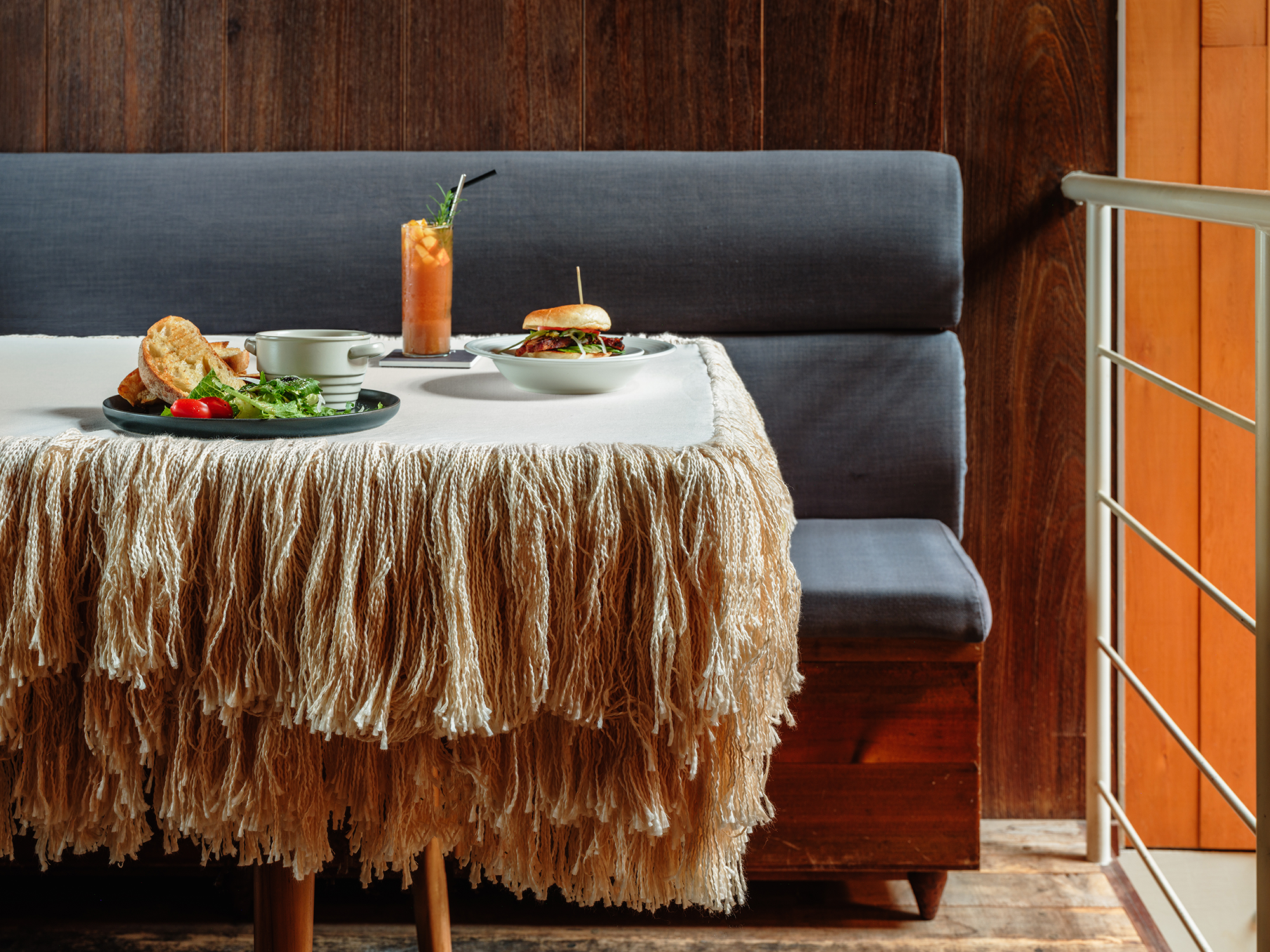
The long table surface suits family-style dining, making food sharing more convenient. This table runner was specially designed for the long table format. It is dyed using slices of betel nuts, with a form inspired by the clustered growth of betel flowers. Layered upward and naturally cascading over the edge of the table, it resembles the organic shape of scattered rice grains, enhancing the overall dining ambiance and character of the space.
Sista Mill 磨粉姊姊
推開Sista Mill的兩層大門,兩層樓高的黃金風鈴木帶出整體環境的挑高感。半開放式的廚房使店內時不時有撲鼻而來的麵包出爐香氣與炭火烤溫暖的味道。「生意人的腦不是你們可以想像,但是我們的腦簡單的多,說是炭烤麵包就真的用炭火烤下去!」負責人之一的潘潘笑著說起店裡的堅持。Sista Mill在日間提供早午餐及正餐外的另一種選擇,多數餐點皆搭配著自家生產手工歐式麵包,「堅持用說的簡單啦,但其實還需要一顆強大的心!」
Sista Mill 藏著兩付相異的面孔,日間提供輕食餐點,夜間偶爾加開,搖身一變成爲酒吧。店內沒有明星商品,但上桌的食材、麵包皆以直火碳烤,經由火烤帶出食材原有的香氣,因此每道餐點從準備到上桌需要一定的時間等待。偶有隱藏菜單或季節限定料理,吃不吃得到全看緣分。
手沖咖啡、自家生產手工歐式麵包、甜點、燉肉、沙拉、酒精及無酒精飲料。偶爾夜間營業時會有搭配調酒下肚的隨性料理。
店內自養野酵的麵包如貝果、巧巴達、小餐包,上桌前會抹上奶油以直火碳烤,帶出香氣,同時也讓麵包表體形成微焦色澤與酥脆口感。偶爾夜幕降臨時,會加開夜間時段,提供經典調酒及下酒菜等選擇。
【空間需求】
1.符合長桌桌型的桌布
2.襯托店內早午餐餐點食材的色調
3.儀式感打造
【餐桌布】
「店內來客多是2-3人用餐,唯有一組大桌,提供給親友或好友相聚。若有桌巾可以加入點綴,變換氛圍或是營造儀式感,好像很不錯!」
長型的桌面符合家庭式的用餐形式,食物分享上也方便。這次的餐桌布便是為長桌專門設計打造的長型桌巾。桌巾選用檳榔籽切片後進行染色,在造型上結合檳榔花成長階段時的擁簇感,以層層向上堆疊的方式,最後自然地於桌沿垂墜,如同稻穗散落開來的有機造型,襯托店內用餐的氛圍與氣質。


Lily of Island
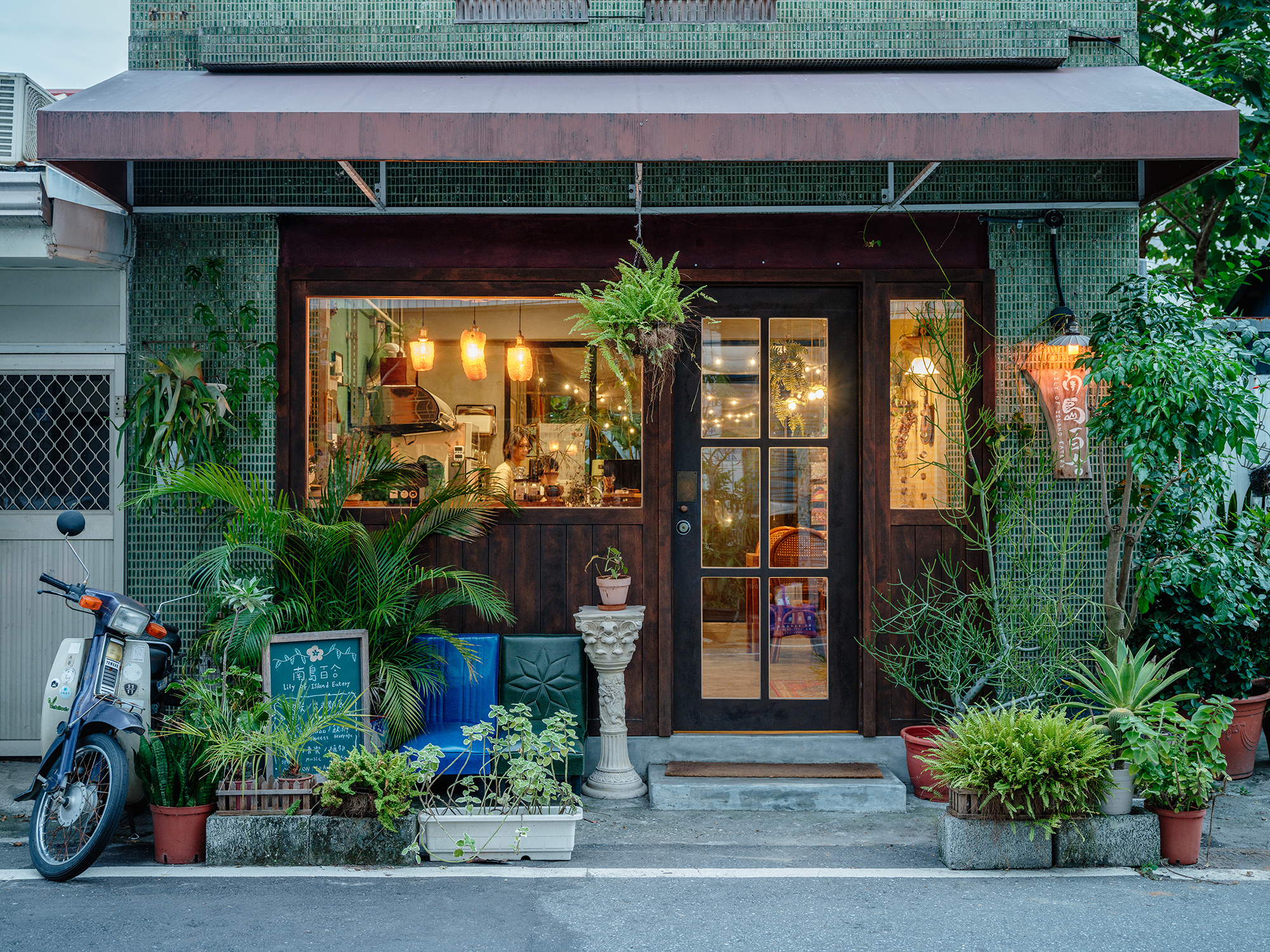
Located in the old town of Hualien, Lily of Island serves up the flavors of a mother’s kitchen. It is run by Chien-Hao and Mei-Zhen, a couple who relocated from Taipei and created a dining space where travel, Austronesian heritage, nature, and craftsmanship converge.
“We live life like a journey, which is why the shop inherited my mom’s nickname, Lily, and her signature dish—Tomato Beef Noodles. We hope Sister Lily’s tomato beef noodles can live on in a place where you can smell the scent of the Pacific Ocean!”
At Lily of Island, guests can enjoy Chinese, Western, and European-inspired dishes, either in the cozy indoor seating or within the lush garden outdoors. These dishes are an intergenerational fusion, born from Chien-Hao and Mei-Zhen’s travel memories and family heritage.
Positioned as a "jungle-style bistro," Lily of Island features dining furniture and objects marked by reuse and handmade details. From the dishes to the space itself, every element weaves together the themes of “nature” and “travel.” The food reflects delightful flavors discovered on journeys, now reimagined through a South Island lens and served to every guest.
In addition to indoor seating, a standout feature is the immersive outdoor garden area, surrounded by paper mulberry trees and diverse plants. The site also includes an outdoor stage, regularly hosting music, sound-based performances, talks, and art workshops—unfolding throughout the seasons in this South Island jungle stage.
“Sister Lily’s Tomato Beef Noodles” is a family recipe, passed down and refined over generations, and now a beloved signature dish. Other items like the Florentine tripe sandwich or churros are inspired by culinary reflections from past travels. For regulars, the must-try combo is a tripe sandwich with a bowl of beef broth—no noodles. Soak the bread in the rich broth, take a big bite—what could be more blissful than that?
【Space Requirements】
1.Reflects the identity of the jungle-style bistro
2.Smaller in size to avoid being too conspicuous
3.Accentuates the yellow tones within the interior space
【Pendant Lamp Shade】
"Our space incorporates many reused objects and traces of handmade craftsmanship. Therefore, we hope the lighting design can also reflect the urban jungle character of our shop."
To create a contrast with the existing dried plant lampshades in the interior, betel nut leaf sheaths were chosen as the material for this new lampshade design. After being fire-roasted, the material developed a distinct texture and rich, deep tones. The non-translucent quality of the sheath diffuses the light, casting a soft and scattered glow throughout the space.
南島百合
位於花蓮舊市區的南島百合,販售著母親的料理,由來自台北的移居者千豪與媄媜共同經營,是個將旅行、南島民族、自然、手工等元素交織在一起的餐飲文化空間。「我們將生活過得像旅行,因此讓店裏繼承了媽媽的小名百合與她的傳統料理—蕃茄牛肉麵。希望百合姐的番茄牛肉麵能在一個可以聞的到太平洋氣味的地方延續下來!」來到南島百合,可以選擇在室內雅座或戶外叢林品味來自中式、歐式及西式的佳餚,這些料理是跨世代的結合,是千豪與媄媜旅行的回憶,也是家族的記憶。
南島百合將自身定位為叢林系小餐館,用餐環境集結了許多再利用與手工痕跡的桌椅與物件,從餐點到用餐環境都結合了「自然」與「旅行」的元素。餐點橫跨台式、西式及歐洲風情,集結在旅行過程中所品嚐到的美好,以南島的方式,再現於每位客人的桌前。
除了室內雅座,空間的一大特點便是戶外叢林沉浸式座位,構樹、各類植栽環繞其中。同時運用既有場域,所打造出的戶外舞台,則不定期的帶來音樂、聲響、座談分享及藝術工作坊等活動,分批在四季的南島叢林舞台上演。
「百合姊的蕃茄牛肉麵」是店內歷經世代承傳下來加以改良後家傳料理,如今也成為店內的特色餐點。其他品項例如佛羅倫斯牛肚包、吉拿棒等,則是歷經旅行後對食物創作思考的匯聚。而店內老饕的吃法,是點一份牛肚包,配上一碗無麵的牛肉湯。以麵包吸飽湯頭,塞進嘴裡,還有什麼比這更幸福啦!
【空間需求】
1.回應店內叢林系小餐館定位
2.尺寸偏小不過於突兀
3.襯托室內空間裡的黃色色調
【燈罩】
「我們的空間結合了許多再利用的物件與手工的痕跡。因此希望燈具的呈現也能回應店裡的都市叢林特色。」
為了與店內已有的乾燥植物燈罩做出不同材質表現,在燈罩的設計與呈現上選用檳榔葉鞘,進行火烤後使材料產生不同質感與深色色澤。不透光的材質效果,讓光線以散射的路線投射到店裡的空間。



香蕉 Banana
【Habitat and Conditions】Bananas are tropical or subtropical crops and are tall, perennial herbaceous plants. They thrive in warm climates, with an optimal growth temperature between 24–32°C, and the ideal being around 27°C. The more days the climate remains within this temperature range, the earlier the plant produces flower buds (inflorescences) and the higher the potential yield.
【Biological Characteristics】The banana plant has large leaves arranged in a spiral pattern. Its inflorescence is terminal, emerging from the center of the pseudostem and hanging downward in a cluster. At the top of the inflorescence are female flowers, which develop into fruit. The middle portion bears neutral flowers, while the lower end contains male flowers. The fruit is a type of berry, containing numerous seeds that are hemispherical and black in color.
【Collector】Kufaw · Putun, Guan Wei WU, Shang Qian LI
【Uses】All parts of the banana plant have practical uses. Beyond the ripe fruit providing rich nutritional value, the plant can also be used to produce dye, alcohol, and utensils. Fibers can be extracted from the unopened pseudostem of the banana plant and spun into thread, which is then used for ropes and woven materials. Across the world, various cultures have used banana fiber to craft everyday items. In Taiwan, the banana fiber craft is especially recognized as a cultural hallmark of the Kavalan people.
【Location】23°49'4.2690" N 121°50’2.6424" E
Misi Natural Farming Area is located on the hillside beside Shiti Fishing Harbor in Fengbin Township, Hualien, within the traditional territory of the Gangkou (港口) community. After retiring in Tamsui, Taipei, Kufaw · Putun returned to his hometown to take over the family land.
“My brother and I never walked on paths made by humans; we followed animal trails to get up here. We cleared the land and planted with our own hands, working together with our people to create what you see today,” Kufaw said.
When he was young, he had no choice but to survive in the north. Now that he has the option, he wants to return to the place where he grew up — a place where food can be picked by hand and eaten immediately, and where everything needed for daily life can be made from materials found right at one’s feet.
【Collection Process】Following a winding mountain path narrow enough for only one vehicle, we arrived at the Misi Natural Farming Area. The moment the car door closed, the sound and vibrations stirred thousands of purple and blue butterflies that instantly filled the entire area.
“This is Gahnia lacera—their main nectar source. Since returning here, I’ve been working to restore the memories I had of this place as a child,” Kufaw said, leading us as he barefootly gathered materials in the way he once chased wild plants and animals.
“Bananas were the most common thing we used to fill our stomachs when we were kids. The leaves were used to hold food or offerings. But when I first came back, the land had been neglected for years and these plants had nowhere to grow, so I specifically replanted them.”
Even everyday things that are unused will disappear, Kufaw murmured thoughtfully throughout.
【生長環境與條件】香蕉為熱帶或亞熱帶作物,為高大型多年生草本植物,喜高溫、生長適溫為24~32℃,最適27℃,若氣候在此範圍內的天數越多,抽蕾越早,產量越高。
【生物特徵】葉片巨大,呈螺旋狀排列,花序頂生從假莖中央抽出,下垂成穗狀花序,花序上端為雌性花,發育成果實,中段為中性花,尾端為雄性花,果實為漿果,種子多粒呈半球形、黑色。
【採集者】Kufaw · Putun 、吳冠葳、李尚謙
【用途】全株皆有實用功能,除成熟果實可提供豐富營養元素外,也可成為染劑、製酒、器皿等。更可從未開花的香蕉假莖抽取纖維成絲,作為繩索及編織的纖維線材,在世界各地皆有不同民族使用香蕉絲製成各式生活用品,而台灣以噶瑪蘭族的香蕉絲工藝為其族群表徵。
【位置】23°49'4.2690" N 121°50’2.6424" E
米汐自然農耕園區,位於花蓮豐濱鄉石梯漁港旁的山腰處,為港口部落傳統領域範圍,kufaw · Putun 於台北淡水退休後,返鄉接手家族土地。「我和弟弟從沒有人類走的路徑,循著獸徑走上來,親手開墾、種植,和自己的族人相互合作打造成現在你看到的樣子。」Kufaw說他年輕時沒選擇,只能旅北生存,現在有了選擇,所以他想回到長大的地方,那個可以隨手採摘,就能將食物送入口中,或是利用腳邊材料製造生活一切所需之地。
【採集過程】沿著僅有一台車能通過的蜿蜒山徑抵達米汐自然農耕園區,一關上車門,因為聲響與空氣的震動,共上千隻的紫斑蝶與青斑蝶瞬間佈滿整個園區。「這個是高氏佛澤蘭,是牠們的蜜源植物,我回來這邊之後,就是一直在還原我小時候對這裡的記憶。」Kufaw帶領著我們在他赤腳追逐野生動植物的年紀裡摘取材料。「香蕉是我們小時候最常拿來墊肚子的,葉子拿來裝食物或祭品,但我剛回來時土地長年沒整理,它們沒有空間生長,是又特地種回來的。」再日常的東西沒有被使用,依然會消失,kufaw的嘴裡始終唸唸有詞。


Shelly Wine Only
Using wine to enrich life, savoring the distinct flavors each variety brings—this is the spirit Shelly hopes to share. Shelly Wine Only, Hualien’s first wine bar, is tucked away in an alley on Jianguo Road. Inside, three double-door refrigerators are stocked with a wide range of wines.
“We want to break the public’s fixed idea about wine. It should be approachable, easy to enjoy and share—not only paired with Western cuisine,” Shelly says passionately. She never holds back her knowledge about wine, often enriching her palate through food and drink, then recommending the perfect wine for each guest. Interestingly, while many consider rosé (pink wine) a fancy drink, Shelly suggests it pairs perfectly with Taiwanese dishes—like stinky tofu!
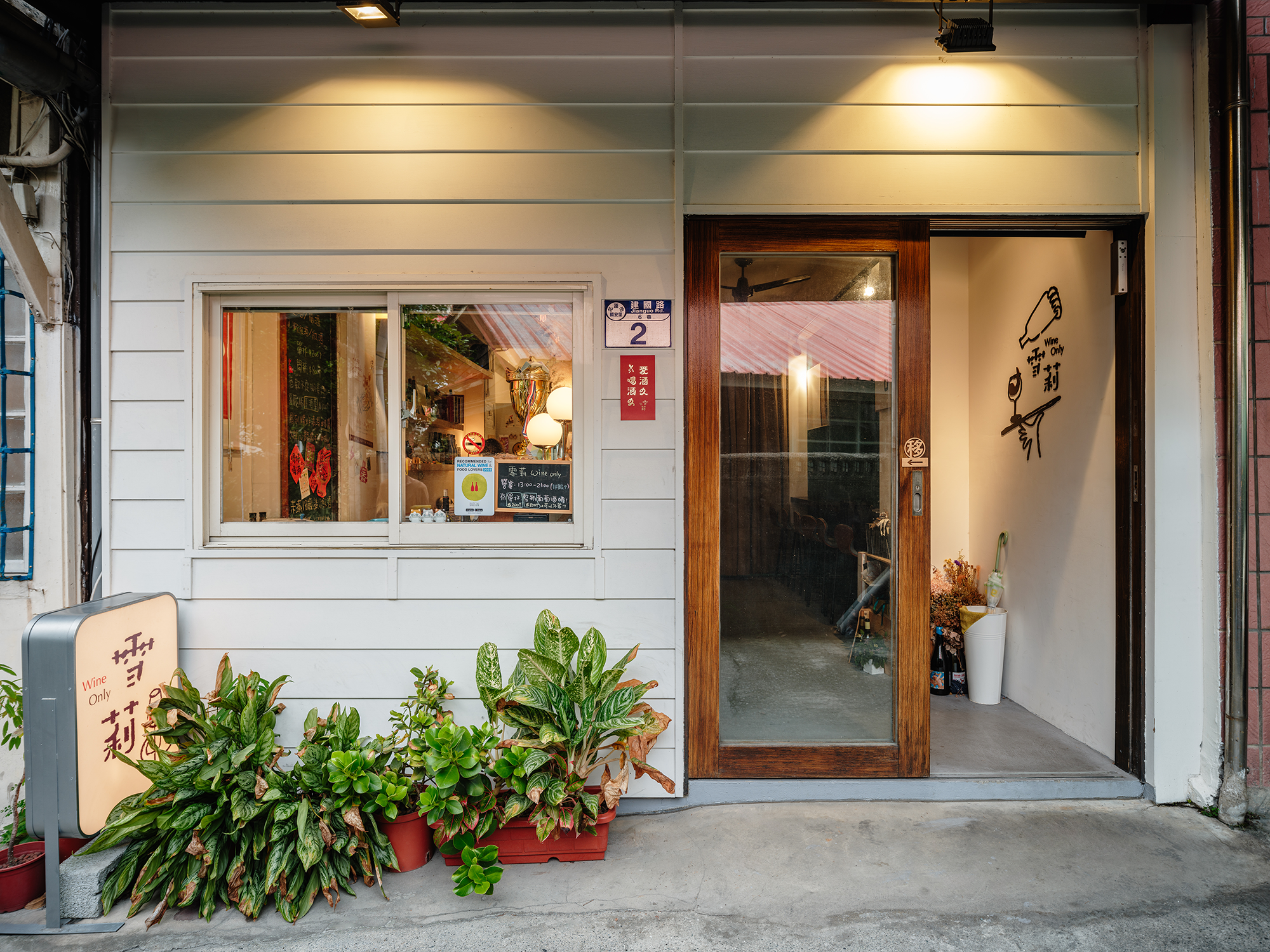
Hidden in an alley on Jianguo Road, the pure white outdoor wooden walls and large floor-to-ceiling windows create a bright, airy, and relaxed atmosphere. Inside, there’s a simple bar counter, and the transparent double-door refrigerators display a wide variety of wines for customers to choose based on their taste preferences. If you have any questions about flavors or wine, Shelly is always nearby to share her insights.
To ensure everyone can “drink well,” the bar offers a diverse selection including sparkling wine, sherry, sweet wines, red, rosé, orange, and white wines, as well as non-alcoholic pure grape juice! All types are available by the glass or by the bottle. And if you want to order any wine, any quantity is welcome!
Shelly hopes every guest finds a wine they love. Wine flavors range widely—from hints of asparagus juice, red bean soup, toasted bread to fresh cream—and are paired with a rotating hidden menu of bar snacks for patrons to enjoy. The bar has no minimum spending requirement, understanding that some guests drive, so there’s no pressure.
【Space Requirements】
1.Light-blocking fabric drapes that fit the shape of the wall
2.Size can be flexibly reduced or expanded
3.Colors that complement the relaxed ambiance of the space
【Light-Blocking Curtain】
The curtain hanging inside the shop is the first thing that catches your eye upon entering. Beyond separating the storage area behind it, it also serves as a decorative element within the interior scene. Dyed with bright hues from banana plants, combined with the natural horizontal leaf vein patterns of the fabric, the drape resembles gently falling leaves, creating a more pleasant and relaxing atmosphere for wine tasting. Usually kept in a semi-closed state, it moves with the flow of the ambiance—when friends or family reserve the space or enjoy lively conversation into the night, the entire curtain can be fully drawn to form a private nighttime room, crafting an exclusive wine-tasting atmosphere unique to Shelly.
雪莉Wine Only
用葡萄酒點綴生活,品飲各酒款特色所帶來的不同風味,是雪莉希望傳遞的精神。花蓮首間的葡萄酒吧—雪莉Wine Only,開設在建國路巷中,三個雙門冰箱內,儲滿各類酒款。「希望打破葡萄酒對大眾的既定印象,他應該是可以被輕鬆品飲與分享的親民酒種,不見得只能搭配西餐。」雪莉的熱情也讓她從不私藏關於葡萄酒的一切,平常藉由吃喝美食,豐富味覺,進而推薦合適每位客人更好的酒款給大眾。有趣的是,一般我們覺得看起來很高級的rose(粉紅酒),雪莉則推薦它是搭配台式食物—臭豆腐的好夥伴!
藏於在建國路的巷弄,純白的戶外木牆配上大落地窗,營造店內通透明亮與輕鬆的愜意感受。店內設有簡單的吧台桌,透明的雙門冰箱內則佈滿各式各樣的酒款,供民眾依口味喜好做選擇。若有任何關於口味或是葡萄酒等疑問,都可就近聽聽雪莉的分享。
為了能讓大家「喝」頓好的,店內販售的品項橫跨氣泡酒、雪莉酒、甜酒、紅酒、粉紅酒、橘酒與白酒等多樣個性酒款,也提供無酒精飲料純葡萄汁!各種品項均可單杯或開瓶飲用。若有想訂購的酒款,數量不拘,皆可訂購!
希望來到店內的客人,都能喝到自己喜歡的酒款,葡萄酒的風味特型形形色色,從津津蘆筍汁、紅豆湯、烤土司到鮮奶油的味道,搭配每日品項不固定的隱藏版下酒菜,供民眾選擇。店內採無低消形式,體諒開車來的朋友們,沒有壓力。
【空間需求】
1.符合牆面造型的遮光布幔
2.尺寸可彈性縮減與擴增
3.襯托店內輕鬆情調的色澤
【遮光簾】
垂掛於店內的窗簾,是進到店內第一個視線落下的地方。除了隔絕後方的儲存空間,更多的是作為室內畫面的一幅點綴。香蕉植物染的明亮成色,結合植物原有的水平葉脈紋理布幔,如同輕盈自然垂墜的葉片,使品酒的空間更為愉悅放鬆。平時維持著半遮蔽的狀態,跟隨著氛圍的流動,如親朋好友包場或是相談甚歡到夜晚,也會將整片簾子展開,成為夜晚的獨立包廂,營造專屬於雪莉的品酒氛圍。



5+ Store
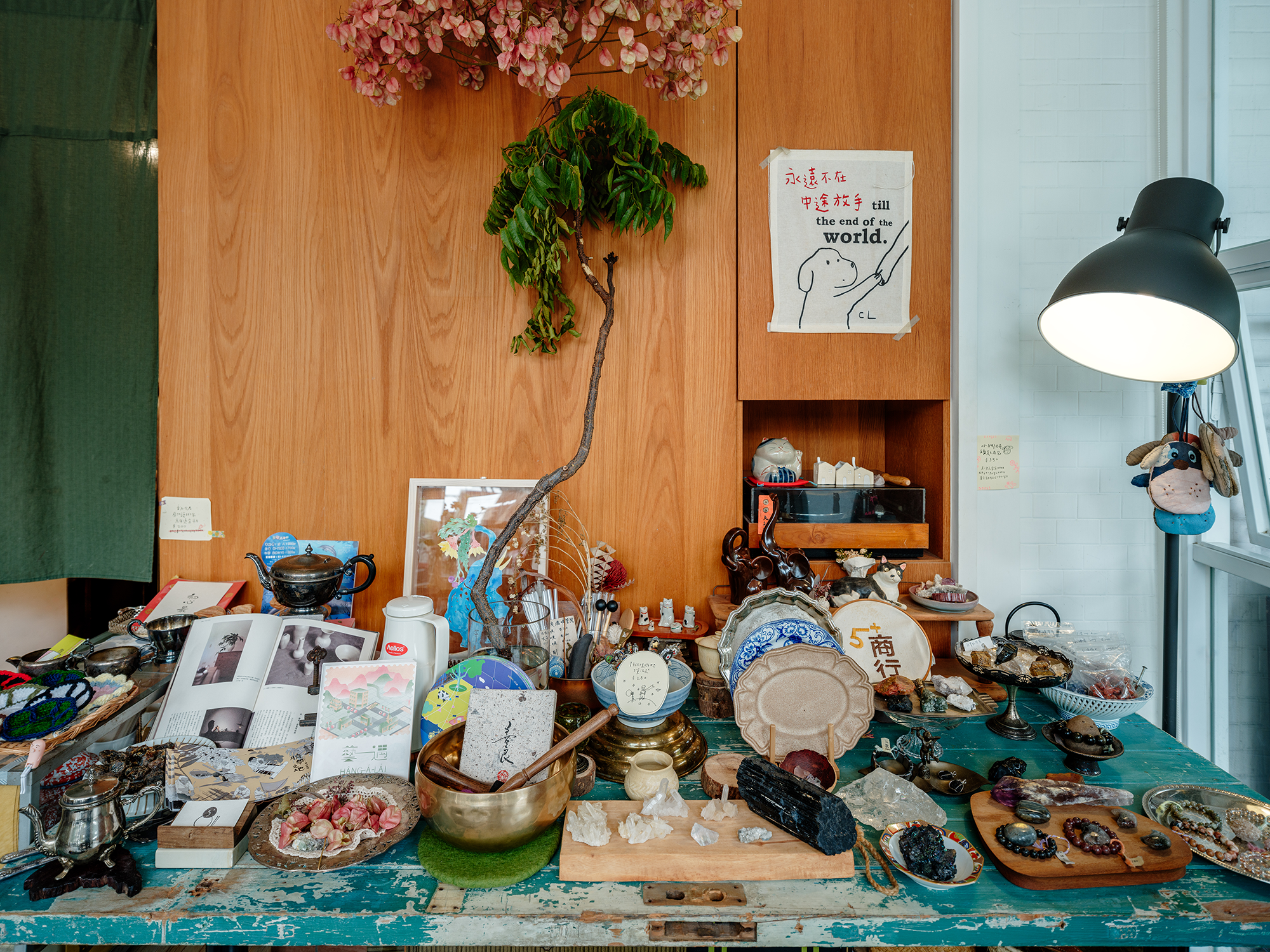
A trip to Hualien, with its breathtaking mountain and sea views, inspired Erica, the current owner of 5+ Store, to relocate there. “When 5+ was just starting, we began by setting up stalls at local markets. Because we love Hualien rice so much, we made rice balls in various flavors using Hualien rice to sell at the markets. That’s actually where the two round shapes in the 5+ logo come from!” Today, besides the classic rice balls, the shop offers a variety of sweet, savory, light meals, and beverages. All ingredients are sourced from local small farmers. No matter how busy it gets, Erica always welcomes customers with her warm and generous smile. “We also have a special opening time: 11:44. It’s an angel number reminding us to stay steadfast, persevere, and believe in ourselves.” Perhaps it is this persistence that has made 5+ a friendly dining space where both people and stray animals can live happily.
From the white exterior walls to the bright, open interior featuring terrazzo floors combined with floral tiles, the space exudes a rare warmth and comfort. Erica hopes to share ingredients she loves with everyone, so most of the food materials come from local Hualien farmers. The shop is also home to Erica’s foster dogs and cats, who roam freely and accompany every visitor to 5+.
At any time during business hours, you’ll find guests of all ages filling the seats at 5+. Besides sweet, savory, light meals, and drinks, the store also offers catering services and custom whole cakes.
No matter how busy the shop gets, 5+ always takes care to explain each dish when it’s served. “We carefully introduce the origin and story behind every ingredient—from the water we use to each dish on the table—so guests can better appreciate the value of their food while they enjoy it.”
【Space Requirements】
1.Combines usage scenarios for both daytime and nighttime.
2.Strong and durable.
【Signboard】
"The signboard is like the soul of the store; it is the first impression we offer to our customers."
Serving as the storefront’s face while fulfilling the functions of “recognition” and “durability,” the signboard is not only about establishing the first impression but also a unique crafted object that complements the overall atmosphere of the store.
The signboard is made using fibers extracted from banana pseudostems. Layers of banana fibers are stacked repeatedly to create an organic texture as the base, which highlights the 5+ logo design and its original black color. Finally, it is mounted on a sturdy base, welcoming guests all year round.
5+商行
一次旅行至花蓮的經驗,沿途經過的山海風景,使5+商行如今的負責人Erica下定決心移居到了花蓮。「5+成立初期,從往返於市集擺攤開始。因為太愛花蓮的米,所以用花蓮米製成各種口味的飯糰跑攤販售,這也是5+ logo兩顆圓球造型的由來!」如今店內除了經典的飯糰品項,也提供其他甜、鹹、輕食與飲品等選擇。所有食材皆取自在地小農,而店內不論忙碌與否,Erica總是會展露她熱情大方的笑容。「另外我們有一個特殊的營業時間,11:44分,這是組天使數字,提醒著我們保持堅定與毅力,相信自己。」或許就是這樣的堅持,使5+成為一個讓民眾舒心,浪浪也生活的開心的友善餐飲環境。
從外觀的白色牆面,到室內磨石子地結合花磚地面的明亮通透空間,皆流露著不易得的溫暖舒適。希望與大眾分享自己也喜歡的食材,因此店內的多數餐點的原物料,來自於花蓮的小農。而5+內也常駐著Erica在中途收留的狗狗與貓貓,在店內穿梭,陪伴著每位來到5+的朋友。
在任何的營業時段來到5+商行,每每可見各年齡層的客人滿座其中。除了甜、鹹、輕食與飲品等選擇之外,也提供外燴服務與整模蛋糕的訂製。
不論店內的忙碌程度,在餐點上桌時,5+一定會進行細心的說菜服務。「我們都會細心的為客人說菜,介紹他們從店內的水到面前每一道菜的食材產地及其故事。客人品菜之餘,也能更好的了解眼前食物的可貴。」
【空間需求】
1.結合白天與夜晚的使用情境
2.堅固耐用
【立牌】
「立牌就像是店裡的靈魂,是我們對外提供給客人的第一印象。」
作為店裡的門面且兼具「辨識」與「堅固」的功能,立牌不單是第一印象的建立,同時是襯托整體店中氣質的獨特工藝物件。
立牌的製作上應用取自於香蕉假莖的纖維,以香蕉絲反覆堆疊形成的有機質地作為底層,以此襯托出5+ logo造型與原有的黑色色彩。最後安裝於穩固的基座上,迎接著一年四季來到店裡的客人。


2023
Hualien Plants Color
This year, Hualien Design Center selected five local plants from Hualien to deeply explore their “surface” and “inner” characteristics, creating innovative local objects that reshape the interaction between people and environmental materials in everyday life.
At the same time, combined with the 2022 Hualien Design Center’s Soil-Inspired Color Project, a joint exhibition is presented, inviting you to visit in person and explore the endless possibilities of this city together.
Xindi
Beautiful Galangal|decorative accessories
Banyu Space
Beautiful Galangal|rug
Peaceful BrunFee
Guava|pendant lamp shade
Muron
Guava|tea set
Decryption Room
Paper mulberry|roof shade
Hon Book Club
Paper mulberry|bookend
Sista Mill
Areca nut|table cloth
Lily of Island
Areca nut|pendant lamp shade
Shelly Wine Only
Banana|curtain
5+ Store
Banana|Signboard
2023 | Hualien Color #002 | 11/01-11/30 | Hualien Gallery | Hualien
adviser|Hualien County Government
organizer|Culture Affairs Beauru, Hualien County Government
operator|Hualien Design Center
curator|Sen Shen Studio, Studio Kao Gong Ji
plan host | Sheng Da TSAI
art director|Cheng Tsung FENG
textile designer|Tzu Chi YIN
textile craftsman|Si Ray CHEN
exhibit designer|Sheng WANG
graphic design|Hong Lin LIU
journal copywrite|Sheng Da TSAI, Ko Fan LIN
arts administration|Ko Fan LIN
woodwork|Weige Interior
lighting design|Oude Light
lighting engineer|Beamtec Lighting
printing | 6Jian Into
photography|FIXER Photographic Studio, Bo Han CHEN
2024
花蓮人拾花蓮材 # 002 取色於植物的創造計畫
今年花蓮設計中心揀選花蓮在地五種植物,深入研究其「表」、「裏」特性,進行全新的地方物件設計,重塑人與環境材料互動的生活風景。同時結合2022年花蓮設計中心取色於土壤的創造計畫,進行聯合展出,邀請您親臨現場一同探索這個城市的無限可能。
心地日常
月桃|裝飾品
半寓咖啡
月桃|地墊
小和步朗
芭樂|燈罩
木容
芭樂|茶席
島東譯電所
構樹|遮光布幔
Hon圖書俱樂部
構樹|書檔
Sista Mill磨粉姊姊
檳榔|餐桌布
南島百合
檳榔|燈罩
雪莉Wine Only
香蕉|遮光簾
5+商行
香蕉|立牌
2023 | 花蓮人拾花蓮材 # 002 取色於植物的創造計畫 | 11/01-11/30 | 花蓮市復興街55號 x Hualien Gallery | 花蓮
指導單位|花蓮縣政府
主辦單位|花蓮縣文化局
承辦單位|花蓮設計中心
策展單位|森深試務所、考工記工作室
計劃統籌|蔡昇達
藝術總監|范承宗
展場設計|王笙
平面設計|劉鋐霖
展覽文字|蔡昇達、林可凡
藝術行政|林可凡
展場施作|唯格室內
照明設計|偶得設計
照明工程|丞逸照明
攝影|定影影像、陳柏翰影像輸出|六角廣告
協力單位|米汐自然生活農園、彌勒果園、阿強西瓜、馬遠部落、港口部落、清水部落、中正部落、紅葉部落、高銘鴻、馬詠恩、呂建達、伊祐.安察、Mosi、田梓雋、簡智隆、邱美香、江寶惜、林志鵬、江俊傑、王子駿