Bamboo Cabin Plan: Sticky Rice Dumpling







2025
Bamboo Cabin Plan: Sticky Rice Dumpling
size|3.4*4.3*3.6 m
material|bamboo, metal, wood, nylon rope, LED light
Taiwanese artist Cheng Tsung FENG's “Bamboo Cabin Plan” is a series of small-scale architectural works built primarily with bamboo, exploring the traditional ways people wrap food.
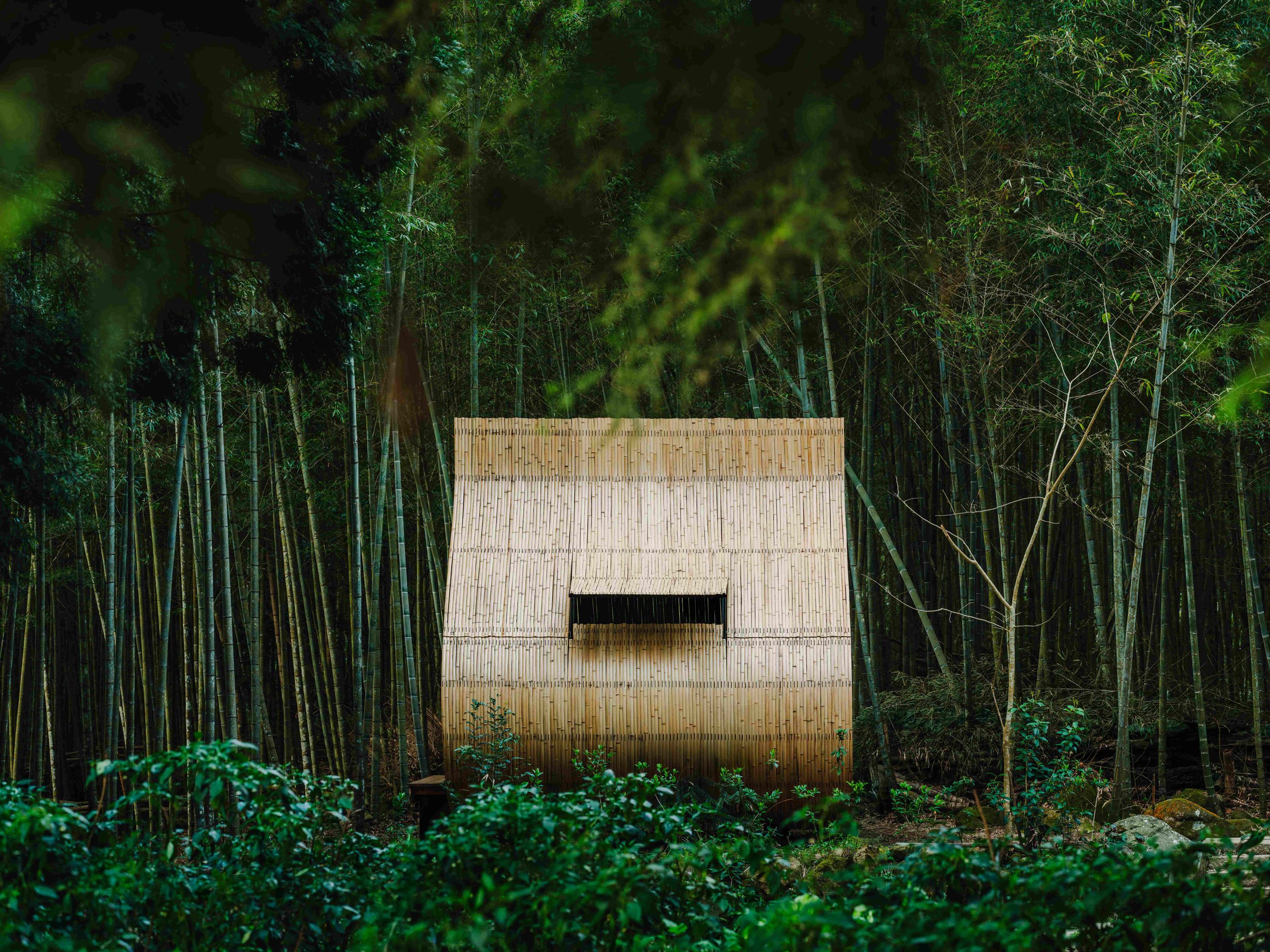
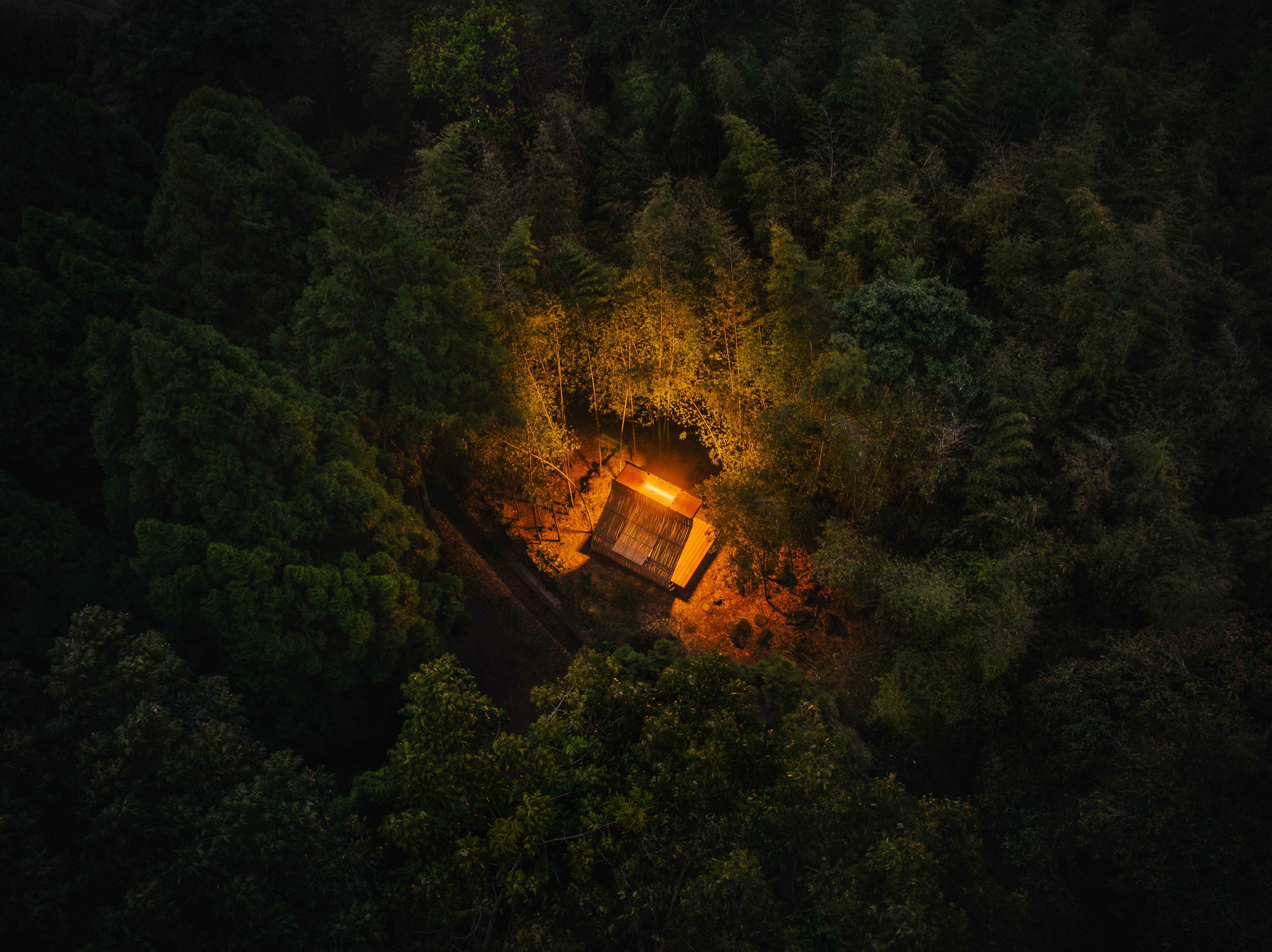
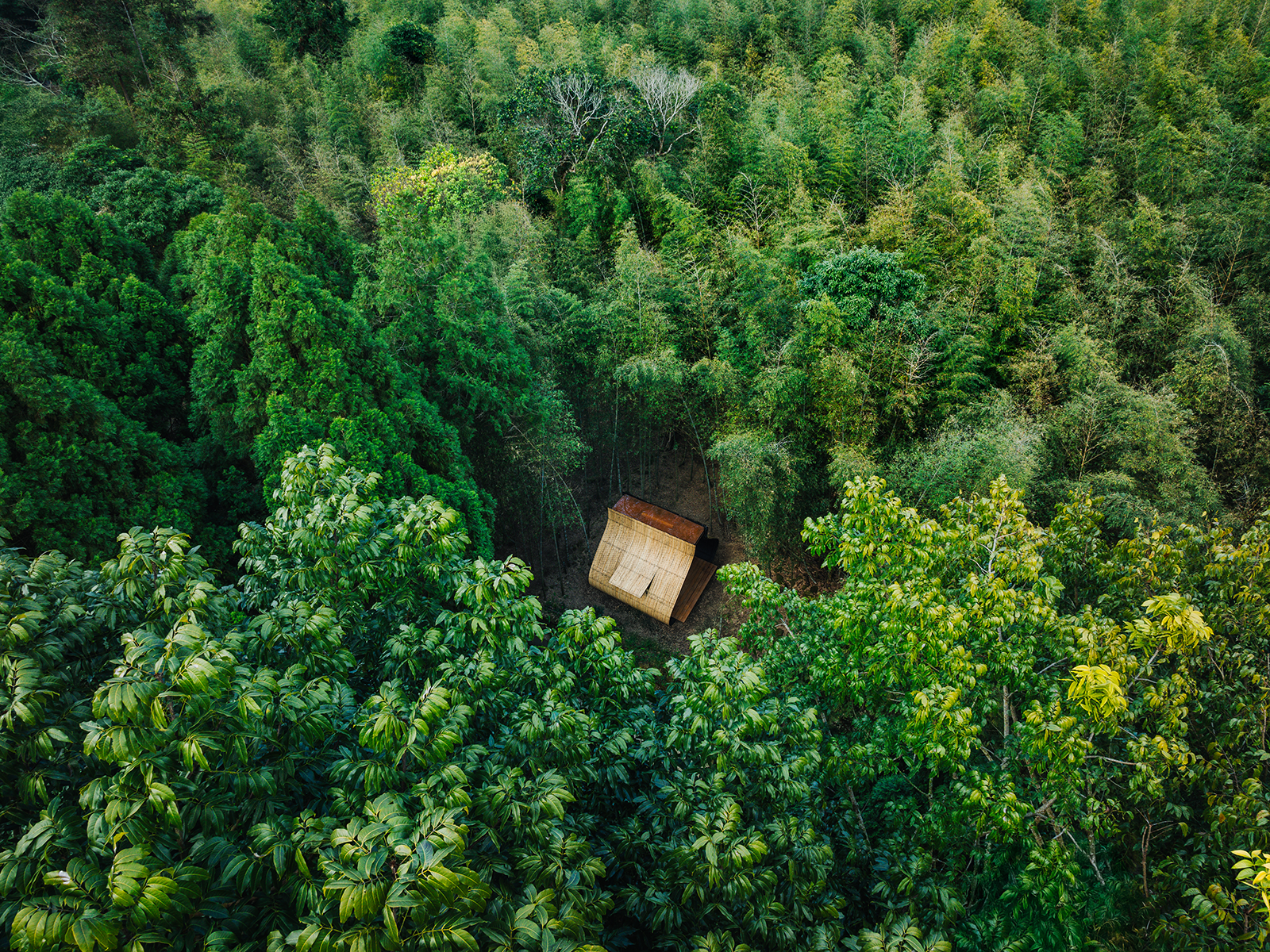
The first piece in this project, Bamboo Cabin Plan: Sticky Rice Dumpling, is situated along a bamboo forest hiking trail in Lugu Township, Nantou County. It offers a shaded resting place for hikers passing through the area.
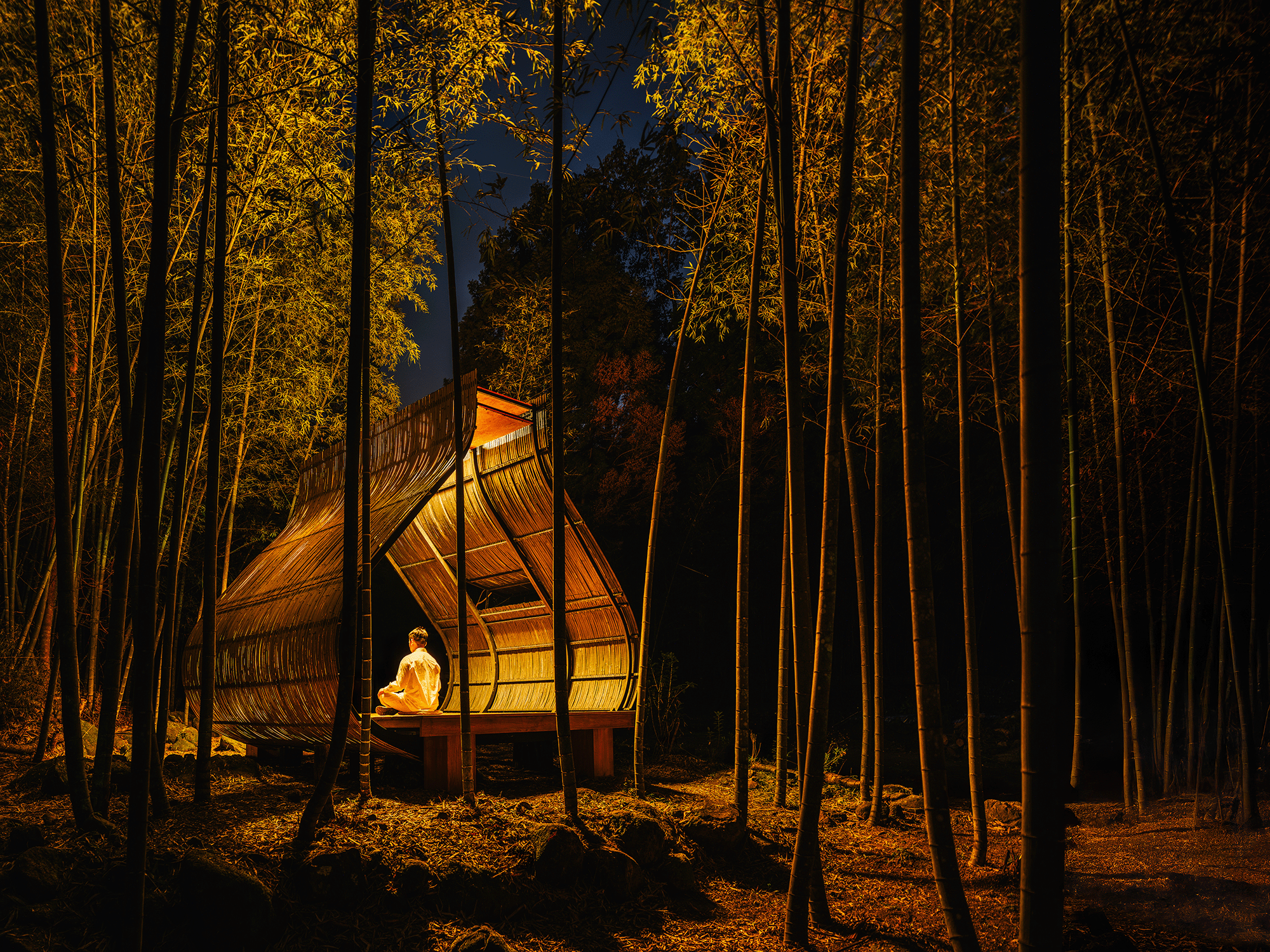
The form of the Bamboo Cabin draws inspiration from the traditional act of wrapping a Sticky Rice Dumpling—placing two bamboo leaves in the palm, filling them with ingredients, and letting the leaves naturally bend under the weight and the shape of the hand to form a curved, enclosing shape.
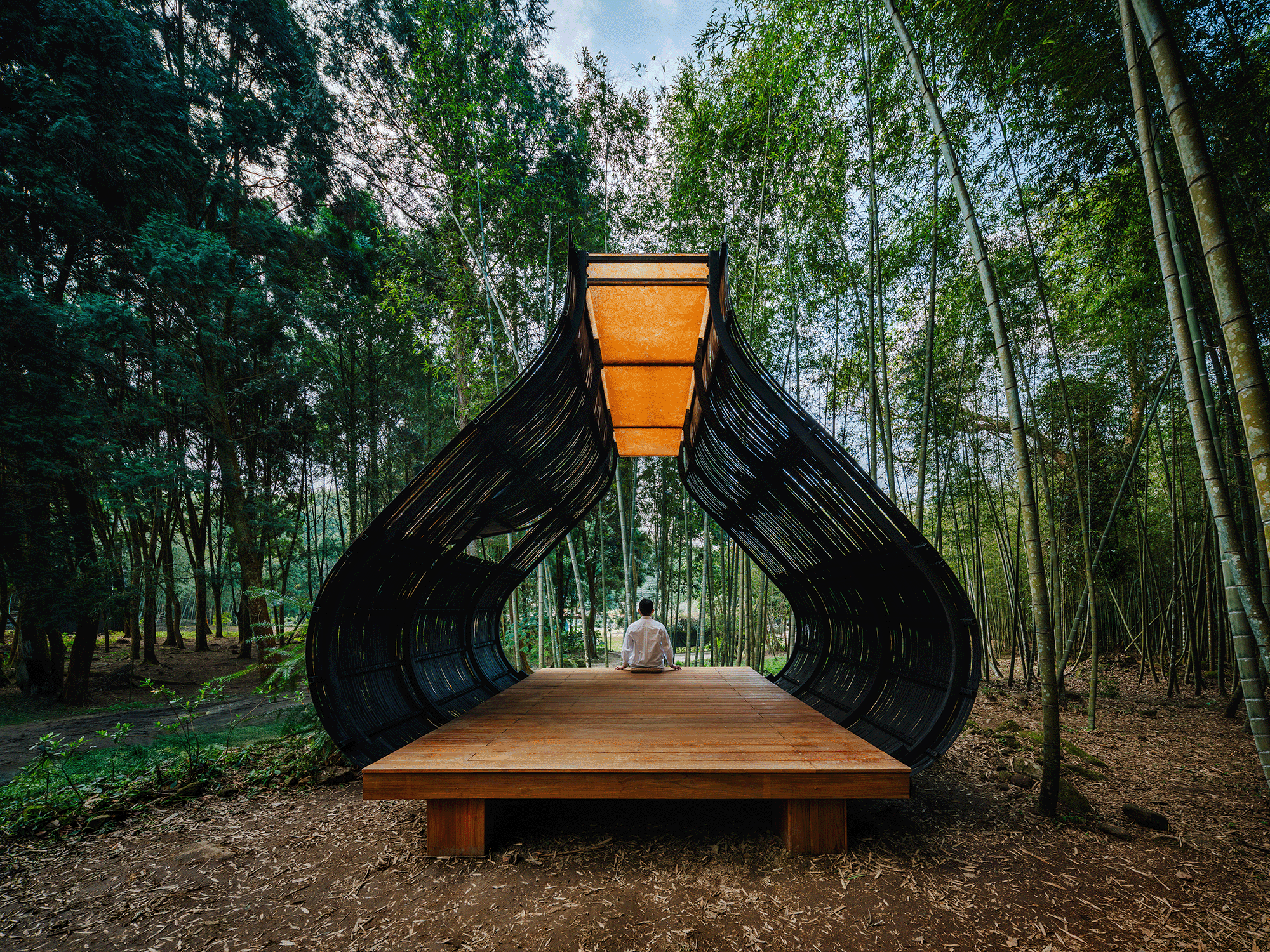
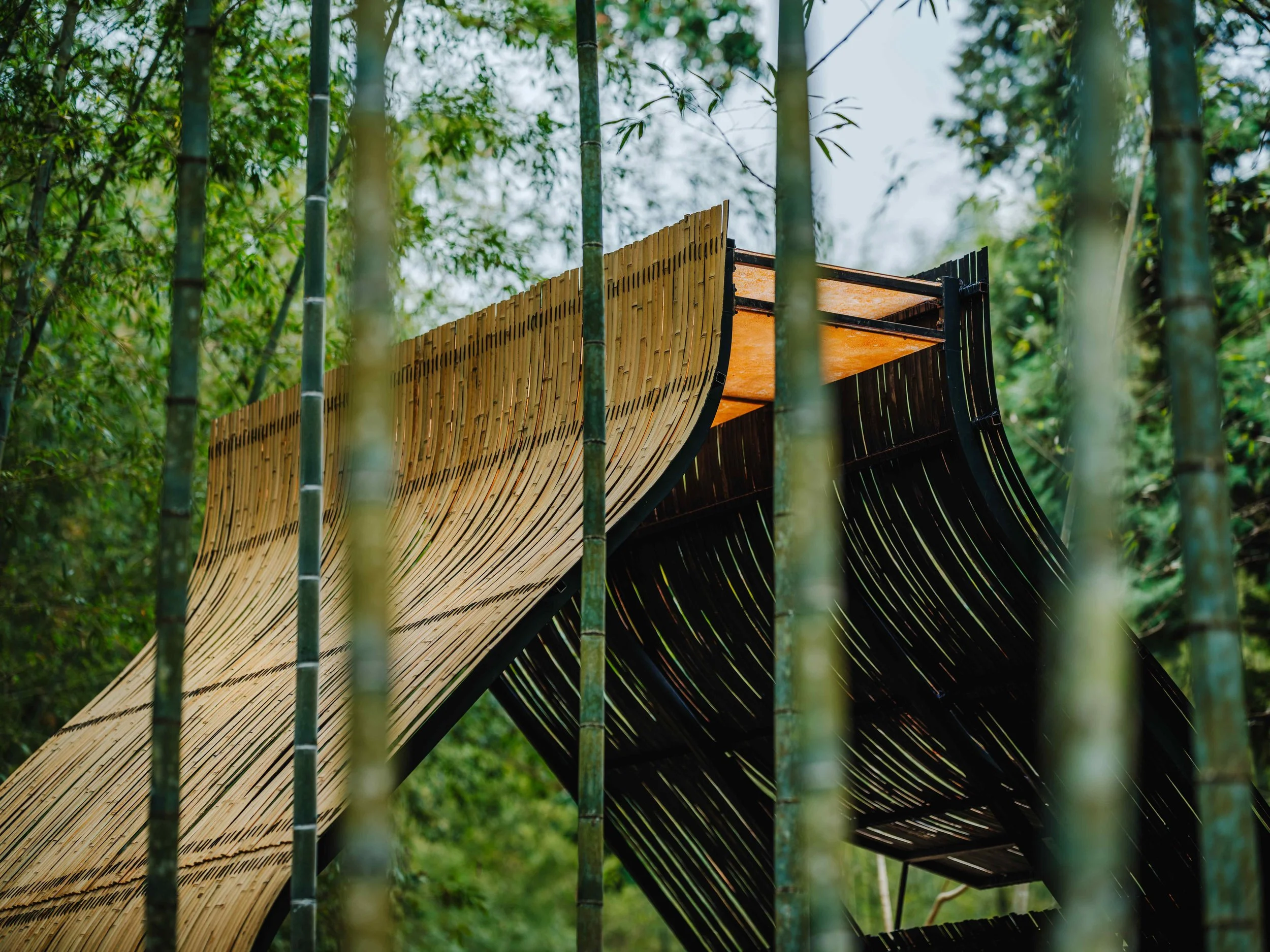
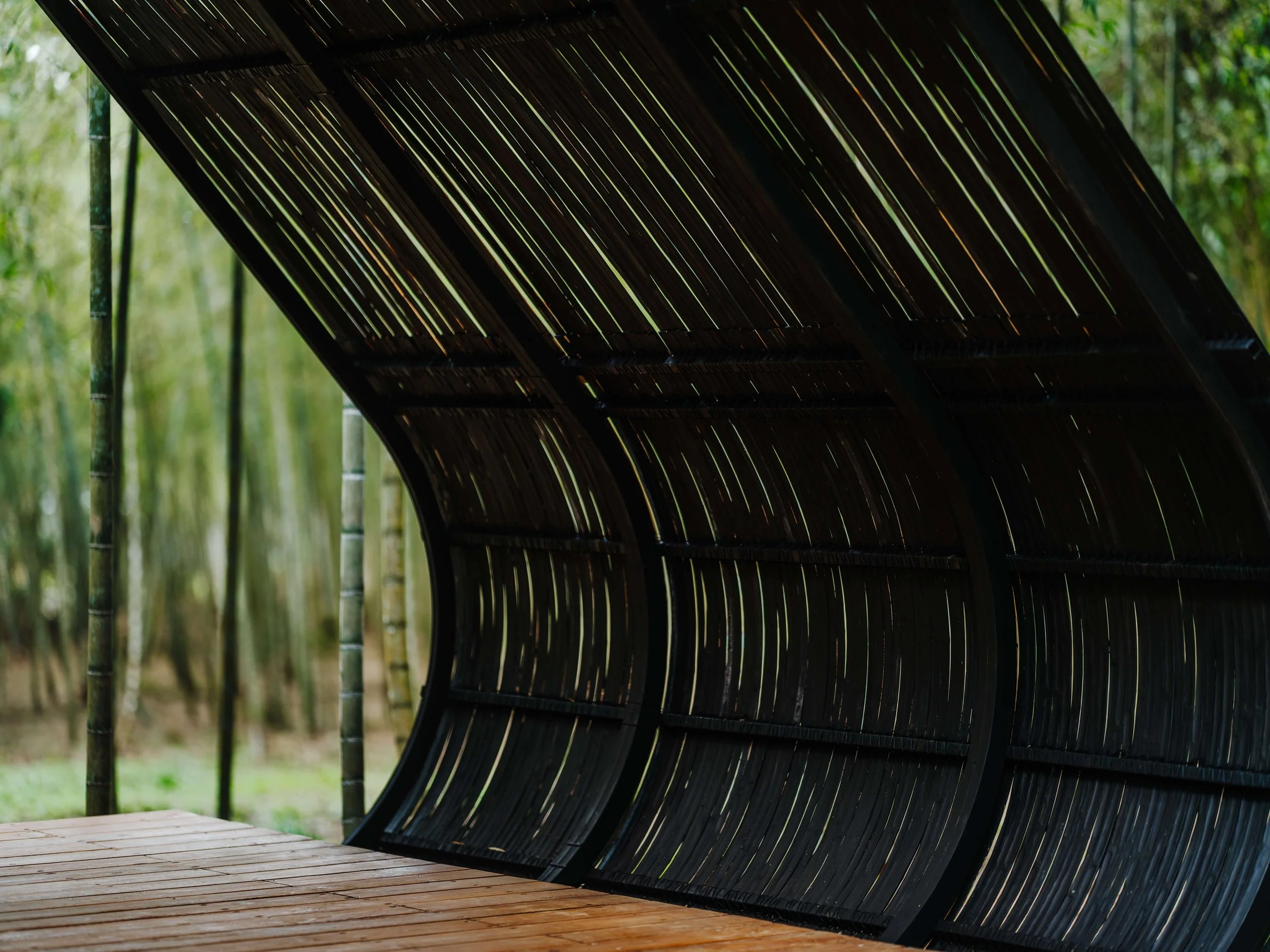
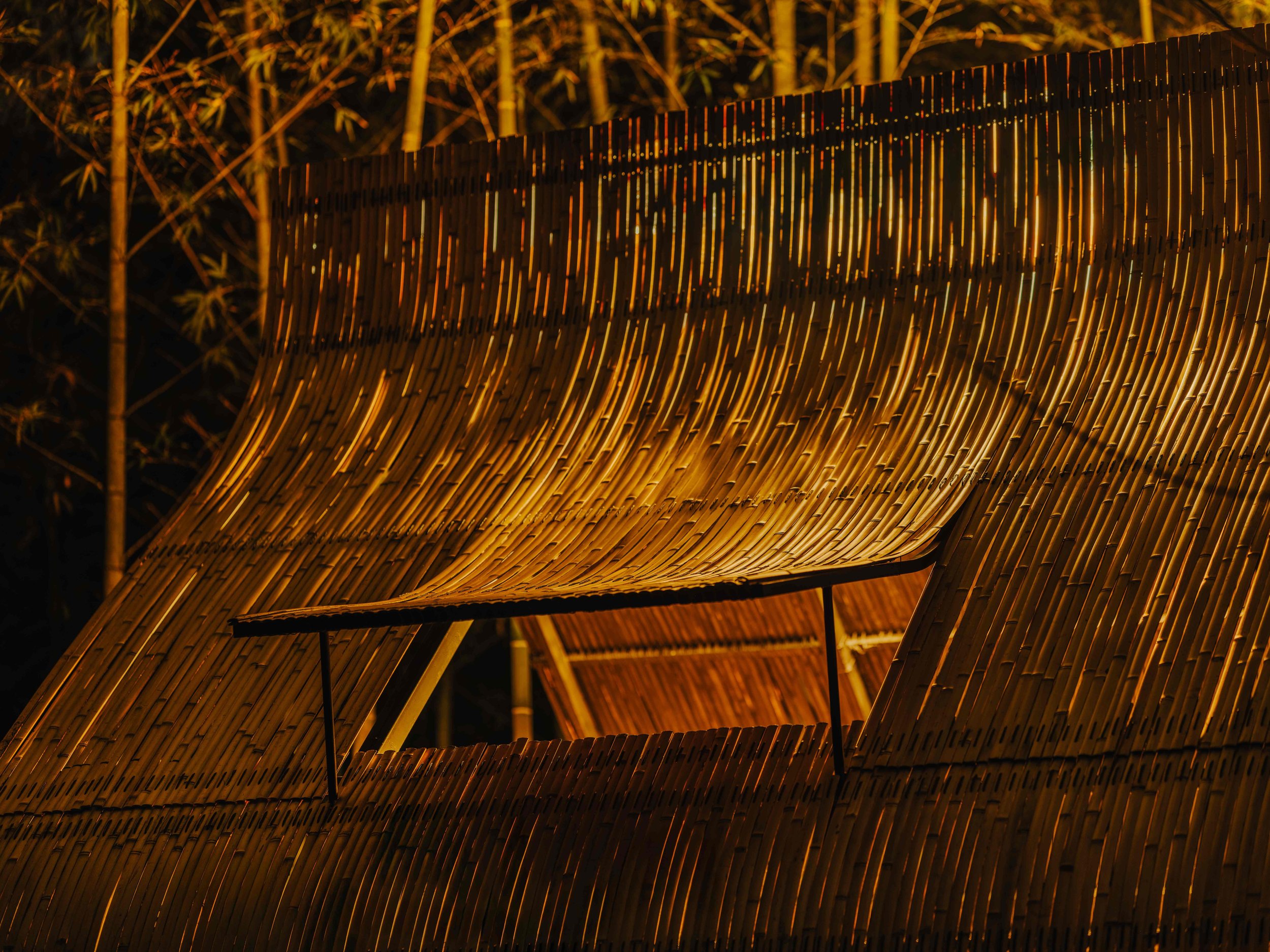
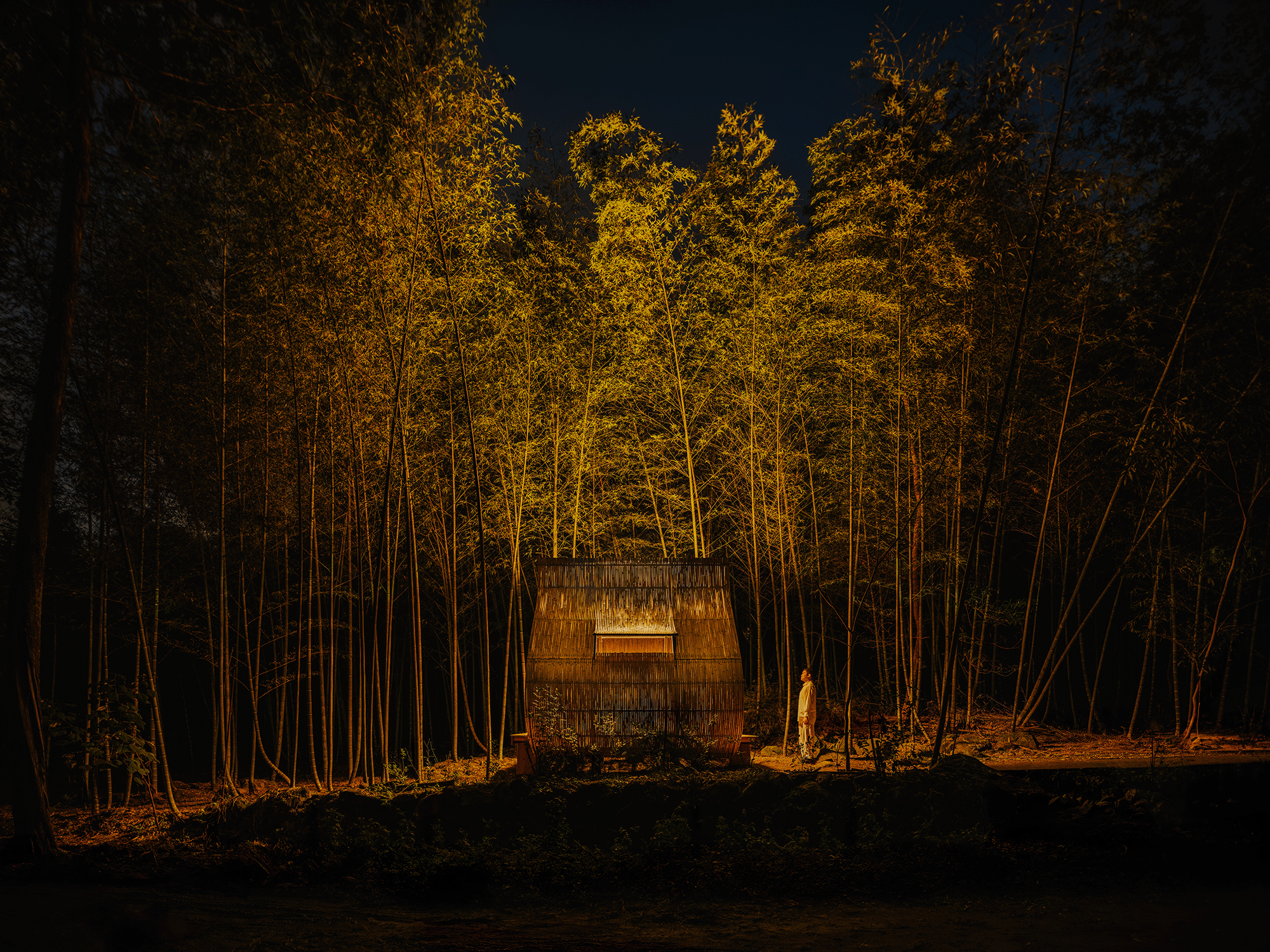
FENG translated this delicate process into architectural form. He arranged multiple bamboo strips in parallel, bending them to create a surrounding space. A small portion at the center is slightly lifted to form a tiny window. The raised wooden floor introduces a gap and shadow between the structure and the ground, giving the cabin a light and playful appearance. The floor allows visitors to sit, nap, or enjoy a picnic inside. On the roof, two handcrafted amber-colored waterproof panels are installed. Their specially textured surface diffuses the light, creating a warm, oily glow reminiscent of glutinous rice, adding a cozy and flavorful impression to the space within.
Starting from the idea of food wrapping, the Bamboo Cabin invites people to step into a giant Sticky Rice Dumpling—as if being held within palms and bamboo leaves, embraced by food culture, tasty memory, and nature material.
2025|Nantou Bamboo Festival|02/15-16, 22-23|moso bamboo forest ancient battlefield|Lugu, Nantou
organizer|Department of Agriculture, Nantou County Government
curator|Red Sky
artist|Cheng Tsung FENG
project designer|Chan Wei HSU, Chong Sheng HSU
human resource manager | Miaw Mann CHEN
handicraft|Chen PENG, Tzu Yin DAI, You Long LIN, Chong Shou LIN, Ai Fu LI, Ai Chu LI
structural analysis| Hsiang Ye Engineering Counsaltant
woodwork engineer|Weige Interior
metalwork engineer|Yi Chang Laser, Wen Ching HSU
lignting design|Oude Light
lighting engineer|Beamtec Lighting
photography|FIXER Photographic Studio
2025
小竹屋計劃:粽子
尺寸|3.4*4.3*3.6 m
材質|竹、金屬、木、尼龍繩、LED燈具
台灣藝術家范承宗的《小竹屋計劃》是以竹子為主要材質搭建小型建築的創作,這個計劃裡所關注的是人們包裹食物的傳統方式。
計劃中的第一件作品《小竹屋計劃:粽子》設置在南投縣鹿谷鄉的竹林登山步道上,提供行經的旅人短暫休息與遮蔭乘涼的空間。這間小竹屋的造形靈感來自於傳統包粽子的動作——將兩片竹葉鋪在手心,裝入餡料,竹葉因爲餡料的重量和手的形狀自然彎曲,逐漸形成包覆的彎曲線條。
范承宗將這個細微的過程轉化為建築形式,他將許多竹片整齊排列,並彎曲形成包圍的空間,在中央局部掀開翹起的一小片,成為小小的窗戶。架高的木地板產生與地面的間隙與陰影,使整座小屋看起來更加輕巧可愛。木地板提供人們在裡面坐下、午睡或野餐。屋頂上方夾著兩片琥珀色的手工防水燈板,燈板表面經過特殊質感處理,讓光線呈現出類似糯米包覆油脂的質地與色澤,為空間內增添一股溫熱、美味的印象。
小竹屋以食物的包裹形式為起點,當人們進入這顆巨大的粽子,就像是身在手心與竹葉之中,被飲食文化、美味記憶與天然材料包圍。
2025|竹夢森活節|02/15-16,22-23|孟宗竹林古戰場|南投鹿谷
主辦單位|南投縣政府農業處
策展單位|赤天空股份有限公司
藝術家|范承宗
專案設計|許展維、徐崇盛
人力管理|陳妙曼
製作協力|彭程、賴資穎、林幼龍、林重壽、李愛富、李愛菊
結構分析|翔業工程顧問
木作工程|唯格室內
金屬工程|艗錩雷射、許文進
照明設計|偶得設計
照明工程|丞逸照明
攝影|定影影像